THE ADVENTURE COLLECTIVE® · Independent discovery and booking for outdoor travel

A full-day private drive from Marrakech over the High Atlas to the UNESCO-listed Ait Ben Haddou — a mix of dramatic mountain views, earthen architecture and short, photo-friendly walks. Ideal for travelers who want a cultural stop without rugged trekking.
A full-day private drive from Marrakech over the High Atlas to the UNESCO-listed Ait Ben Haddou — a mix of dramatic mountain views, earthen architecture and short, photo-friendly walks. Ideal for travelers who want a cultural stop without rugged trekking.
You leave Marrakech before dawn and the city’s ochre blocks dissolve into the High Atlas: a long ribbon of road that rises, twists and opens into harsh light and serrated ridgelines. Halfway up a 2,260 m pass, the van pauses at a roadside café and the valley spreads below — a first, cinematic preview of southern Morocco’s geology where folded sandstone and gravelly scree cup the sky.
Verified experiences and guided adventures in the surrounding area.
Operated by Planificador de Viajes Marruecos · Ait Ben Haddou, Drâa-Tafilalet
You leave Marrakech before dawn and the city’s ochre blocks dissolve into the High Atlas: a long ribbon of road that rises, twists and opens into harsh light and serrated ridgelines. Halfway up a 2,260 m pass, the van pauses at a roadside café and the valley spreads below — a first, cinematic preview of southern Morocco’s geology where folded sandstone and gravelly scree cup the sky.
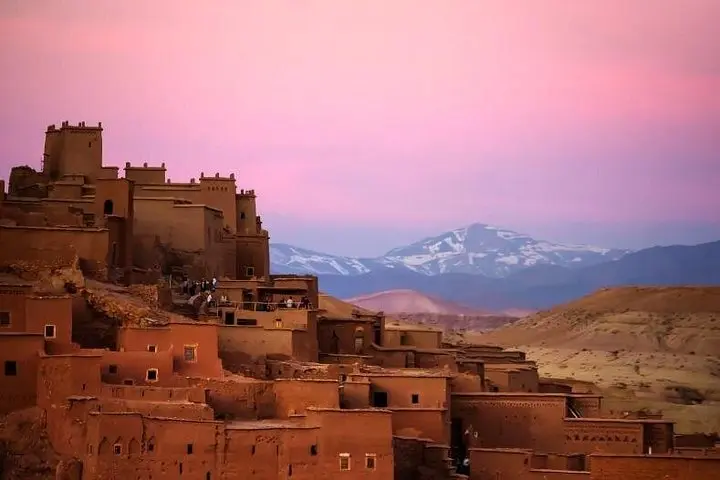
Ait Ben Haddou, the earthen fortress that appears like a medieval stage set, perches beside the Ounila Valley. The ksar’s mud-brick towers and defensive walls reflect centuries of caravan trade between Marrakech and the Sahara; behind them the Anti-Atlas begins its gentler slopes. Local Berber culture is visible in narrow lanes, simple terraces and family-run stalls selling mint tea and carved wooden doors.
Expect 12–14 hours on a private minivan: long drives punctuated by two or three short walks, photo stops at panoramic viewpoints and a 90–120 minute guided visit inside the kasbah. Terrain at the site is compacted mud, uneven steps and a few steep climbs — sturdy shoes and steady footing matter more than technical gear.
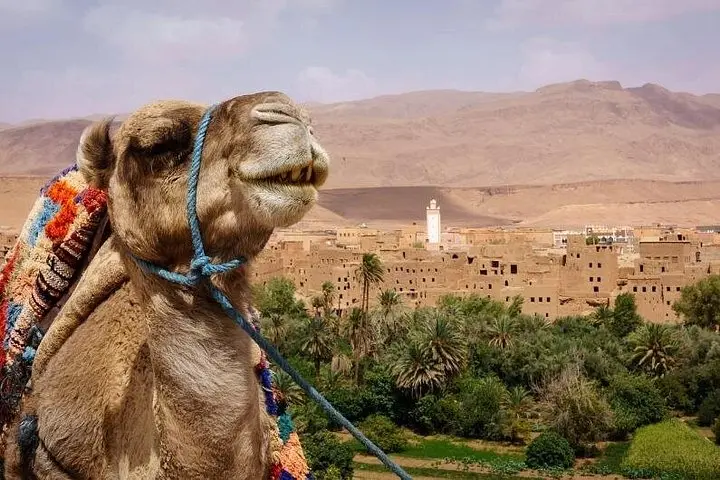
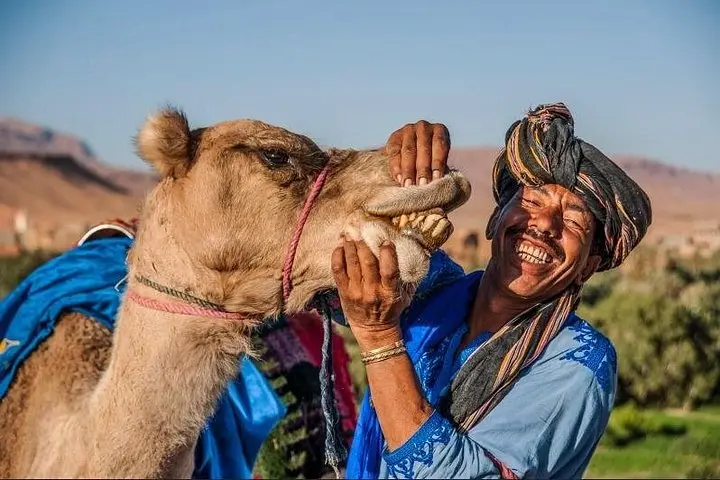
Practicalities: schedule pickups from Marrakech hotels, bring sun protection, extra water, and a small daypack. If you opt for the camel ride or a local lunch upgrade, allot extra time and cash. The route is accessible year-round, though summer heat and winter winds shift comfort levels — travel early in the day to avoid the hottest stretch and to make the most of the light for photography.
Expect roughly 3–4 hours each way depending on traffic and stops; total door-to-door time for the tour is about 12–14 hours.
Yes — the guided visit to the kasbah is included in this private tour’s itinerary.
They are optional upgrades; camel rides and sit-down lunches are available for an additional fee and should be requested in advance.
Yes — the tour is rated easy overall, but the ksar has uneven paths and steps that may be difficult for strollers or limited-mobility travelers.
Planificador de Viajes Marruecos operates guided outdoor trips and adventures with an emphasis on safety, stewardship, and memorable experiences.
You leave Marrakech before dawn and the city’s ochre blocks dissolve into the High Atlas: a long ribbon of road that rises, twists and opens into harsh light and serrated ridgelines. Halfway up a 2,260 m pass, the van pauses at a roadside café and the valley spreads below — a first, cinematic preview of southern Morocco’s geology where folded sandstone and gravelly scree cup the sky.
You leave Marrakech before dawn and the city’s ochre blocks dissolve into the High Atlas: a long ribbon of road that rises, twists and opens into harsh light and serrated ridgelines. Halfway up a 2,260 m pass, the van pauses at a roadside café and the valley spreads below — a first, cinematic preview of southern Morocco’s geology where folded sandstone and gravelly scree cup the sky.
Ait Ben Haddou, the earthen fortress that appears like a medieval stage set, perches beside the Ounila Valley. The ksar’s mud-brick towers and defensive walls reflect centuries of caravan trade between Marrakech and the Sahara; behind them the Anti-Atlas begins its gentler slopes. Local Berber culture is visible in narrow lanes, simple terraces and family-run stalls selling mint tea and carved wooden doors.
Expect 12–14 hours on a private minivan: long drives punctuated by two or three short walks, photo stops at panoramic viewpoints and a 90–120 minute guided visit inside the kasbah. Terrain at the site is compacted mud, uneven steps and a few steep climbs — sturdy shoes and steady footing matter more than technical gear.
Practicalities: schedule pickups from Marrakech hotels, bring sun protection, extra water, and a small daypack. If you opt for the camel ride or a local lunch upgrade, allot extra time and cash. The route is accessible year-round, though summer heat and winter winds shift comfort levels — travel early in the day to avoid the hottest stretch and to make the most of the light for photography.