THE ADVENTURE COLLECTIVE® · Independent discovery and booking for outdoor travel

Drive north from Addis to one of Ethiopia’s most dramatic landscapes: the Blue Nile Gorge and Jemma Valley. This full-day tour pairs sweeping canyon viewpoints with a visit to the historic Debre Libanos monastery and a downhill walk to the Portuguese Bridge.
Drive north from Addis to one of Ethiopia’s most dramatic landscapes: the Blue Nile Gorge and Jemma Valley. This full-day tour pairs sweeping canyon viewpoints with a visit to the historic Debre Libanos monastery and a downhill walk to the Portuguese Bridge.
You round a highland shoulder and the road drops like a curtain — terraces and scrub give way to an impossible cleft. The Blue Nile Gorge opens beneath you, a kilometer of raw, folded rock and light carving a deep throat through Ethiopia’s central plateau. Wind moves through the chasm as if reading its own history; the river at the bottom dares you to follow its line.
Verified experiences and guided adventures in the surrounding area.
Operated by WALK IN ETHIOPIA TOUR AND TRAVEL · Debre Libanos, Oromia
You round a highland shoulder and the road drops like a curtain — terraces and scrub give way to an impossible cleft. The Blue Nile Gorge opens beneath you, a kilometer of raw, folded rock and light carving a deep throat through Ethiopia’s central plateau. Wind moves through the chasm as if reading its own history; the river at the bottom dares you to follow its line.
This one-day circuit links geological drama with centuries of faith. The gorge itself is part of the Blue Nile (Abay) system, the river that carries most of the Nile’s headwaters from Lake Tana and has, over millennia, carved steep basalt walls and stepped terraces. Perched on the rim, the Debre Libanos monastery — founded in the 13th century by Saint Teklehaimanot — guards relics, stonework and a tradition of pilgrimage. Below, the 17th-century Portuguese Bridge spans a Jemma River side-valley, a quiet place where Gelada baboons forage and raptors quarter the thermal lifts.
Expect a day of big viewpoints, short downhill walks to the bridge, and close cultural encounters. The itinerary balances vehicle time across highland roads with easy walking; guides interpret monastic art, local geology and birdlife. Practical planning: start early to avoid afternoon glare in the gorge, bring layers for windy rims and sun protection on exposed viewpoints. Hydrate and wear sturdy shoes—the descent to the bridge is uneven rock and dust. Respect monastery customs (modest dress, quiet photography), keep distance from wildlife, and support local guides who steward paths and stories. By late afternoon you roll back toward Addis with the canyon’s scale still pushing at the edge of the window.
The tour covers roughly 200–220 km one-way roads, with the whole trip running around 11–12 hours including stops and walks.
The walk is short but steep in places and across uneven rocky sections; proper footwear and steady footing are recommended.
Photography rules vary; modest, respectful behavior is expected — ask your guide before photographing religious objects or people.
Yes — Gelada baboons are commonly seen near the bridge and monastery slopes; raptors and other highland birds are often visible from viewpoints.
WALK IN ETHIOPIA TOUR AND TRAVEL operates guided outdoor trips and adventures with an emphasis on safety, stewardship, and memorable experiences.


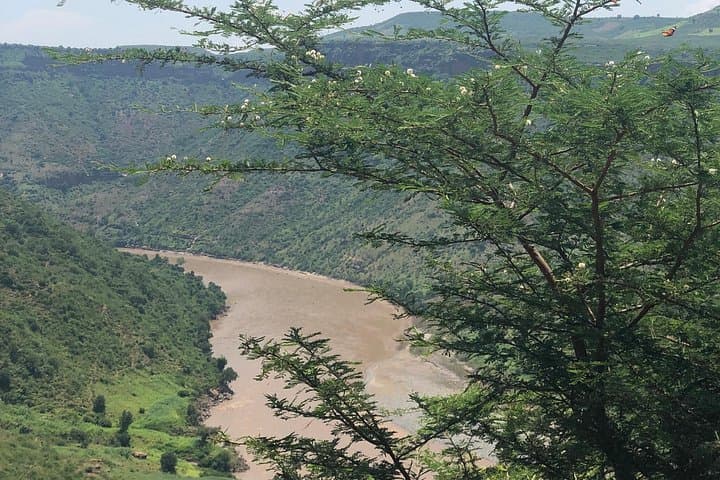

You round a highland shoulder and the road drops like a curtain — terraces and scrub give way to an impossible cleft. The Blue Nile Gorge opens beneath you, a kilometer of raw, folded rock and light carving a deep throat through Ethiopia’s central plateau. Wind moves through the chasm as if reading its own history; the river at the bottom dares you to follow its line.
You round a highland shoulder and the road drops like a curtain — terraces and scrub give way to an impossible cleft. The Blue Nile Gorge opens beneath you, a kilometer of raw, folded rock and light carving a deep throat through Ethiopia’s central plateau. Wind moves through the chasm as if reading its own history; the river at the bottom dares you to follow its line.
This one-day circuit links geological drama with centuries of faith. The gorge itself is part of the Blue Nile (Abay) system, the river that carries most of the Nile’s headwaters from Lake Tana and has, over millennia, carved steep basalt walls and stepped terraces. Perched on the rim, the Debre Libanos monastery — founded in the 13th century by Saint Teklehaimanot — guards relics, stonework and a tradition of pilgrimage. Below, the 17th-century Portuguese Bridge spans a Jemma River side-valley, a quiet place where Gelada baboons forage and raptors quarter the thermal lifts.
Expect a day of big viewpoints, short downhill walks to the bridge, and close cultural encounters. The itinerary balances vehicle time across highland roads with easy walking; guides interpret monastic art, local geology and birdlife. Practical planning: start early to avoid afternoon glare in the gorge, bring layers for windy rims and sun protection on exposed viewpoints. Hydrate and wear sturdy shoes—the descent to the bridge is uneven rock and dust. Respect monastery customs (modest dress, quiet photography), keep distance from wildlife, and support local guides who steward paths and stories. By late afternoon you roll back toward Addis with the canyon’s scale still pushing at the edge of the window.