THE ADVENTURE COLLECTIVE® · Independent discovery and booking for outdoor travel

Travel west from Marrakech to Essaouira for a full-day blend of Atlantic coast, historic ramparts, and visits to women’s argan cooperatives. Expect guided medina walks, harbor views from the Skala, and practical stops for photos and local shopping.
Travel west from Marrakech to Essaouira for a full-day blend of Atlantic coast, historic ramparts, and visits to women’s argan cooperatives. Expect guided medina walks, harbor views from the Skala, and practical stops for photos and local shopping.
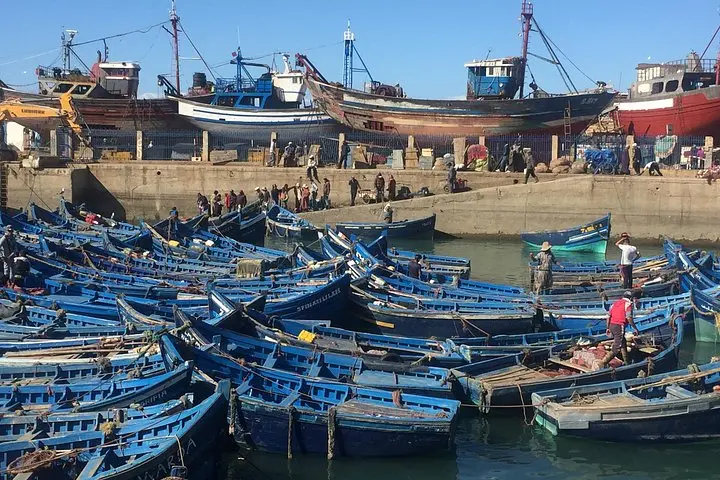
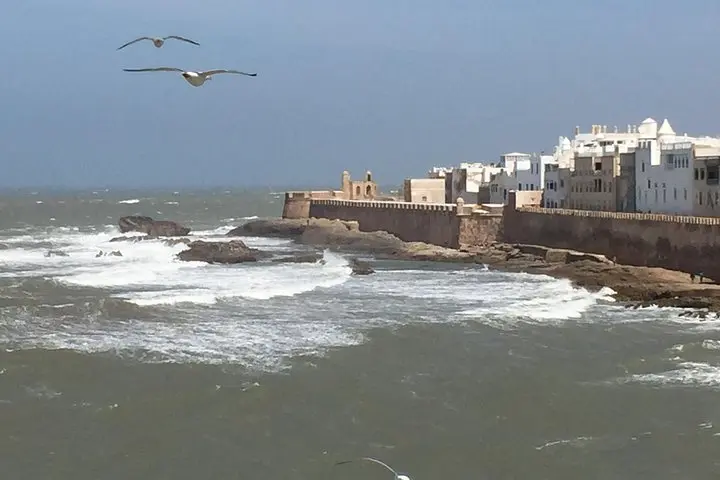
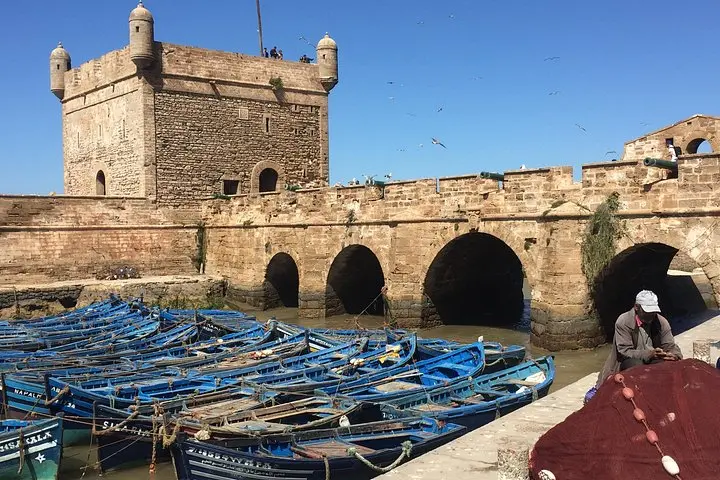
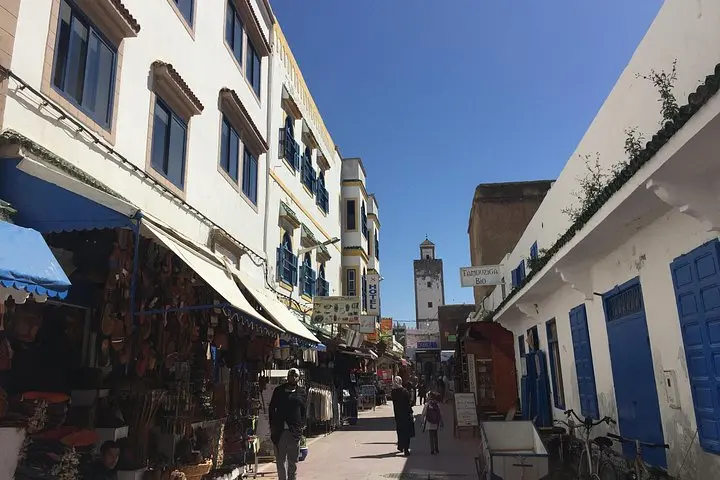
A salt-laced wind meets the vehicle as it rolls west from Marrakech toward the Atlantic, and by midmorning the white-and-blue facades of Essaouira appear on the horizon. The town’s low ramparts and the Skala’s cannons cut a clean silhouette against the sea; gulls wheel and the harbor hums with fishermen mending nets. This is Mogador — a working port with straight streets, weathered wood shutters, and a medina that rewards walking.
Verified experiences and guided adventures in the surrounding area.
Operated by Moroccan Travel Trip By Promythic Tours Company · Essaouira, Marrakech-Safi
A salt-laced wind meets the vehicle as it rolls west from Marrakech toward the Atlantic, and by midmorning the white-and-blue facades of Essaouira appear on the horizon. The town’s low ramparts and the Skala’s cannons cut a clean silhouette against the sea; gulls wheel and the harbor hums with fishermen mending nets. This is Mogador — a working port with straight streets, weathered wood shutters, and a medina that rewards walking.
Essaouira’s past is stitched to trade and craft: Portuguese forts from the 16th century, 18th-century French plans, and a legacy of sailors and traders who shaped the harbor. The coastline is geologically recent rock and sand, shaped by Atlantic swells that push tides sharply into the bay. Inland, the argan forests are low, thorny trees adapted to semi-arid soils; their fruits sustain goats and local cooperatives that press oil by traditional methods.
The day-trip rhythm is simple and practical: a climate-controlled transfer of roughly 2.5–3 hours each way, a stop at a women’s argan cooperative to watch hand-extraction and sample products, then a guided walking tour of the medina, the port, and the Skala with time for independent wandering and photos.
Practical guidance: wear sturdy shoes for cobbles and ramparts, carry sun protection and a refillable water bottle, bring cash for market purchases, and plan for breezy, cooler afternoons by the water. The full-day itinerary suits travelers who want culture, coastal scenery, and a short immersion into Morocco’s artisanal traditions without overnight logistics.
Expect about 2.5–3 hours each way depending on traffic and chosen pickup point in Marrakech.
This tour typically includes transport, bottled water, and guided walking; meals and most purchases in the medina are not included.
Yes — the cooperative visit is accessible and generally family-friendly; the operator notes wheelchair accessibility but medina streets can be narrow and uneven.
Guides are multilingual and groups are small—usually limited to seven travelers for a more personal experience.
Moroccan Travel Trip By Promythic Tours Company operates guided outdoor trips and adventures with an emphasis on safety, stewardship, and memorable experiences.
A salt-laced wind meets the vehicle as it rolls west from Marrakech toward the Atlantic, and by midmorning the white-and-blue facades of Essaouira appear on the horizon. The town’s low ramparts and the Skala’s cannons cut a clean silhouette against the sea; gulls wheel and the harbor hums with fishermen mending nets. This is Mogador — a working port with straight streets, weathered wood shutters, and a medina that rewards walking.
A salt-laced wind meets the vehicle as it rolls west from Marrakech toward the Atlantic, and by midmorning the white-and-blue facades of Essaouira appear on the horizon. The town’s low ramparts and the Skala’s cannons cut a clean silhouette against the sea; gulls wheel and the harbor hums with fishermen mending nets. This is Mogador — a working port with straight streets, weathered wood shutters, and a medina that rewards walking.
Essaouira’s past is stitched to trade and craft: Portuguese forts from the 16th century, 18th-century French plans, and a legacy of sailors and traders who shaped the harbor. The coastline is geologically recent rock and sand, shaped by Atlantic swells that push tides sharply into the bay. Inland, the argan forests are low, thorny trees adapted to semi-arid soils; their fruits sustain goats and local cooperatives that press oil by traditional methods.
The day-trip rhythm is simple and practical: a climate-controlled transfer of roughly 2.5–3 hours each way, a stop at a women’s argan cooperative to watch hand-extraction and sample products, then a guided walking tour of the medina, the port, and the Skala with time for independent wandering and photos.
Practical guidance: wear sturdy shoes for cobbles and ramparts, carry sun protection and a refillable water bottle, bring cash for market purchases, and plan for breezy, cooler afternoons by the water. The full-day itinerary suits travelers who want culture, coastal scenery, and a short immersion into Morocco’s artisanal traditions without overnight logistics.