THE ADVENTURE COLLECTIVE® · Independent discovery and booking for outdoor travel

A single-day, private flight from Safaga to Cairo compresses millennia into one long, efficient day: Giza’s pyramids and Sphinx, the Egyptian Museum’s artifacts, and the bustling alleys of Khan El Khalili. Expect early starts, steady walking, and a seasoned Egyptologist to keep the story moving.
A single-day, private flight from Safaga to Cairo compresses millennia into one long, efficient day: Giza’s pyramids and Sphinx, the Egyptian Museum’s artifacts, and the bustling alleys of Khan El Khalili. Expect early starts, steady walking, and a seasoned Egyptologist to keep the story moving.
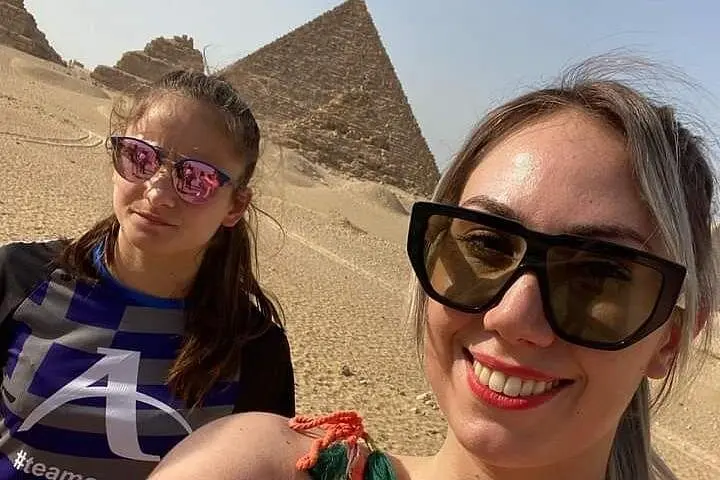
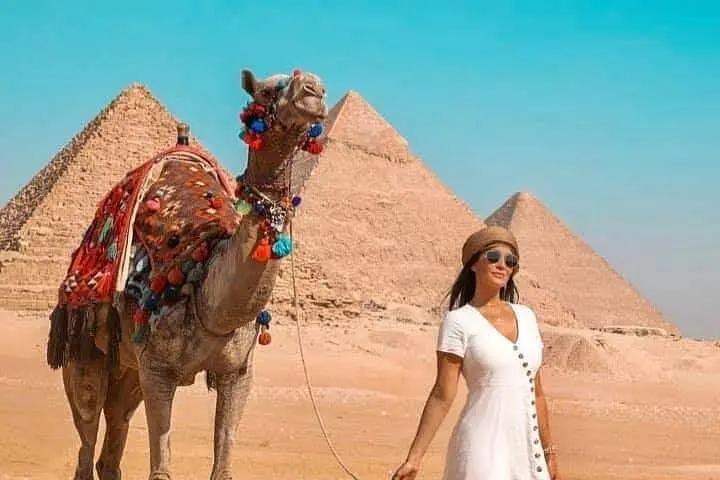
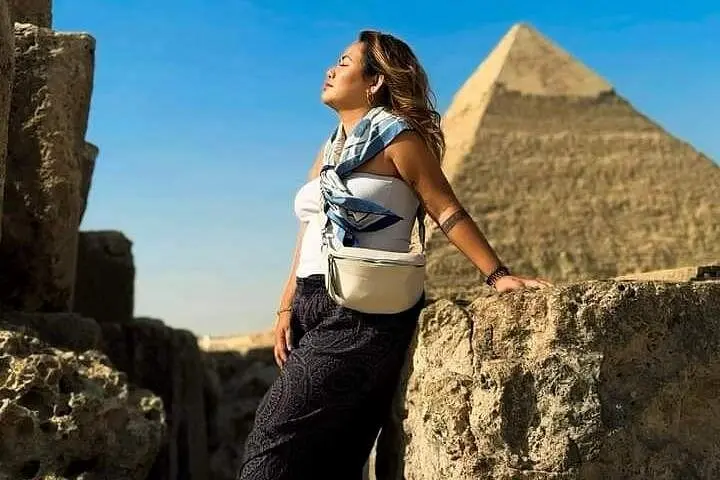
You leave Safaga before dawn, the Red Sea flattening into a silver ribbon as the minibus threads toward Hurghada Airport. An hour later you’re airborne; below, the Nile’s green line pulls you toward the broad sweep of Greater Cairo. By midmorning the Giza Plateau rises out of the desert — raw limestone cliffs, oversized stones that still hold the smell of millennia, and the slow, immovable watch of the Great Pyramid.
Verified experiences and guided adventures in the surrounding area.
Operated by Egypt Best Day Tours · Giza, Cairo Governorate
You leave Safaga before dawn, the Red Sea flattening into a silver ribbon as the minibus threads toward Hurghada Airport. An hour later you’re airborne; below, the Nile’s green line pulls you toward the broad sweep of Greater Cairo. By midmorning the Giza Plateau rises out of the desert — raw limestone cliffs, oversized stones that still hold the smell of millennia, and the slow, immovable watch of the Great Pyramid.
The day links epochs: Paleolithic quarries and Old Kingdom ambition at Giza, the curated treasures of the Egyptian Museum, and the layered urban textures of Khan El Khalili market. Geologically the plateau is Eocene limestone underlaid with fossil-rich beds; builders quarried that same stone to raise the pyramids. Culturally the sites map pharaonic belief, Ottoman-era commerce, and modern Egyptian life all in one loop.
Expect a long, compact day — roughly 12–14 hours including flights and transfers — with concentrated walking on uneven ground and museum halls. Your Egyptologist guide will steer you through construction theories, funerary goods, and market etiquette while pointing out details missed by the casual glance.
Practical notes: carry your passport for the domestic flight, bring sun protection and a refillable water bottle, and budget small bills for taxis and bazaar purchases. Modest attire will keep interactions smooth at religious sites and busy public spaces.
This route rewards efficient travelers: a high-impact cultural day that pairs outdoor ruins with museum depth, all wrapped in the practical logistics of a private transfer and short flight back to Safaga.
The itinerary lists admissions to the Giza Plateau, Egyptian Museum and National Museum of Egyptian Civilization as included—verify specifics with your operator before travel.
The Hurghada–Cairo flight is about 1–1.25 hours; combined with transfers the total roundtrip travel time to/from Safaga typically adds several hours to the day.
The tour notes wheelchair accessibility for transport and many surfaces, but some parts of the Giza Plateau are uneven; contact the operator to confirm accommodations for specific mobility needs.
Smart-casual, modest clothing works best: breathable fabrics, covered shoulders and knees in some religious or formal museum areas; a scarf can be handy.
Egypt Best Day Tours operates guided outdoor trips and adventures with an emphasis on safety, stewardship, and memorable experiences.

You leave Safaga before dawn, the Red Sea flattening into a silver ribbon as the minibus threads toward Hurghada Airport. An hour later you’re airborne; below, the Nile’s green line pulls you toward the broad sweep of Greater Cairo. By midmorning the Giza Plateau rises out of the desert — raw limestone cliffs, oversized stones that still hold the smell of millennia, and the slow, immovable watch of the Great Pyramid.
You leave Safaga before dawn, the Red Sea flattening into a silver ribbon as the minibus threads toward Hurghada Airport. An hour later you’re airborne; below, the Nile’s green line pulls you toward the broad sweep of Greater Cairo. By midmorning the Giza Plateau rises out of the desert — raw limestone cliffs, oversized stones that still hold the smell of millennia, and the slow, immovable watch of the Great Pyramid.
The day links epochs: Paleolithic quarries and Old Kingdom ambition at Giza, the curated treasures of the Egyptian Museum, and the layered urban textures of Khan El Khalili market. Geologically the plateau is Eocene limestone underlaid with fossil-rich beds; builders quarried that same stone to raise the pyramids. Culturally the sites map pharaonic belief, Ottoman-era commerce, and modern Egyptian life all in one loop.
Expect a long, compact day — roughly 12–14 hours including flights and transfers — with concentrated walking on uneven ground and museum halls. Your Egyptologist guide will steer you through construction theories, funerary goods, and market etiquette while pointing out details missed by the casual glance.
Practical notes: carry your passport for the domestic flight, bring sun protection and a refillable water bottle, and budget small bills for taxis and bazaar purchases. Modest attire will keep interactions smooth at religious sites and busy public spaces.
This route rewards efficient travelers: a high-impact cultural day that pairs outdoor ruins with museum depth, all wrapped in the practical logistics of a private transfer and short flight back to Safaga.