THE ADVENTURE COLLECTIVE® · Independent discovery and booking for outdoor travel

Escape Chiang Mai for a day and walk the lanes of Mae Kampong: coffee shops, friendly homestays, and a refreshing waterfall set in volcanic foothills. This practical day trip mixes easy hiking, local culture, and scenic stops.
Escape Chiang Mai for a day and walk the lanes of Mae Kampong: coffee shops, friendly homestays, and a refreshing waterfall set in volcanic foothills. This practical day trip mixes easy hiking, local culture, and scenic stops.
You step off the minivan onto a narrow lane where wooden houses lean toward the hillside and the smell of roasted coffee follows like a familiar guide.
Verified experiences and guided adventures in the surrounding area.
Operated by TakeMeTour · Mae Kampong, Chiang Mai
You step off the minivan onto a narrow lane where wooden houses lean toward the hillside and the smell of roasted coffee follows like a familiar guide.
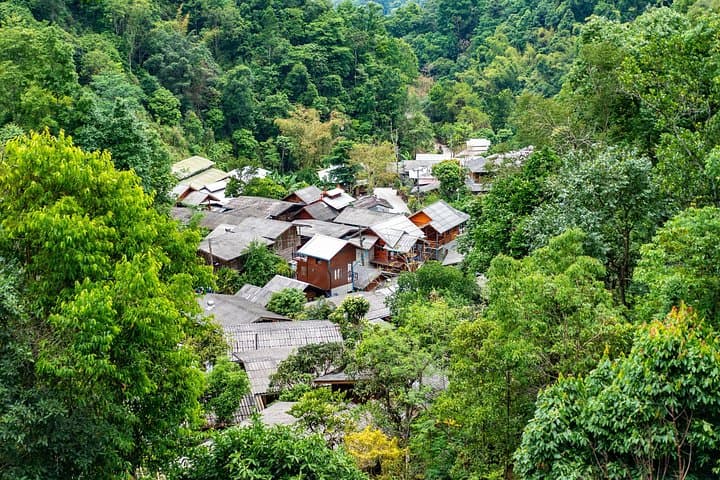
Mae Kampong sits high in the forested foothills east of Chiang Mai — a cluster of steep lanes, tea terraces, and drip-fed coffee plots carved into volcanic-aged soil. The village grew as a logging and agricultural settlement; today it’s known for homestays, small-scale coffee roasting, and a waterfall that insists you slow down.
Geology here is gentle: eroded volcanic hills, iron-rich clay soils, and streams that have cut shallow gullies through decades of rainy seasons. Culturally, families still practice household crafts and hospitality, opening kitchens and cafés that share simple northern Thai dishes.
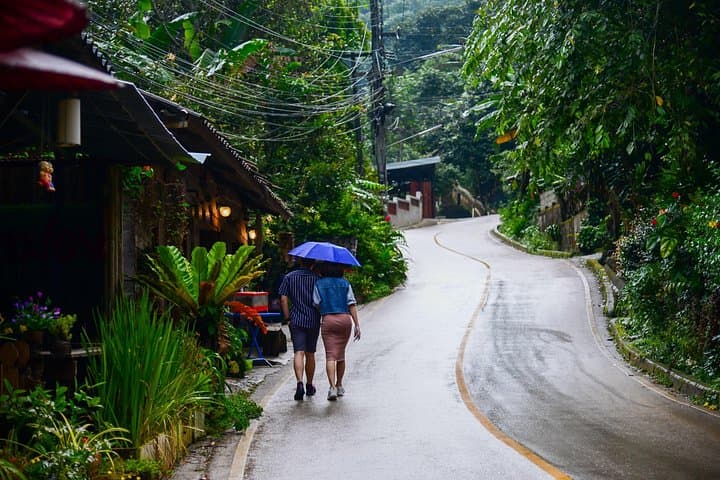
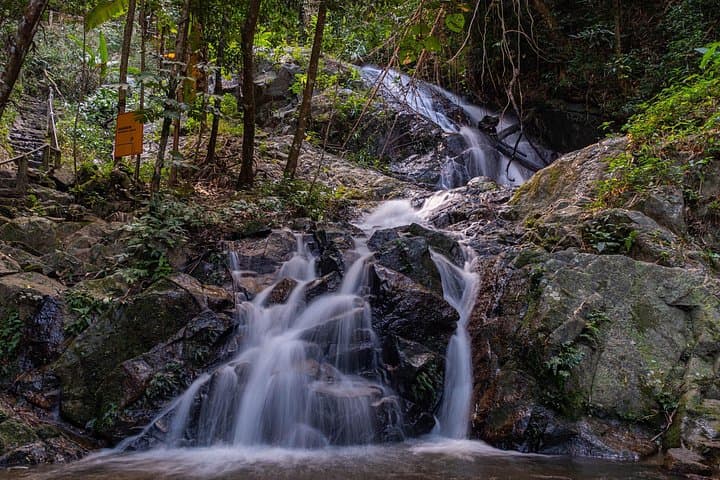
On a typical eight-hour excursion from Chiang Mai you’ll stroll village streets, visit a local coffee house to watch beans being roasted, and walk a short trail to Mae Kampong Waterfall where cool water nudges you into the shade. The trail is mostly gentle but uneven; moss and wet roots mean steady footing matters.
Practical guide: allow 1–2 hours for travel each way depending on traffic, wear grippy shoes, carry water and insect repellent, and plan for changing light — mountain mornings can be bright but shaded by noon. If you hope to photograph the falls, aim for mid-morning after the first light filters through the canopy and before late-afternoon crowds. Respect local households by asking before entering homestays or gardens, and bring small change to buy coffee or snacks — it directly supports village incomes.
Expect about 45–90 minutes each way depending on traffic and road conditions; tours usually include hotel pickup.
The trail is short and mostly easy but includes uneven surfaces and roots—good walking shoes are advised.
Some pools may be shallow and suitable for wading, but swimming conditions vary; follow local guidance and avoid strong currents after heavy rain.
Basic café toilets and small eateries operate in the village; treat options are local-style lunches, snacks, and coffee from family-run shops.
TakeMeTour operates guided outdoor trips and adventures with an emphasis on safety, stewardship, and memorable experiences.
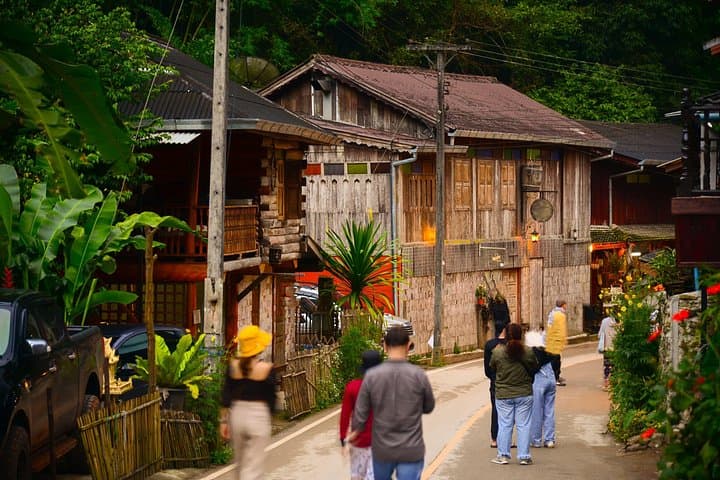
You step off the minivan onto a narrow lane where wooden houses lean toward the hillside and the smell of roasted coffee follows like a familiar guide.
You step off the minivan onto a narrow lane where wooden houses lean toward the hillside and the smell of roasted coffee follows like a familiar guide.
Mae Kampong sits high in the forested foothills east of Chiang Mai — a cluster of steep lanes, tea terraces, and drip-fed coffee plots carved into volcanic-aged soil. The village grew as a logging and agricultural settlement; today it’s known for homestays, small-scale coffee roasting, and a waterfall that insists you slow down.
Geology here is gentle: eroded volcanic hills, iron-rich clay soils, and streams that have cut shallow gullies through decades of rainy seasons. Culturally, families still practice household crafts and hospitality, opening kitchens and cafés that share simple northern Thai dishes.
On a typical eight-hour excursion from Chiang Mai you’ll stroll village streets, visit a local coffee house to watch beans being roasted, and walk a short trail to Mae Kampong Waterfall where cool water nudges you into the shade. The trail is mostly gentle but uneven; moss and wet roots mean steady footing matters.
Practical guide: allow 1–2 hours for travel each way depending on traffic, wear grippy shoes, carry water and insect repellent, and plan for changing light — mountain mornings can be bright but shaded by noon. If you hope to photograph the falls, aim for mid-morning after the first light filters through the canopy and before late-afternoon crowds. Respect local households by asking before entering homestays or gardens, and bring small change to buy coffee or snacks — it directly supports village incomes.