THE ADVENTURE COLLECTIVE® · Independent discovery and booking for outdoor travel

Spend a full day traveling from Bari to two UNESCO World Heritage sites—Matera’s ancient Sassi and Alberobello’s fairytale trulli. This guided 10‑hour excursion combines geology, living history and practical touring advice for walkers of all levels.
Spend a full day traveling from Bari to two UNESCO World Heritage sites—Matera’s ancient Sassi and Alberobello’s fairytale trulli. This guided 10‑hour excursion combines geology, living history and practical touring advice for walkers of all levels.
Morning light slides across honey-colored stone as the minivan eases into Matera’s labyrinth. The air smells faintly of espresso and warm bread; stairways hew themselves from rock, and the town seems to have grown out of the ground rather than atop it.
Verified experiences and guided adventures in the surrounding area.
Operated by Sofia Experiences · Matera, Basilicata
Morning light slides across honey-colored stone as the minivan eases into Matera’s labyrinth. The air smells faintly of espresso and warm bread; stairways hew themselves from rock, and the town seems to have grown out of the ground rather than atop it.
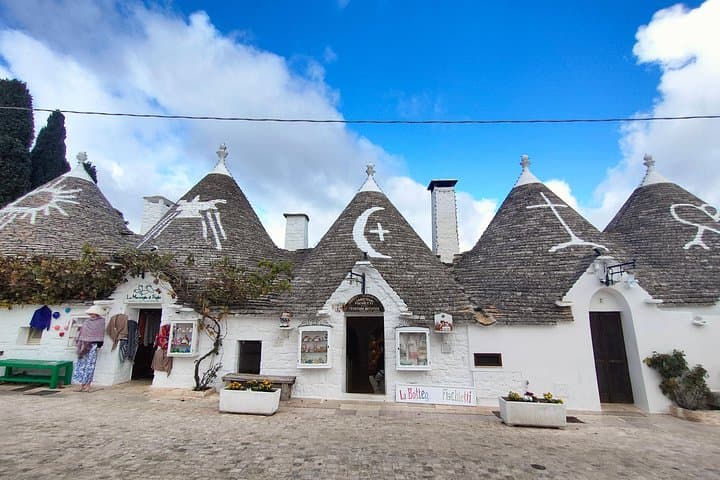
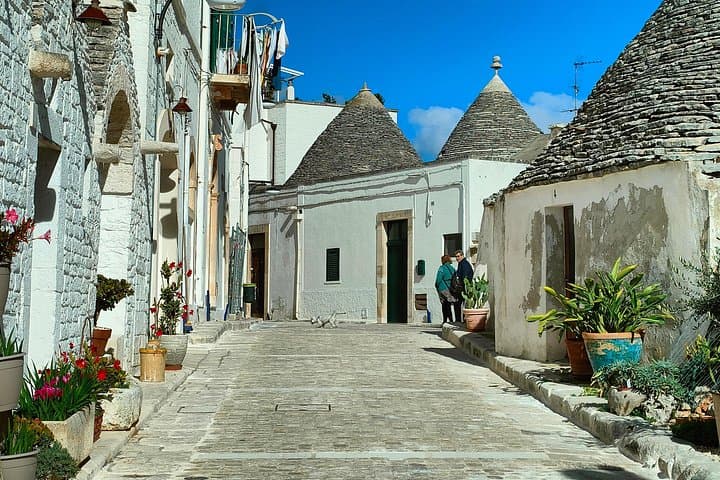
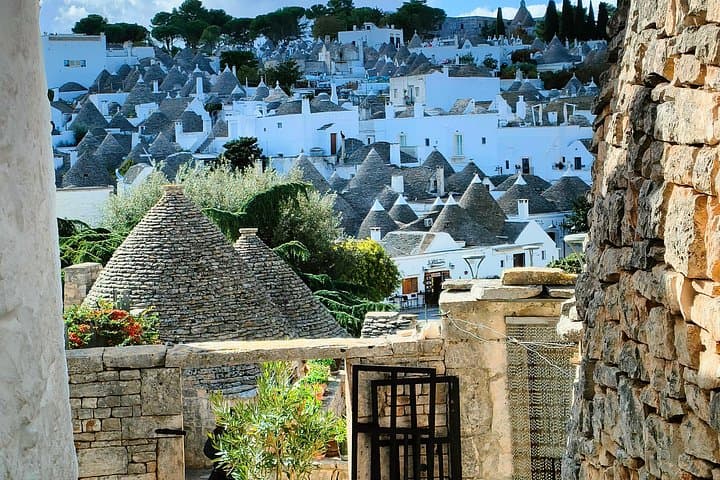
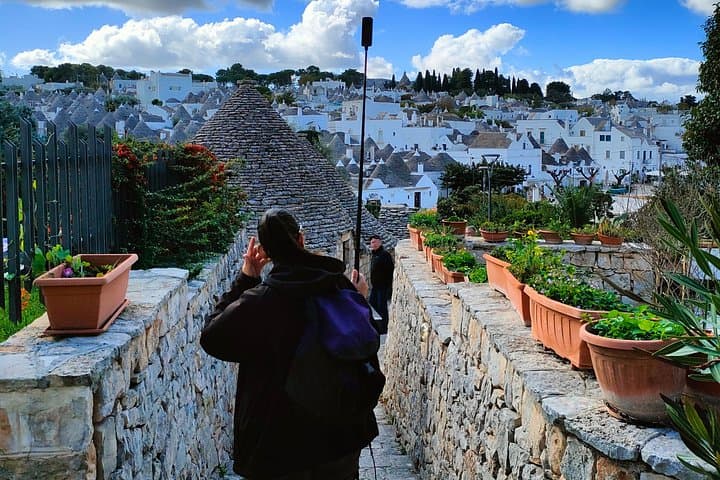
Matera’s Sassi are living architecture carved from soft limestone and calcarenite over millennia—cave dwellings, chapels and narrow alleys shaped by human hands since prehistoric times. The city’s recent life as European Capital of Culture (2019) sits beside an older story of rural poverty and mass resettlement, now reversed by careful restoration and museums like Casa Grotta. Across the plain, Alberobello’s whitewashed trulli rise with their conical roofs, a dry‑stone craft codified in the 17th–18th centuries and recognized by UNESCO in 1996; the Sovereign Trullo offers a rare interior glimpse into that tradition.
Geology and vernacular technique meet: soft rock in Matera allowed cave carving, while the stacked limestone of Puglia produced trulli without mortar. Culturally, both towns feel intimate—shops, workshops and cafes thread through the tourist routes rather than dominate them.
Practically: this is a full 10‑hour day with periods on foot over uneven cobbles and low steps. Expect guided entry to a Casa Grotta and the Trullo Sovrano, time for photos, and a break for lunch in local cafés. Bring water, sturdy shoes, and a light layer for coastal winds; the tour includes air‑conditioned transport between sites. Keep to marked paths, respect private homes, and pace your day to absorb two very different UNESCO stories.
The tour runs about 10 hours and includes transport in an air‑conditioned vehicle, a guided visit of Matera’s Sassi with Casa Grotta, and entry to the Trullo Sovrano in Alberobello.
Walking is moderate but on uneven cobbles and steps; participants should be steady on their feet but no special fitness is required.
Lunch is typically not included—guides usually allow time for a café or restaurant stop so you can choose local dishes.
Yes—the tour departs from Bari and nearby coastal towns; check your booking confirmation for the listed pickup points and times.
Sofia Experiences operates guided outdoor trips and adventures with an emphasis on safety, stewardship, and memorable experiences.
Morning light slides across honey-colored stone as the minivan eases into Matera’s labyrinth. The air smells faintly of espresso and warm bread; stairways hew themselves from rock, and the town seems to have grown out of the ground rather than atop it.
Morning light slides across honey-colored stone as the minivan eases into Matera’s labyrinth. The air smells faintly of espresso and warm bread; stairways hew themselves from rock, and the town seems to have grown out of the ground rather than atop it.
Matera’s Sassi are living architecture carved from soft limestone and calcarenite over millennia—cave dwellings, chapels and narrow alleys shaped by human hands since prehistoric times. The city’s recent life as European Capital of Culture (2019) sits beside an older story of rural poverty and mass resettlement, now reversed by careful restoration and museums like Casa Grotta. Across the plain, Alberobello’s whitewashed trulli rise with their conical roofs, a dry‑stone craft codified in the 17th–18th centuries and recognized by UNESCO in 1996; the Sovereign Trullo offers a rare interior glimpse into that tradition.
Geology and vernacular technique meet: soft rock in Matera allowed cave carving, while the stacked limestone of Puglia produced trulli without mortar. Culturally, both towns feel intimate—shops, workshops and cafes thread through the tourist routes rather than dominate them.
Practically: this is a full 10‑hour day with periods on foot over uneven cobbles and low steps. Expect guided entry to a Casa Grotta and the Trullo Sovrano, time for photos, and a break for lunch in local cafés. Bring water, sturdy shoes, and a light layer for coastal winds; the tour includes air‑conditioned transport between sites. Keep to marked paths, respect private homes, and pace your day to absorb two very different UNESCO stories.