THE ADVENTURE COLLECTIVE® · Independent discovery and booking for outdoor travel

Spend a day exploring Grottaglie’s colorful pottery quarter and Matera’s ancient Sassi carved into limestone. This guided van tour from Lecce packs geology, craft, and centuries of daily life into a single, manageable itinerary.
Spend a day exploring Grottaglie’s colorful pottery quarter and Matera’s ancient Sassi carved into limestone. This guided van tour from Lecce packs geology, craft, and centuries of daily life into a single, manageable itinerary.
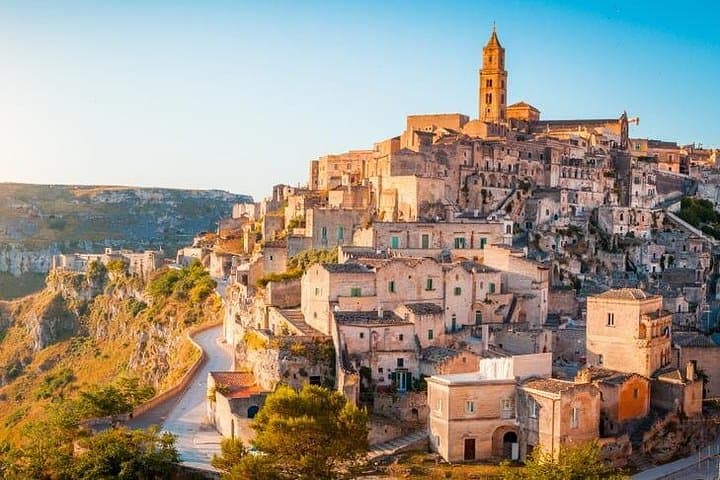
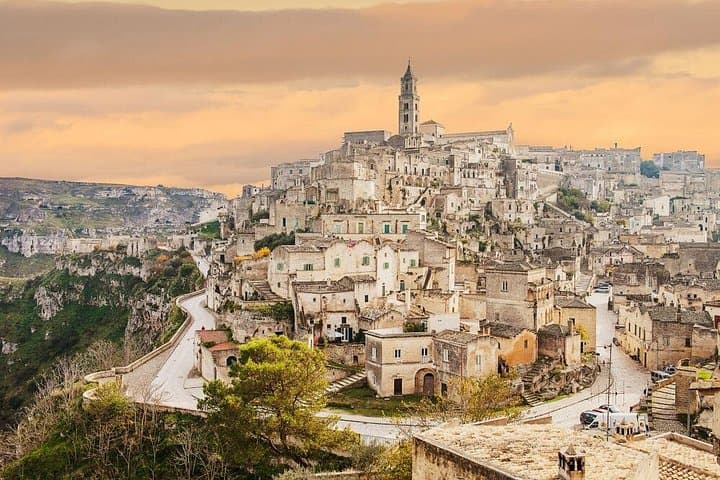
You step out of a nine-seat van into a wash of limestone light: narrow streets cut into rock, churches hewn from the hillside, and the distant Murge plateau rolling away under a broad Apulian sky.
Verified experiences and guided adventures in the surrounding area.
Operated by myTour in Italy · Matera, Basilicata
You step out of a nine-seat van into a wash of limestone light: narrow streets cut into rock, churches hewn from the hillside, and the distant Murge plateau rolling away under a broad Apulian sky.
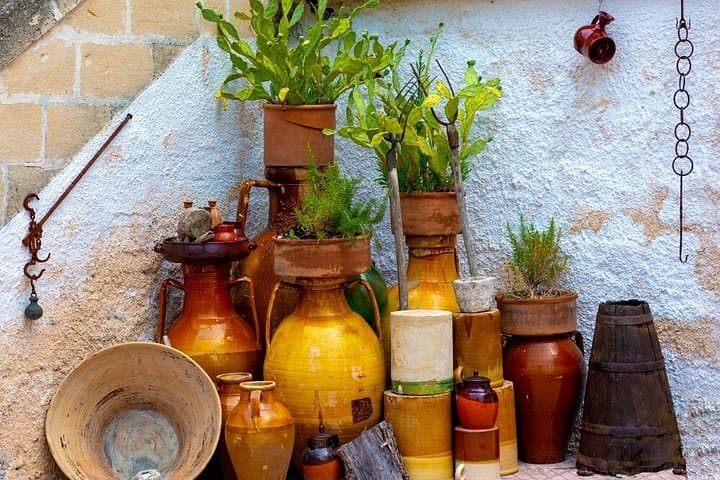
The route links two contrasting but connected histories. Grottaglie opens the morning with its bright ceramic workshops and cobbled lanes where pottery kilns still steam; the town is a working craft center that keeps traditional glazes and forms alive. By afternoon Matera unfolds — the Sassi, dwellings carved into calcarenite and tufaceous limestone, reveal a living chronology from prehistoric caves to Baroque facades. Geologically, the Murge and Matera’s ravines are karst landscapes: soluble rock sculpted by water that produced caves, ravines and the distinctive honey-colored stone of the region.
Culture here is tactile: chapels with fresco fragments, family-run botteghe, and plazas where food and conversation are central. Matera’s UNESCO status and its role as European Capital of Culture 2019 have focused restoration and visitor care, but much of the city retains an intimate, uneven scale.
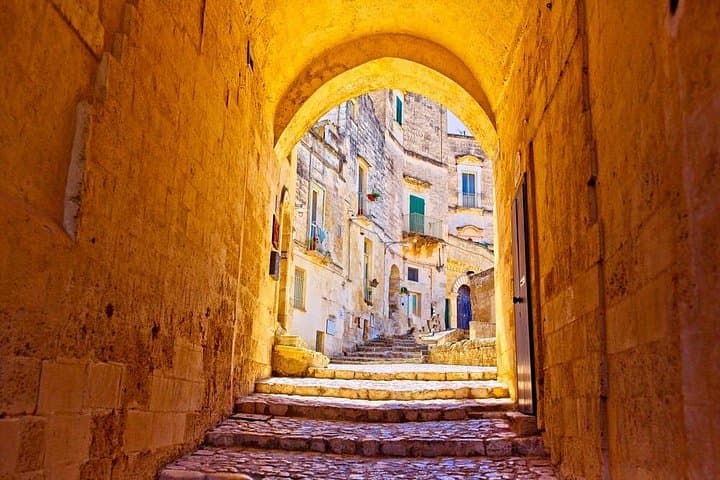
Practical notes: expect 9 hours total with about 3–4 hours in Matera and a shorter stop in Grottaglie. Surfaces are irregular — stone steps, narrow alleys and occasional steep ramps — so sturdy shoes and steady footing matter. Bring water, sun protection in summer, and cash for small artisan purchases. The tour is driven by a professional, making this a compact way to see both ceramics and cave-dwellings in a single, well-paced day.
The tour departs from Lecce in the morning (around 9:00 AM) and returns to Lecce the same day at approximately 6:00 PM.
You’ll spend around 3–4 hours on foot in Matera moving through narrow streets and steps; the walk is at a relaxed pace but over irregular terrain.
The tour notes stroller accessibility for short distances, but many alleys and caves have steps — infants may need to be carried in places.
This tour provides time to explore but does not typically include paid museum admissions; check the operator’s details before booking.
myTour in Italy operates guided outdoor trips and adventures with an emphasis on safety, stewardship, and memorable experiences.
You step out of a nine-seat van into a wash of limestone light: narrow streets cut into rock, churches hewn from the hillside, and the distant Murge plateau rolling away under a broad Apulian sky.
You step out of a nine-seat van into a wash of limestone light: narrow streets cut into rock, churches hewn from the hillside, and the distant Murge plateau rolling away under a broad Apulian sky.
The route links two contrasting but connected histories. Grottaglie opens the morning with its bright ceramic workshops and cobbled lanes where pottery kilns still steam; the town is a working craft center that keeps traditional glazes and forms alive. By afternoon Matera unfolds — the Sassi, dwellings carved into calcarenite and tufaceous limestone, reveal a living chronology from prehistoric caves to Baroque facades. Geologically, the Murge and Matera’s ravines are karst landscapes: soluble rock sculpted by water that produced caves, ravines and the distinctive honey-colored stone of the region.
Culture here is tactile: chapels with fresco fragments, family-run botteghe, and plazas where food and conversation are central. Matera’s UNESCO status and its role as European Capital of Culture 2019 have focused restoration and visitor care, but much of the city retains an intimate, uneven scale.
Practical notes: expect 9 hours total with about 3–4 hours in Matera and a shorter stop in Grottaglie. Surfaces are irregular — stone steps, narrow alleys and occasional steep ramps — so sturdy shoes and steady footing matter. Bring water, sun protection in summer, and cash for small artisan purchases. The tour is driven by a professional, making this a compact way to see both ceramics and cave-dwellings in a single, well-paced day.