THE ADVENTURE COLLECTIVE® · Independent discovery and booking for outdoor travel

Drive from Fez into the cool cedar groves of Morocco’s Middle Atlas on a private day tour that visits Imouzar’s caves, Ifrane’s alpine streets and Azrou’s markets. Expect cedar forests, Barbary macaques and short walks at altitude.
Drive from Fez into the cool cedar groves of Morocco’s Middle Atlas on a private day tour that visits Imouzar’s caves, Ifrane’s alpine streets and Azrou’s markets. Expect cedar forests, Barbary macaques and short walks at altitude.
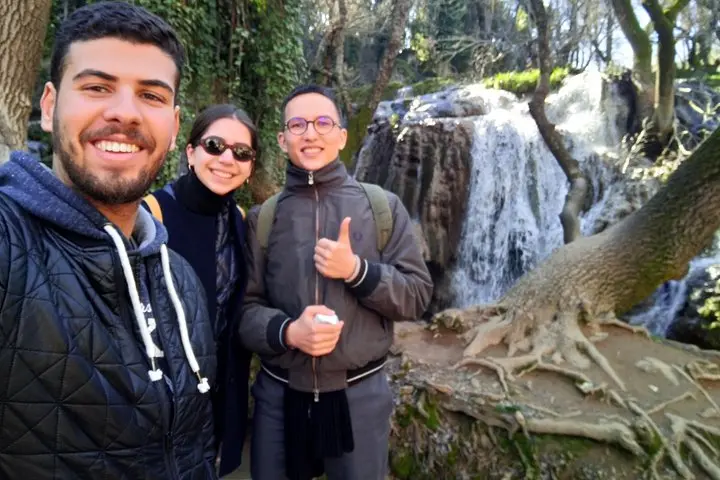
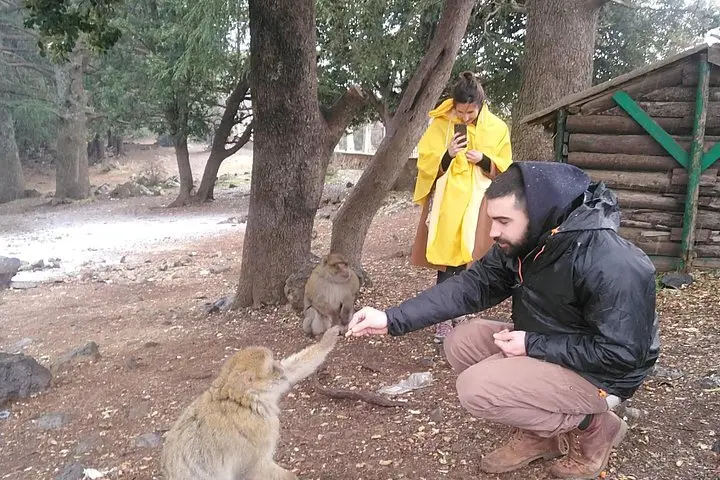
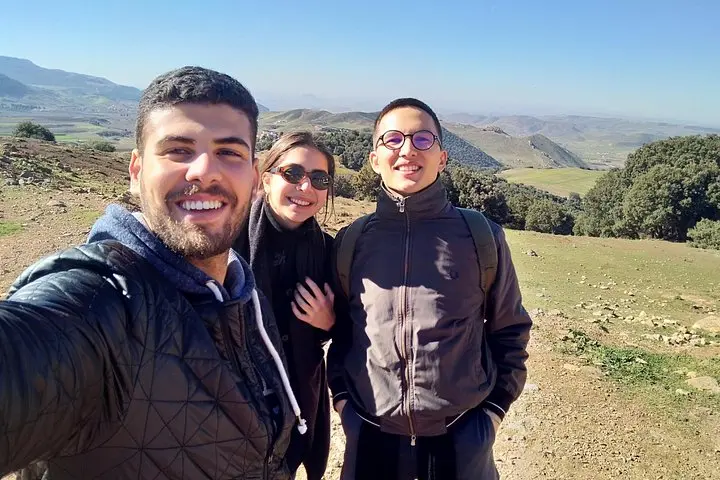
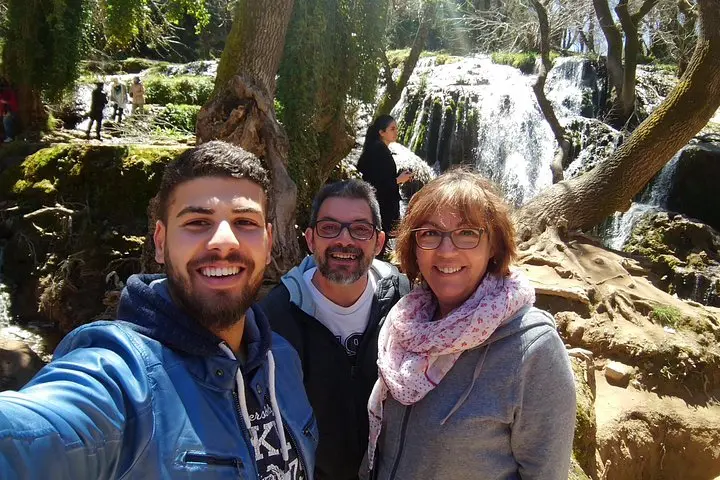
Morning light over Fez lifts the city’s pulse as the road climbs into the Middle Atlas, trading riad roofs for cedar trunks and cooler air. You drive from roughly 400 m in the Fes basin up toward Ifrane at 1,650 m, windows down to the scent of resin and earth. Small villages appear—Imouzar’s caves and a roadside place for mint tea—before a ribbon of road breaks through dense cedar that frames the long, dexterous leaps of the Barbary macaques.
Verified experiences and guided adventures in the surrounding area.
Operated by Touria Tours · Fez, Fès-Meknès
Morning light over Fez lifts the city’s pulse as the road climbs into the Middle Atlas, trading riad roofs for cedar trunks and cooler air. You drive from roughly 400 m in the Fes basin up toward Ifrane at 1,650 m, windows down to the scent of resin and earth. Small villages appear—Imouzar’s caves and a roadside place for mint tea—before a ribbon of road breaks through dense cedar that frames the long, dexterous leaps of the Barbary macaques.
Geology here is compact and high: the Middle Atlas is older, folded limestone and volcanic outcrops that gather winter snow and feed the region’s springs. Culture is overt and straightforward—Berber villages like Azrou showcase woodwork, handwoven carpets, and a market life that still trades by voice and gesture. Ifrane’s European-style architecture reflects a 20th-century effort to create a mountain retreat at altitude, while older Berber uses of caves and cedar groves remind you this is a lived landscape.
Practically, expect 7–8 hours of touring with multiple short stops and two moderate walks on uneven forest tracks; total driving roughly 130–160 km round-trip. Trails are mostly short and not technical, but pack layers—the temperature can swing a few degrees every hour—and a sturdy pair of shoes. Carry water, small cash for markets, and give macaques space: do not feed them. Schedule mornings for clearer light and easier animal viewing; afternoons can cloud over or bring rain in shoulder seasons.
The tour runs about 7–8 hours with multiple stops; expect roughly 130–160 km round-trip depending on the exact route and detours.
The standard inclusions list private transport and bottled water; verify with your operator whether lunch or site entry fees are included before booking.
Yes—macaques are commonly seen in the cedar forests, but encounters are unpredictable; maintain distance and do not feed them.
The tour is marketed as suitable for most fitness levels, but it involves short walks on uneven ground and multiple vehicle transfers—ask the operator about accessible options.
Touria Tours operates guided outdoor trips and adventures with an emphasis on safety, stewardship, and memorable experiences.
Morning light over Fez lifts the city’s pulse as the road climbs into the Middle Atlas, trading riad roofs for cedar trunks and cooler air. You drive from roughly 400 m in the Fes basin up toward Ifrane at 1,650 m, windows down to the scent of resin and earth. Small villages appear—Imouzar’s caves and a roadside place for mint tea—before a ribbon of road breaks through dense cedar that frames the long, dexterous leaps of the Barbary macaques.
Morning light over Fez lifts the city’s pulse as the road climbs into the Middle Atlas, trading riad roofs for cedar trunks and cooler air. You drive from roughly 400 m in the Fes basin up toward Ifrane at 1,650 m, windows down to the scent of resin and earth. Small villages appear—Imouzar’s caves and a roadside place for mint tea—before a ribbon of road breaks through dense cedar that frames the long, dexterous leaps of the Barbary macaques.
Geology here is compact and high: the Middle Atlas is older, folded limestone and volcanic outcrops that gather winter snow and feed the region’s springs. Culture is overt and straightforward—Berber villages like Azrou showcase woodwork, handwoven carpets, and a market life that still trades by voice and gesture. Ifrane’s European-style architecture reflects a 20th-century effort to create a mountain retreat at altitude, while older Berber uses of caves and cedar groves remind you this is a lived landscape.
Practically, expect 7–8 hours of touring with multiple short stops and two moderate walks on uneven forest tracks; total driving roughly 130–160 km round-trip. Trails are mostly short and not technical, but pack layers—the temperature can swing a few degrees every hour—and a sturdy pair of shoes. Carry water, small cash for markets, and give macaques space: do not feed them. Schedule mornings for clearer light and easier animal viewing; afternoons can cloud over or bring rain in shoulder seasons.