THE ADVENTURE COLLECTIVE® · Independent discovery and booking for outdoor travel

A full-day tour from Zagreb that pairs Nin’s ancient salt pans, healing mud and Queen’s Beach with Zadar’s Roman forum, Sea Organ and market life. Expect a long but rewarding day of history, coastal landscapes and sensory seaside moments.
A full-day tour from Zagreb that pairs Nin’s ancient salt pans, healing mud and Queen’s Beach with Zadar’s Roman forum, Sea Organ and market life. Expect a long but rewarding day of history, coastal landscapes and sensory seaside moments.
Morning light lifts off the shallow lagoon around Nin and the salt pans glitter like a map of old trades. You step from an air-conditioned coach onto flat, sun-warmed boards where wind from the Velebit mountain pushes across salt fields and the sea organ down in Zadar answers with a thin, unpredictable chord.
Verified experiences and guided adventures in the surrounding area.
Operated by Dabi Abu · Zadar, Zadar County
Morning light lifts off the shallow lagoon around Nin and the salt pans glitter like a map of old trades. You step from an air-conditioned coach onto flat, sun-warmed boards where wind from the Velebit mountain pushes across salt fields and the sea organ down in Zadar answers with a thin, unpredictable chord.
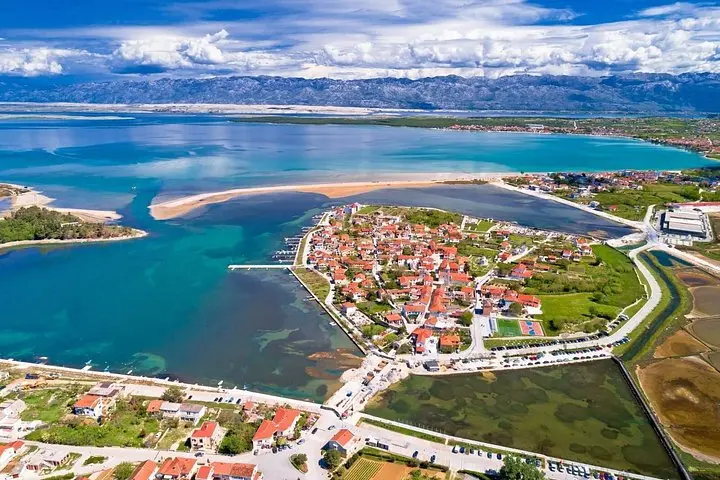
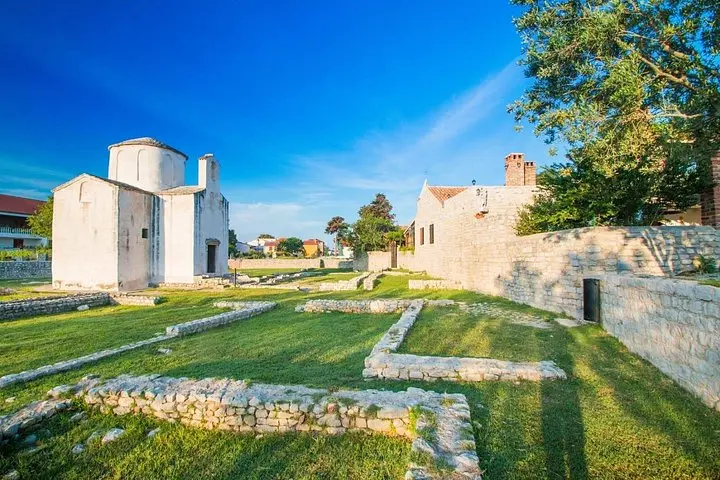
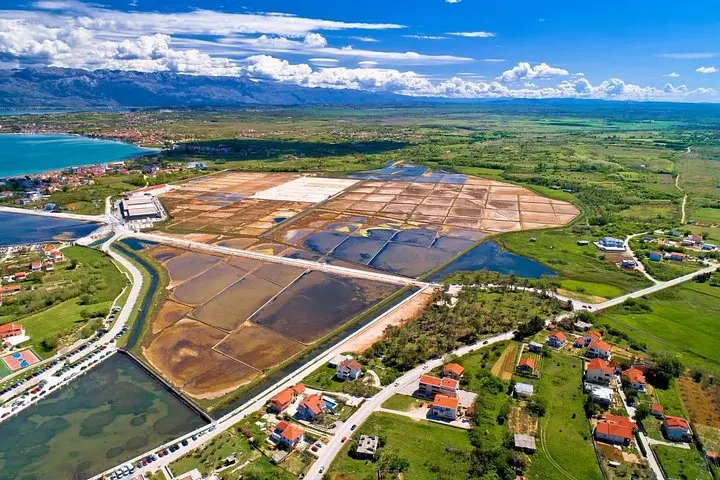
Nin is compact but layered: Roman and Illyrian remains underfoot, a tiny Romanesque Church of St. Nicholas sitting on an earthen mound where medieval kings once performed rites, and the Solana salt pans whose handcrafted pans echo 1,500 years of local industry. Queen’s Beach stretches as pale sand and shallow warm water — the mud flats to the east have been used as a therapeutic resource for decades. Thirty minutes away, Zadar’s peninsula opens with a Roman forum, the circular pre-Romanesque Church of St. Donatus, and the contemporary installations of the Sea Organ and Greetings to the Sun, where human design hands the performance over to wind and tide.
Expect constant contrasts: compact medieval streets, open salt flats, and coastal promenades. Plan for a long day (this itinerary runs roughly 12–13 hours from Zagreb), so prioritize sun protection, comfortable shoes, and a swimsuit if you want a quick dip or mud therapy. Bring some local currency for small purchases and allow time at the markets for fresh produce.
Practical rhythm: linger at the salt museum to watch traditional salt harvesting, time your visit to the Sea Organ for mid-afternoon or sunset, and keep a light pack for boardwalks and cobbled streets. The trip balances history, simple geology, and the raw sounds of the Adriatic — a day that moves between human craft and the sea’s own voice.
The scheduled tour is about 12–13 hours and departs from Zagreb; travel time to the coast is roughly three hours one way by road.
Yes—most itineraries include a stop at Queen’s Beach and the mud site; bring a swimsuit and a towel if you want to participate.
Admission to the salt museum and some sites may be included per itinerary; meals are typically not included—bring cash or expect to buy food at local markets and cafes.
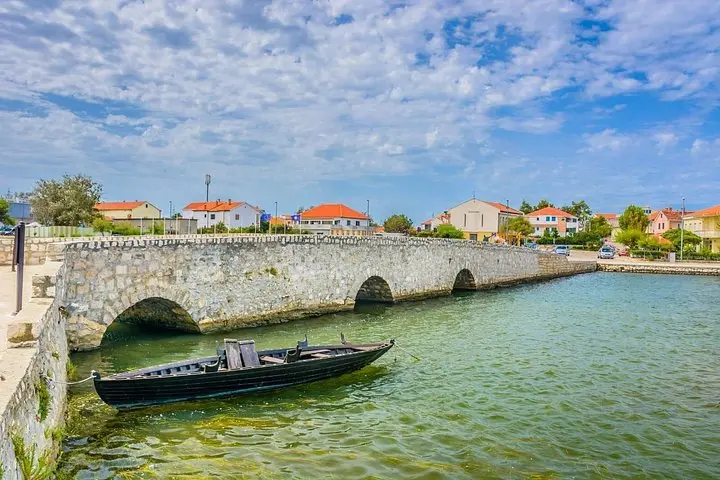
The tour is rated easy, but cobbled streets, bridges in Nin, and some uneven salt-pan boardwalks can be challenging—check with the operator for specific accessibility arrangements.
Dabi Abu operates guided outdoor trips and adventures with an emphasis on safety, stewardship, and memorable experiences.
Morning light lifts off the shallow lagoon around Nin and the salt pans glitter like a map of old trades. You step from an air-conditioned coach onto flat, sun-warmed boards where wind from the Velebit mountain pushes across salt fields and the sea organ down in Zadar answers with a thin, unpredictable chord.
Morning light lifts off the shallow lagoon around Nin and the salt pans glitter like a map of old trades. You step from an air-conditioned coach onto flat, sun-warmed boards where wind from the Velebit mountain pushes across salt fields and the sea organ down in Zadar answers with a thin, unpredictable chord.
Nin is compact but layered: Roman and Illyrian remains underfoot, a tiny Romanesque Church of St. Nicholas sitting on an earthen mound where medieval kings once performed rites, and the Solana salt pans whose handcrafted pans echo 1,500 years of local industry. Queen’s Beach stretches as pale sand and shallow warm water — the mud flats to the east have been used as a therapeutic resource for decades. Thirty minutes away, Zadar’s peninsula opens with a Roman forum, the circular pre-Romanesque Church of St. Donatus, and the contemporary installations of the Sea Organ and Greetings to the Sun, where human design hands the performance over to wind and tide.
Expect constant contrasts: compact medieval streets, open salt flats, and coastal promenades. Plan for a long day (this itinerary runs roughly 12–13 hours from Zagreb), so prioritize sun protection, comfortable shoes, and a swimsuit if you want a quick dip or mud therapy. Bring some local currency for small purchases and allow time at the markets for fresh produce.
Practical rhythm: linger at the salt museum to watch traditional salt harvesting, time your visit to the Sea Organ for mid-afternoon or sunset, and keep a light pack for boardwalks and cobbled streets. The trip balances history, simple geology, and the raw sounds of the Adriatic — a day that moves between human craft and the sea’s own voice.