THE ADVENTURE COLLECTIVE® · Independent discovery and booking for outdoor travel

A fast ferry from Kos drops you into Mandraki’s quiet harbor and an island defined by volcanic drama. Spend a day descending into the Stefanos crater, climbing to a mountaintop monastery, and exploring narrow lanes before the return crossing.
A fast ferry from Kos drops you into Mandraki’s quiet harbor and an island defined by volcanic drama. Spend a day descending into the Stefanos crater, climbing to a mountaintop monastery, and exploring narrow lanes before the return crossing.
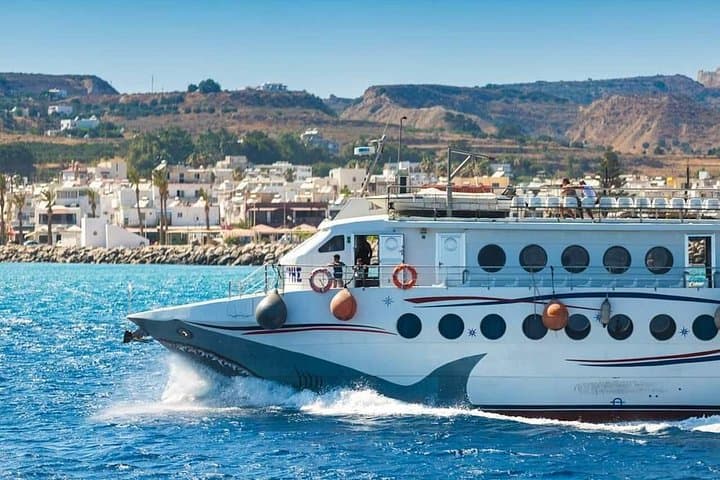
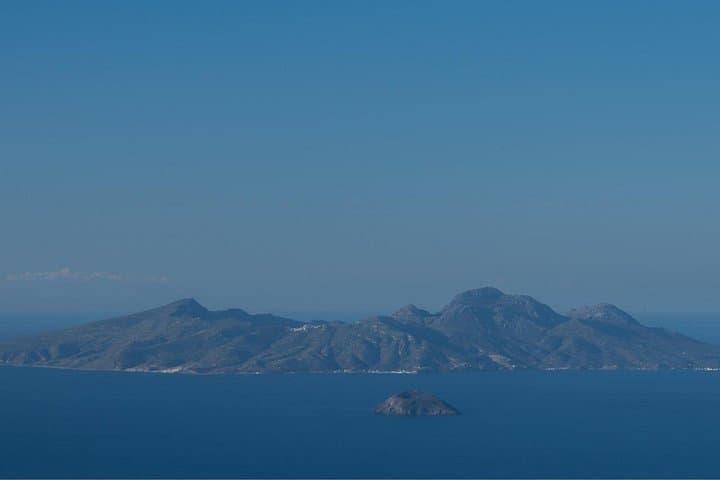
You step aboard the Captain Dimitris as the harbor of Kardamena shrinks behind you — the Aegean opens, flat and steel-blue, while Nisyros rises from the horizon like a dark crown. The crossing takes about 45–60 minutes; gulls wheel and the boat leans into the swell. Arriving at Mandraki, whitewashed houses and a small harbor offer immediate contrast to the raw geology inland.
Verified experiences and guided adventures in the surrounding area.
Operated by SAIL AWAY TOURS · Mandraki, South Aegean
You step aboard the Captain Dimitris as the harbor of Kardamena shrinks behind you — the Aegean opens, flat and steel-blue, while Nisyros rises from the horizon like a dark crown. The crossing takes about 45–60 minutes; gulls wheel and the boat leans into the swell. Arriving at Mandraki, whitewashed houses and a small harbor offer immediate contrast to the raw geology inland.
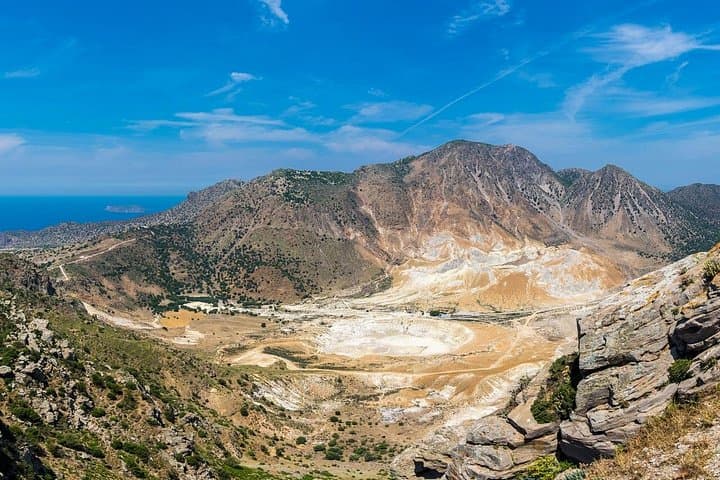
Nisyros is one of the Dodecanese’s smallest volcanic islands, shaped by repeated eruptions and fumarolic activity. The island’s most dramatic feature is the Stefanos crater — a rim you can peer into where sulfur springs hiss and the ground seems to breathe. Human history here is layered: Byzantine and Venetian traces sit alongside the mountain monastery of Panagia Spiliani, reached by roughly 200 stone steps that reward you with sweeping views of the caldera and sea.
On a standard day trip you’ll have about five hours ashore — enough time for the optional bus ride up to the crater rim, a short descent into the volcanic floor for the sulfur vents, and a wander through Mandraki’s narrow lanes. Expect uneven paths, loose volcanic rock, and sharp sun; the crater’s smell of sulfur is unmistakable and part of the experience.
Practical notes: wear sturdy shoes, bring 1–2 liters of water, sun protection, and some cash for local snacks or bus transfers. If you’re prone to seasickness or have cardiovascular concerns, consult your doctor — operators advise caution. Plan to move at a relaxed pace: the island rewards steady steps and curiosity, not haste.
The crossing from Kardamena to Nisyros takes roughly 45–60 minutes depending on sea conditions.
Access to the crater is typically optional and may require a short bus transfer or guide — confirm whether this is included or priced as an extra with your operator.
The island includes uneven paths, stairs (around 200 to the monastery), and loose volcanic terrain; it’s not recommended for travelers with significant mobility limitations.
Greece uses the euro and Greek is the local language; English is commonly spoken in tourist services and tavernas.
SAIL AWAY TOURS operates guided outdoor trips and adventures with an emphasis on safety, stewardship, and memorable experiences.
You step aboard the Captain Dimitris as the harbor of Kardamena shrinks behind you — the Aegean opens, flat and steel-blue, while Nisyros rises from the horizon like a dark crown. The crossing takes about 45–60 minutes; gulls wheel and the boat leans into the swell. Arriving at Mandraki, whitewashed houses and a small harbor offer immediate contrast to the raw geology inland.
You step aboard the Captain Dimitris as the harbor of Kardamena shrinks behind you — the Aegean opens, flat and steel-blue, while Nisyros rises from the horizon like a dark crown. The crossing takes about 45–60 minutes; gulls wheel and the boat leans into the swell. Arriving at Mandraki, whitewashed houses and a small harbor offer immediate contrast to the raw geology inland.
Nisyros is one of the Dodecanese’s smallest volcanic islands, shaped by repeated eruptions and fumarolic activity. The island’s most dramatic feature is the Stefanos crater — a rim you can peer into where sulfur springs hiss and the ground seems to breathe. Human history here is layered: Byzantine and Venetian traces sit alongside the mountain monastery of Panagia Spiliani, reached by roughly 200 stone steps that reward you with sweeping views of the caldera and sea.
On a standard day trip you’ll have about five hours ashore — enough time for the optional bus ride up to the crater rim, a short descent into the volcanic floor for the sulfur vents, and a wander through Mandraki’s narrow lanes. Expect uneven paths, loose volcanic rock, and sharp sun; the crater’s smell of sulfur is unmistakable and part of the experience.
Practical notes: wear sturdy shoes, bring 1–2 liters of water, sun protection, and some cash for local snacks or bus transfers. If you’re prone to seasickness or have cardiovascular concerns, consult your doctor — operators advise caution. Plan to move at a relaxed pace: the island rewards steady steps and curiosity, not haste.