THE ADVENTURE COLLECTIVE® · Independent discovery and booking for outdoor travel

Drive from Nizwa up into the Hajar Mountains to the rim of Jebel Shams and peer into Wadi Ghul — Oman's dramatic 'Grand Canyon.' This full‑day excursion blends market culture, historic forts, and high‑alpine geology with straightforward logistics for active travelers.
Drive from Nizwa up into the Hajar Mountains to the rim of Jebel Shams and peer into Wadi Ghul — Oman's dramatic 'Grand Canyon.' This full‑day excursion blends market culture, historic forts, and high‑alpine geology with straightforward logistics for active travelers.
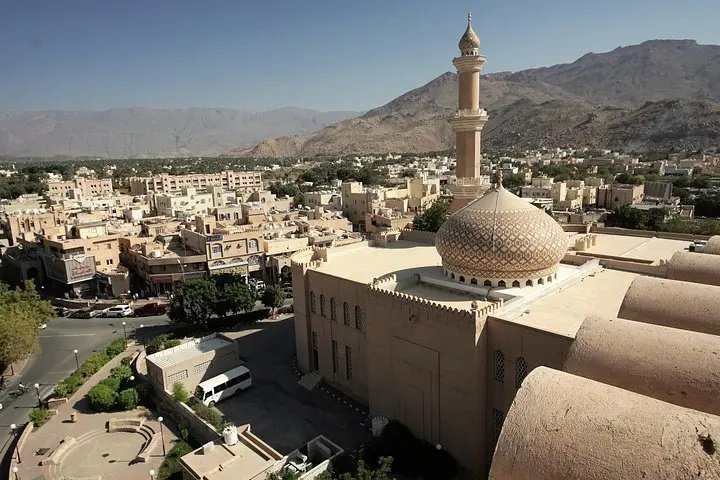
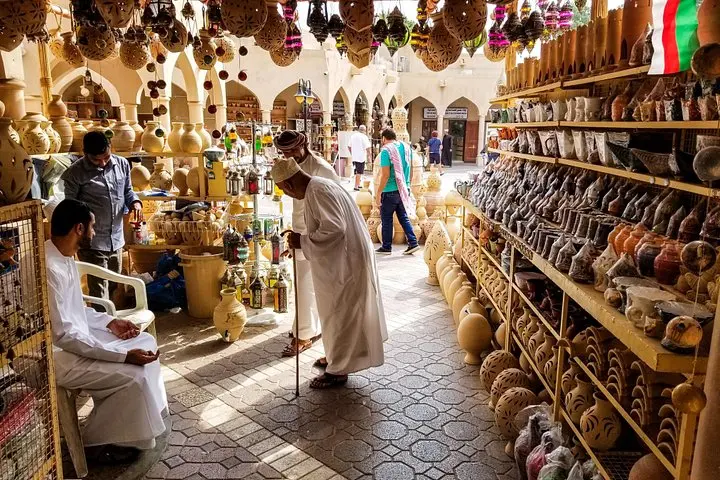
Morning light on the Hajar Mountains slices the desert air as a low-slung minivan threads a road carved into the limestone spine of northern Oman. By midmorning the town of Nizwa comes into view — its round fort rising above a fragrant souq where silver and khanjar blades catch the sun and goats quietly await their buyers.
Verified experiences and guided adventures in the surrounding area.
Operated by Old Muscat Tourism · Nizwa, A'Dakhiliyah
Morning light on the Hajar Mountains slices the desert air as a low-slung minivan threads a road carved into the limestone spine of northern Oman. By midmorning the town of Nizwa comes into view — its round fort rising above a fragrant souq where silver and khanjar blades catch the sun and goats quietly await their buyers.
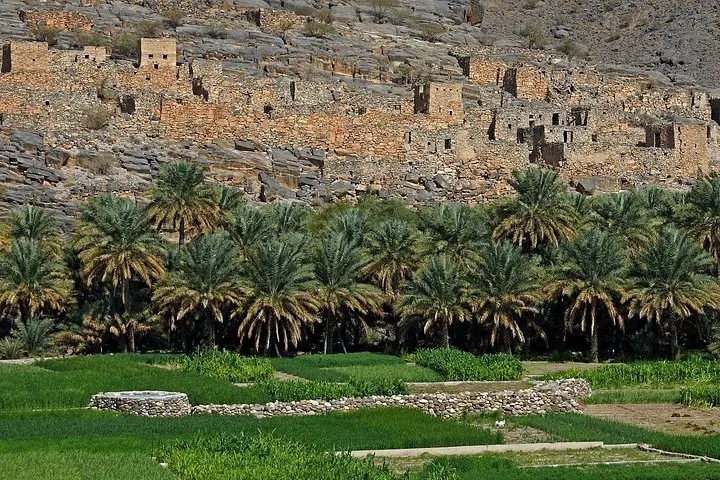
Nizwa was an early capital and an intellectual hub in Oman; its seventeenth‑century fort still commands the old quarter. Beyond the town the road climbs toward Al Hamra and the rim of Jebel Shams, Oman’s highest massif. Geologically, the range is folded, uplifted limestone and shale; deep canyons like Wadi Ghul (the so‑called Oman “Grand Canyon”) expose layers of ancient seabed pushed skyward.
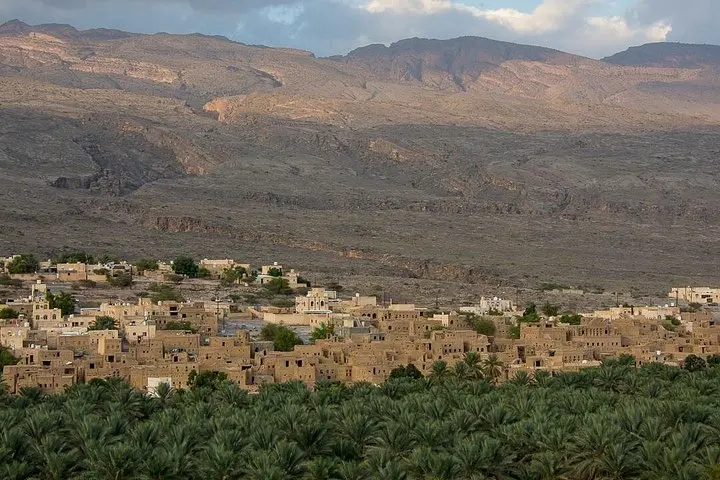
Culture here is tangible — adobe houses with palm‑beam ceilings, tight community souqs, and tea shared under acacia shade. Landscapes seem to have personality: the canyon’s wind dares you close to the edge, while the cool mountain air pushes back at the valley heat.
Practical guidance: expect an 8–9 hour day with long, comfortable drives and short, steep viewpoints; bring sun protection, sturdy shoes for rocky viewpoints, and at least 1.5–2 liters of water. If you stop for the rim walk, be cautious of loose rock and sudden gusts. Photography windows favor low morning or late afternoon sun. Dress conservatively in town out of cultural respect. If you’re sensitive to altitude or have heart concerns, consult a guide before the climb to 2,000 m.
This trip mixes cultural weathering and raw mountain geology — a compact, manageable way to see Oman’s high places in a day.
The excursion is about 8–9 hours with several hours of roundtrip driving from the departure city plus short stops in Nizwa, Al Hamra and Jebel Shams viewpoints.
The tour includes Nizwa Fort entrance and a local restaurant lunch; bottled water and an English speaking guide are also provided.
Short visits to markets and the fort are accessible, but the canyon viewpoints have uneven ground; infants may ride in strollers during vehicle time but some walking is required.
Road access reaches about 2,000 m; some visitors notice mild breathlessness if unaccustomed to altitude—those with heart or respiratory conditions should consult their doctor.
Old Muscat Tourism operates guided outdoor trips and adventures with an emphasis on safety, stewardship, and memorable experiences.
Morning light on the Hajar Mountains slices the desert air as a low-slung minivan threads a road carved into the limestone spine of northern Oman. By midmorning the town of Nizwa comes into view — its round fort rising above a fragrant souq where silver and khanjar blades catch the sun and goats quietly await their buyers.
Morning light on the Hajar Mountains slices the desert air as a low-slung minivan threads a road carved into the limestone spine of northern Oman. By midmorning the town of Nizwa comes into view — its round fort rising above a fragrant souq where silver and khanjar blades catch the sun and goats quietly await their buyers.
Nizwa was an early capital and an intellectual hub in Oman; its seventeenth‑century fort still commands the old quarter. Beyond the town the road climbs toward Al Hamra and the rim of Jebel Shams, Oman’s highest massif. Geologically, the range is folded, uplifted limestone and shale; deep canyons like Wadi Ghul (the so‑called Oman “Grand Canyon”) expose layers of ancient seabed pushed skyward.
Culture here is tangible — adobe houses with palm‑beam ceilings, tight community souqs, and tea shared under acacia shade. Landscapes seem to have personality: the canyon’s wind dares you close to the edge, while the cool mountain air pushes back at the valley heat.
Practical guidance: expect an 8–9 hour day with long, comfortable drives and short, steep viewpoints; bring sun protection, sturdy shoes for rocky viewpoints, and at least 1.5–2 liters of water. If you stop for the rim walk, be cautious of loose rock and sudden gusts. Photography windows favor low morning or late afternoon sun. Dress conservatively in town out of cultural respect. If you’re sensitive to altitude or have heart concerns, consult a guide before the climb to 2,000 m.
This trip mixes cultural weathering and raw mountain geology — a compact, manageable way to see Oman’s high places in a day.