THE ADVENTURE COLLECTIVE® · Independent discovery and booking for outdoor travel

Escape Marrakech for a full‑day private drive into the Middle Atlas to witness Ouzoud’s 110‑meter waterfalls, walk forested trails, and sip mint tea at riverside cafés. This practical guide covers what to expect on the hike, how to photograph the falls, and tips for handling the resident macaques.
Escape Marrakech for a full‑day private drive into the Middle Atlas to witness Ouzoud’s 110‑meter waterfalls, walk forested trails, and sip mint tea at riverside cafés. This practical guide covers what to expect on the hike, how to photograph the falls, and tips for handling the resident macaques.
The road north from Marrakech unspools through olive groves, then rises into the low flanks of the Middle Atlas. By midmorning the minivan pulls up at a small village rim and the roar becomes obvious before you see the falls: Ouzoud’s cataracts announce themselves as a vertical line of white, spray catching light into a steady rainbow that seems to follow the water down.
Verified experiences and guided adventures in the surrounding area.
Operated by Morocco today travel · Azilal, Béni Mellal-Khénifra
The road north from Marrakech unspools through olive groves, then rises into the low flanks of the Middle Atlas. By midmorning the minivan pulls up at a small village rim and the roar becomes obvious before you see the falls: Ouzoud’s cataracts announce themselves as a vertical line of white, spray catching light into a steady rainbow that seems to follow the water down.
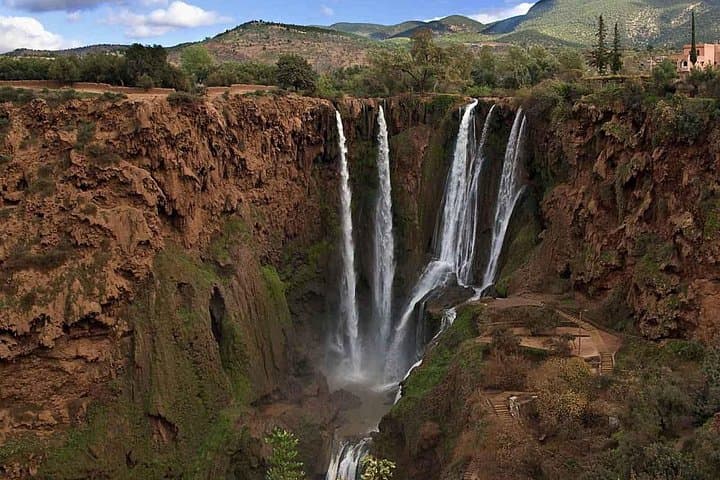
On this private day trip the narrative is simple—three hours of winding drive, two hours at the falls and time to breathe in between. The river El Abid has carved a 110‑meter drop through limestone and red earth; terraces of rock and scrub steer the cascades into multiple streams before they rejoin and continue toward the plain. Geologically, Ouzoud sits at a transition between the high Atlas massif’s folded sedimentary layers and lower volcanic outcrops, which is why the falls spread into tiers instead of one sheer face.
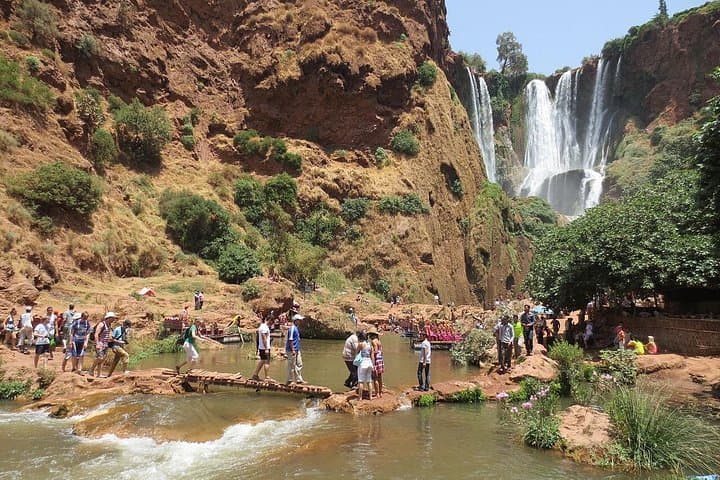
Human history here is just as tangible. Berber communities have farmed the plateau for centuries; olive trees you pass en route are the product of those same terraces. Small cafés cluster near the stream, their tables balanced on stone ledges where locals pour mint tea and fry simple tagines for visitors. Barbary macaques patrol the picnic areas—charismatic and curious, they are part of the scene but not pets.
The walk from village to viewpoint is about 1–2 km each way with roughly 150 m of elevation change: a steady descent on dirt paths, stone steps and occasional slick rock at the edges. Expect uneven footing and short steep stretches—nothing technical, but the return climb is brisk. The reward is multi‑angle vantage points: a top rim that frames the full drop, ledges beside the torrent where spray cools the air, and lower pools where the river slows.
Practical details: operators pick up from Jemaa el‑Fna (post office meeting point) and provide air‑conditioned transport. Total outing time is 7–10 hours door‑to‑door. Bring sturdy shoes, a lightweight rain shell if the season forecasts showers, and small cash for cafés and local vendors. Keep camera gear dry—spray and mist can be persistent—and secure personal items from monkeys.
For photographers, late afternoon light gives the rainbow depth; early morning offers cleaner water flows and fewer crowds. If you prefer a quieter visit, ask for an early pickup. The area is well‑visited but managed; follow marked paths, respect private terraces, and leave no trace. Ouzoud is a single‑day escape from Marrakech that pairs a readable, physical walk with one of Morocco’s most dramatic water features—a place where geology, culture and the river all demand your attention.
Expect about 2.5–3 hours each way depending on traffic; the tour schedules pickups around 08:00 to maximize time at the falls.
There are shallow pools where locals wade, but currents can be strong—swim only in designated calm areas and at your own risk.
Yes, Barbary macaques are common near the falls and villages; observe from a distance, do not feed them, and secure loose items.
The paths are manageable for most but include steep sections; the tour notes say the activity is suitable for all fitness levels but children should be supervised.
Local cafés serve simple Moroccan dishes and bottled water; bringing snacks is fine, but support local businesses if possible.
Full refunds are available if you cancel at least 24 hours before the scheduled departure time.
Morocco today travel operates guided outdoor trips and adventures with an emphasis on safety, stewardship, and memorable experiences.
The road north from Marrakech unspools through olive groves, then rises into the low flanks of the Middle Atlas. By midmorning the minivan pulls up at a small village rim and the roar becomes obvious before you see the falls: Ouzoud’s cataracts announce themselves as a vertical line of white, spray catching light into a steady rainbow that seems to follow the water down.
The road north from Marrakech unspools through olive groves, then rises into the low flanks of the Middle Atlas. By midmorning the minivan pulls up at a small village rim and the roar becomes obvious before you see the falls: Ouzoud’s cataracts announce themselves as a vertical line of white, spray catching light into a steady rainbow that seems to follow the water down.
On this private day trip the narrative is simple—three hours of winding drive, two hours at the falls and time to breathe in between. The river El Abid has carved a 110‑meter drop through limestone and red earth; terraces of rock and scrub steer the cascades into multiple streams before they rejoin and continue toward the plain. Geologically, Ouzoud sits at a transition between the high Atlas massif’s folded sedimentary layers and lower volcanic outcrops, which is why the falls spread into tiers instead of one sheer face.
Human history here is just as tangible. Berber communities have farmed the plateau for centuries; olive trees you pass en route are the product of those same terraces. Small cafés cluster near the stream, their tables balanced on stone ledges where locals pour mint tea and fry simple tagines for visitors. Barbary macaques patrol the picnic areas—charismatic and curious, they are part of the scene but not pets.
The walk from village to viewpoint is about 1–2 km each way with roughly 150 m of elevation change: a steady descent on dirt paths, stone steps and occasional slick rock at the edges. Expect uneven footing and short steep stretches—nothing technical, but the return climb is brisk. The reward is multi‑angle vantage points: a top rim that frames the full drop, ledges beside the torrent where spray cools the air, and lower pools where the river slows.
Practical details: operators pick up from Jemaa el‑Fna (post office meeting point) and provide air‑conditioned transport. Total outing time is 7–10 hours door‑to‑door. Bring sturdy shoes, a lightweight rain shell if the season forecasts showers, and small cash for cafés and local vendors. Keep camera gear dry—spray and mist can be persistent—and secure personal items from monkeys.
For photographers, late afternoon light gives the rainbow depth; early morning offers cleaner water flows and fewer crowds. If you prefer a quieter visit, ask for an early pickup. The area is well‑visited but managed; follow marked paths, respect private terraces, and leave no trace. Ouzoud is a single‑day escape from Marrakech that pairs a readable, physical walk with one of Morocco’s most dramatic water features—a place where geology, culture and the river all demand your attention.