THE ADVENTURE COLLECTIVE® · Independent discovery and booking for outdoor travel

A day trip from Marrakech to Ouzoud drops you into North Africa’s highest cascades—110 meters of limestone, olive groves and cliffside cafés. This practical guide covers how to get there, what to expect on the trails, and tips to make the most of your visit.
A day trip from Marrakech to Ouzoud drops you into North Africa’s highest cascades—110 meters of limestone, olive groves and cliffside cafés. This practical guide covers how to get there, what to expect on the trails, and tips to make the most of your visit.
You arrive at the rim and the world rearranges itself around a sound: water, at once patient and insistent, dropping 110 meters into a bowl of green. From the viewpoint the falls slice through a patchwork of olive terraces; spray mists the air and the path below gleams with wet stone. Guides call out to vendors selling mint tea, goats graze in the terraces, and the steady click of cameras marks the exact moment people stop pretending they aren’t small.
Verified experiences and guided adventures in the surrounding area.
Operated by red city travel · Ouzoud, Azilal Province
You arrive at the rim and the world rearranges itself around a sound: water, at once patient and insistent, dropping 110 meters into a bowl of green. From the viewpoint the falls slice through a patchwork of olive terraces; spray mists the air and the path below gleams with wet stone. Guides call out to vendors selling mint tea, goats graze in the terraces, and the steady click of cameras marks the exact moment people stop pretending they aren’t small.
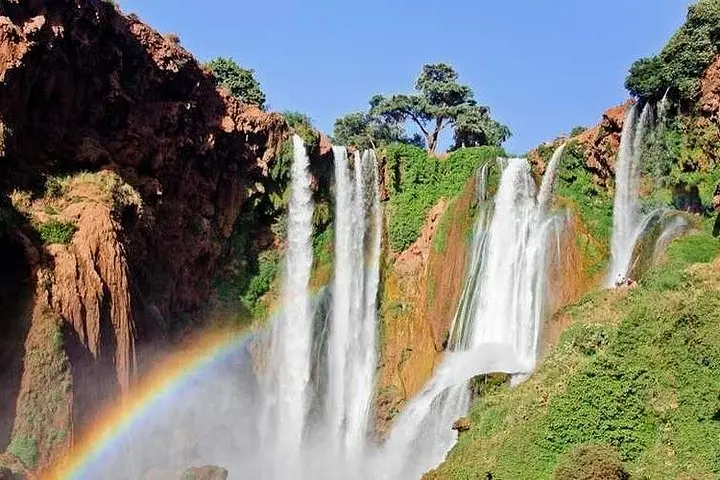
The drive from Marrakech is part of the story—about 150 km northeast through scrubland and foothills of the High Atlas, usually 2.5–3 hours in a comfortable, air-conditioned van. The road curves past Berber villages where flat-roofed houses and stacked olive presses (molens) speak to generations who have worked these slopes. Geologically, Ouzoud is carved from limestone and red clay; the river has cut a steep, stepped gorge that focuses the flow into tight channels before the dramatic drop. That 110-meter curtain of water is the tallest in North Africa and remains fed by winter rains and spring snowmelt, which is when the falls are at their most theatrical.
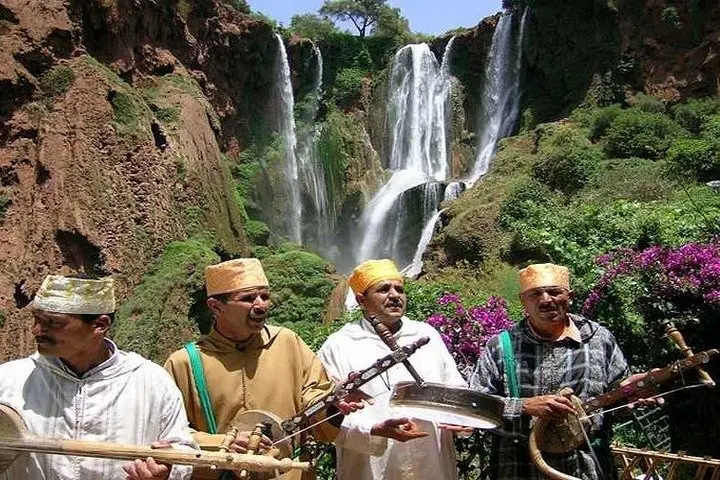
Locally, the site has long been a meeting point—farmers, millers and now guides and small family-run cafés. Barbary macaques make casual appearances on the cliffs and near the picnic spots; guides can point out old mill ruins and explain the centuries-old olive oil traditions you can still see on the trails. Respect for the landscape matters here: erosion is visible where unofficial paths cut the slopes, and vendors rely on steady, responsible tourist flow.
Practicalities shape a good visit. Most organized day trips include pickup in central Marrakech, transport, and a 3–4 hour window on-site. The loop trail around the falls is roughly 3 km if you stick to main viewpoints; expect 150–300 m of cumulative elevation change when you move down to the river and back up. Terrain mixes paved steps, rocky dirt trails and occasional slick stone; good grip on footwear is non-negotiable. If you want to reach the pool base, be prepared for more stairs and a steeper return.
Bring at least 1.5–2 liters of water, sun protection and cash for small cafés, boat rides to the base (optional), and tips. A light rain shell can be useful in spring when spray and showers make the air damp. If you plan to swim, check with guides about currents and seasonal flow; the pool looks calm from above but conditions vary.
Timing changes everything: early morning gives softer light and fewer crowds, late afternoon offers golden sidelighting on the gorge. Whether you’re there for photography, a steep stair workout or the relaxed rhythm of tea in a cliffside café, Ouzoud rewards attention—with a waterfall that keeps insisting you come closer, but with a geography that will politely push you back to the trail when it’s time to leave.
About 150 km; organized transfers typically take 2.5–3 hours each way depending on traffic and stops.
Many day-trip packages include admission; check the tour details, but local access is also possible independently.
Swimming is possible in calmer seasons, but check with local guides about currents and safety—conditions vary by season.
Yes—small cafés and basic facilities cluster around the main viewpoints and riverside; bring cash for purchases.
Generally yes, but watch children on narrow paths and near edges; the descent/ascent can be tiring for young kids.
Yes—Barbary macaques are common around the viewpoints; avoid feeding them and keep a safe distance.
red city travel operates guided outdoor trips and adventures with an emphasis on safety, stewardship, and memorable experiences.
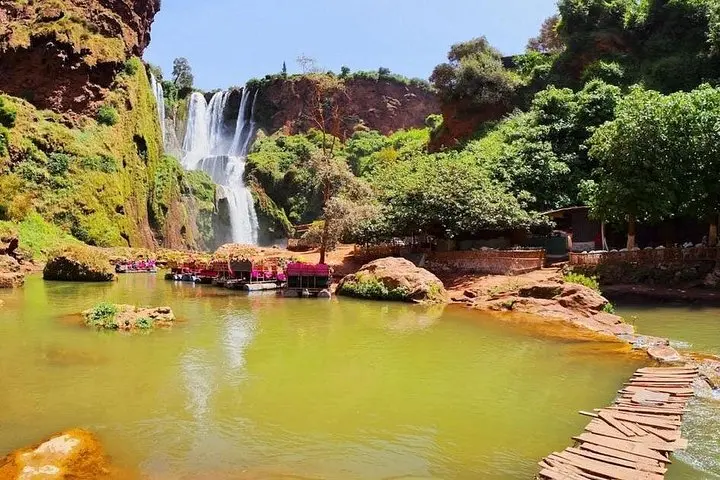
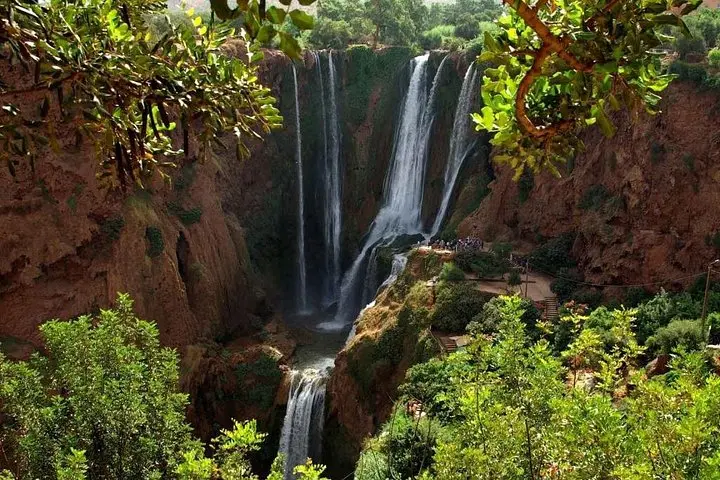
You arrive at the rim and the world rearranges itself around a sound: water, at once patient and insistent, dropping 110 meters into a bowl of green. From the viewpoint the falls slice through a patchwork of olive terraces; spray mists the air and the path below gleams with wet stone. Guides call out to vendors selling mint tea, goats graze in the terraces, and the steady click of cameras marks the exact moment people stop pretending they aren’t small.
You arrive at the rim and the world rearranges itself around a sound: water, at once patient and insistent, dropping 110 meters into a bowl of green. From the viewpoint the falls slice through a patchwork of olive terraces; spray mists the air and the path below gleams with wet stone. Guides call out to vendors selling mint tea, goats graze in the terraces, and the steady click of cameras marks the exact moment people stop pretending they aren’t small.
The drive from Marrakech is part of the story—about 150 km northeast through scrubland and foothills of the High Atlas, usually 2.5–3 hours in a comfortable, air-conditioned van. The road curves past Berber villages where flat-roofed houses and stacked olive presses (molens) speak to generations who have worked these slopes. Geologically, Ouzoud is carved from limestone and red clay; the river has cut a steep, stepped gorge that focuses the flow into tight channels before the dramatic drop. That 110-meter curtain of water is the tallest in North Africa and remains fed by winter rains and spring snowmelt, which is when the falls are at their most theatrical.
Locally, the site has long been a meeting point—farmers, millers and now guides and small family-run cafés. Barbary macaques make casual appearances on the cliffs and near the picnic spots; guides can point out old mill ruins and explain the centuries-old olive oil traditions you can still see on the trails. Respect for the landscape matters here: erosion is visible where unofficial paths cut the slopes, and vendors rely on steady, responsible tourist flow.
Practicalities shape a good visit. Most organized day trips include pickup in central Marrakech, transport, and a 3–4 hour window on-site. The loop trail around the falls is roughly 3 km if you stick to main viewpoints; expect 150–300 m of cumulative elevation change when you move down to the river and back up. Terrain mixes paved steps, rocky dirt trails and occasional slick stone; good grip on footwear is non-negotiable. If you want to reach the pool base, be prepared for more stairs and a steeper return.
Bring at least 1.5–2 liters of water, sun protection and cash for small cafés, boat rides to the base (optional), and tips. A light rain shell can be useful in spring when spray and showers make the air damp. If you plan to swim, check with guides about currents and seasonal flow; the pool looks calm from above but conditions vary.
Timing changes everything: early morning gives softer light and fewer crowds, late afternoon offers golden sidelighting on the gorge. Whether you’re there for photography, a steep stair workout or the relaxed rhythm of tea in a cliffside café, Ouzoud rewards attention—with a waterfall that keeps insisting you come closer, but with a geography that will politely push you back to the trail when it’s time to leave.