THE ADVENTURE COLLECTIVE® · Independent discovery and booking for outdoor travel
Escape Marrakech for a full day to Ouzoud Waterfalls: a scenic drive into the Atlas foothills, a guided descent to the base of Morocco’s highest falls, a chance to spot wild monkeys, and a traditional lunch with a view. Read on for what to expect and how to prepare.
Escape Marrakech for a full day to Ouzoud Waterfalls: a scenic drive into the Atlas foothills, a guided descent to the base of Morocco’s highest falls, a chance to spot wild monkeys, and a traditional lunch with a view. Read on for what to expect and how to prepare.
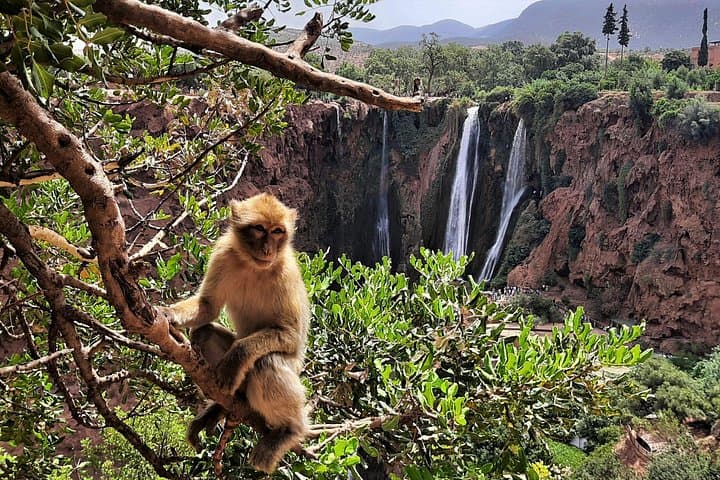
You leave Marrakech while the city is still waking: the medina recedes, olive groves and terraced hills step into view, and the road threads toward the Atlas foothills. By mid‑morning the cliff face opens and the falls announce themselves — twin curtains of water throwing mist that dares you closer and sends cool beads across your face.
Verified experiences and guided adventures in the surrounding area.
Operated by Morocco Tours Toubkal Trek · Azilal, Béni Mellal-Khénifra
You leave Marrakech while the city is still waking: the medina recedes, olive groves and terraced hills step into view, and the road threads toward the Atlas foothills. By mid‑morning the cliff face opens and the falls announce themselves — twin curtains of water throwing mist that dares you closer and sends cool beads across your face.
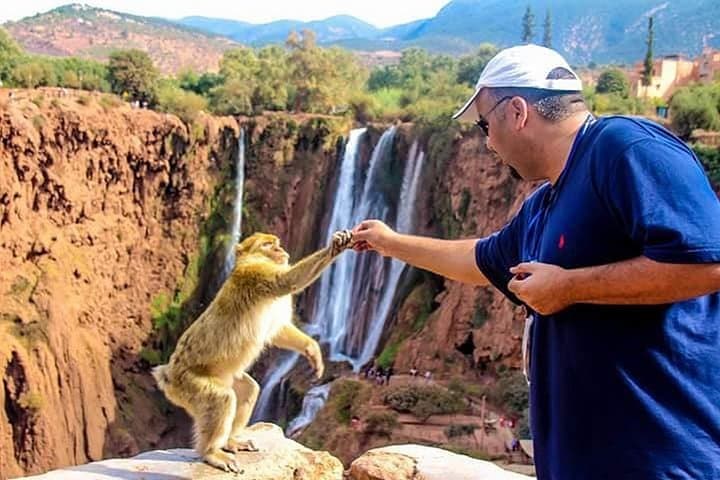
Geology here is readable: the El Abid (Ouzoud) River has carved through soft sedimentary rock, creating a cascade that drops in multiple tiers. The area’s human story is equally plain — Berber villages and centuries‑old watermills cling to the valley, and local families still press olives and welcome visitors for tagine and mint tea. Watch for the macaques who move like punctuation between viewpoints; they’re part of the scene but remain wild.
On the ground expect a 2.5–3.5 km loop if you follow the main viewpoints and descend to the base, with roughly 150–250 m of ascent/descent on stone steps and uneven trails. The guided portion typically includes a walk to the base, time to swim in natural pools (seasonal), and a restaurant lunch with waterfall views. Plan for loose stones, frequent stairs and spray that can make surfaces slick.
Practical essentials: start early to avoid mid‑day heat and tour buses, bring a refillable water bottle, wear grippy shoes and a light layer for the mist. If you want quieter moments, ask your guide for the upstream footpaths toward olive terraces — the views reward the extra 20 minutes.
The round‑trip drive is roughly 150–180 km each way, typically 1.5–2.5 hours each direction depending on traffic and stops.
Yes—there are natural pools at the base where swimming is possible in warm months, but conditions vary and you should check with your guide before entering.
The macaques are wild; they may be curious but can take food or belongings. Keep distance, don’t feed them, and secure loose items.
Children can usually join, and the tour notes it’s suitable for all fitness levels, but reaching the base requires steep steps; ask about vehicle drop‑off options if mobility is limited.
Morocco Tours Toubkal Trek operates guided outdoor trips and adventures with an emphasis on safety, stewardship, and memorable experiences.
You leave Marrakech while the city is still waking: the medina recedes, olive groves and terraced hills step into view, and the road threads toward the Atlas foothills. By mid‑morning the cliff face opens and the falls announce themselves — twin curtains of water throwing mist that dares you closer and sends cool beads across your face.
You leave Marrakech while the city is still waking: the medina recedes, olive groves and terraced hills step into view, and the road threads toward the Atlas foothills. By mid‑morning the cliff face opens and the falls announce themselves — twin curtains of water throwing mist that dares you closer and sends cool beads across your face.
Geology here is readable: the El Abid (Ouzoud) River has carved through soft sedimentary rock, creating a cascade that drops in multiple tiers. The area’s human story is equally plain — Berber villages and centuries‑old watermills cling to the valley, and local families still press olives and welcome visitors for tagine and mint tea. Watch for the macaques who move like punctuation between viewpoints; they’re part of the scene but remain wild.
On the ground expect a 2.5–3.5 km loop if you follow the main viewpoints and descend to the base, with roughly 150–250 m of ascent/descent on stone steps and uneven trails. The guided portion typically includes a walk to the base, time to swim in natural pools (seasonal), and a restaurant lunch with waterfall views. Plan for loose stones, frequent stairs and spray that can make surfaces slick.
Practical essentials: start early to avoid mid‑day heat and tour buses, bring a refillable water bottle, wear grippy shoes and a light layer for the mist. If you want quieter moments, ask your guide for the upstream footpaths toward olive terraces — the views reward the extra 20 minutes.
