THE ADVENTURE COLLECTIVE® · Independent discovery and booking for outdoor travel

Walk barefoot across brilliant white travertine, explore the Roman ruins of Hierapolis and feel hot springs steam under a wide Anatolian sky. This full-day tour from Istanbul packs geology, history and a private transfer into one long, vivid day.
Walk barefoot across brilliant white travertine, explore the Roman ruins of Hierapolis and feel hot springs steam under a wide Anatolian sky. This full-day tour from Istanbul packs geology, history and a private transfer into one long, vivid day.
Stepping onto Pamukkale is like entering a landscape that both cools and challenges the senses: blinding white travertine terraces curve down the hillside, steam rising where hot springs still feed shallow pools. Visitors remove their shoes and feel warm, calcified stone underfoot while columns and broken mausoleums from Hierapolis frame the plateau like echoes of another era.
Verified experiences and guided adventures in the surrounding area.
Operated by Booking Guide Turkey · Pamukkale, Denizli Province
Stepping onto Pamukkale is like entering a landscape that both cools and challenges the senses: blinding white travertine terraces curve down the hillside, steam rising where hot springs still feed shallow pools. Visitors remove their shoes and feel warm, calcified stone underfoot while columns and broken mausoleums from Hierapolis frame the plateau like echoes of another era.
The site began as a Hellenistic spa and later flourished under Roman rule; Hierapolis' ruins — a theater, baths and necropolis — record centuries of urban life tied to the thermal springs. Geologically, the terraces formed over millennia as carbonate-rich water deposited travertine; the white surfaces you walk are living rock, sensitive to weight, detergents and channel changes. Locally, small villages around Denizli still dry herbs and keep simple restaurants where regional lamb and ayran are staples.
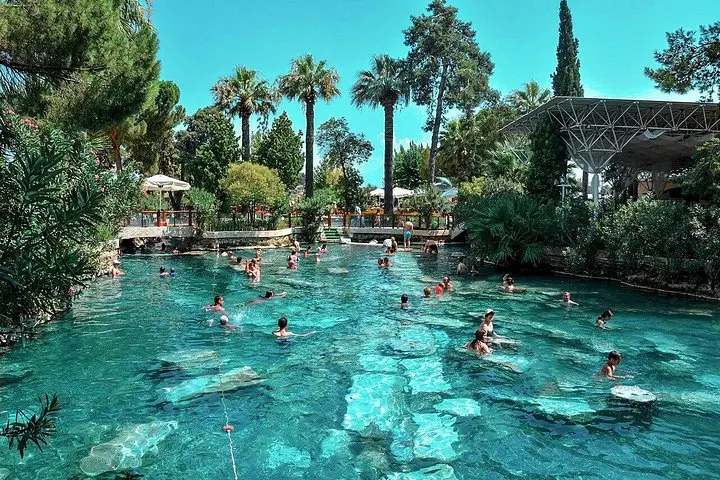
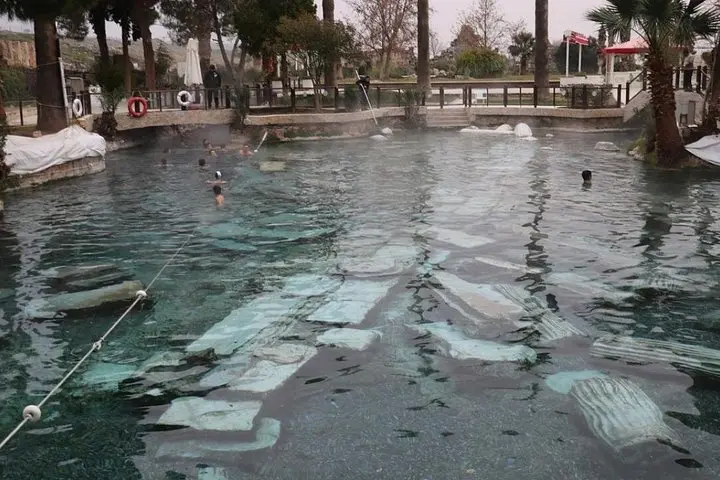
Practically, a full-day tour from Istanbul runs 9–12 hours door-to-door and typically includes private transport, a guide, entrance fees and lunch. Expect uneven walking surfaces, steps and open sun; shade is limited on the terraces but plentiful among the ruins. The best light for photos is early morning or late afternoon, when the contrast softens and steam becomes visible. Follow site rules: walk only in designated areas, carry water, and budget time for the Cleopatra (Antique) Pool if you want a paid dip. For travelers, this is a single-day plunge into geology and antiquity — high on visuals, low on technical difficulty, and deeply grounded in Turkey’s layered history.
Door-to-door travel typically takes 9–12 hours for the entire tour, including flights/ferry or long-distance driving depending on the operator’s itinerary.
This tour lists entrance fees to Pamukkale and lunch as included; confirm specifics at booking for any optional paid baths like the Antique Pool.
Bathing on the travertine terraces is not allowed; a separate paid option exists for the Cleopatra/Antique Pool within the archaeological zone.
Yes — the route is manageable for families and older visitors but expect stairs, uneven paths and the need to remove footwear for terrace access.
Booking Guide Turkey operates guided outdoor trips and adventures with an emphasis on safety, stewardship, and memorable experiences.
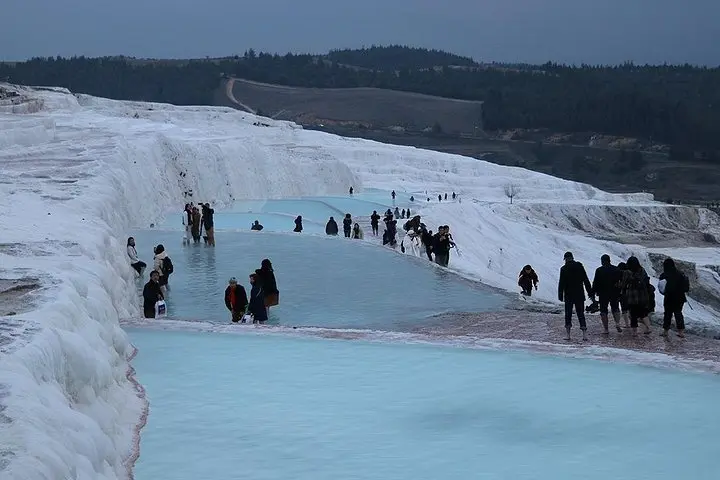
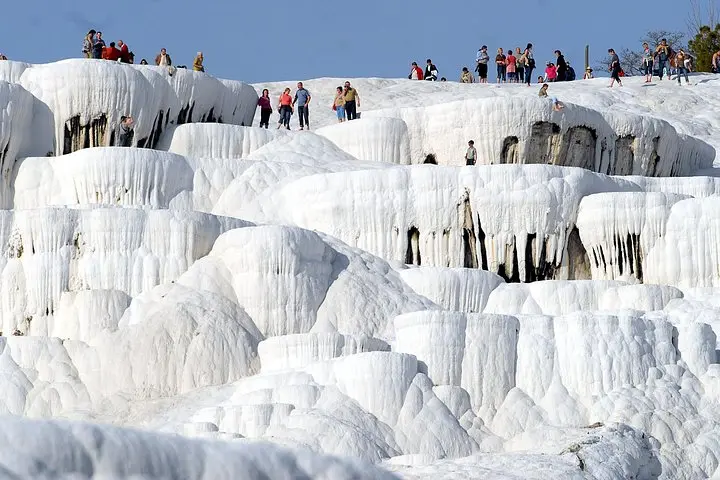
Stepping onto Pamukkale is like entering a landscape that both cools and challenges the senses: blinding white travertine terraces curve down the hillside, steam rising where hot springs still feed shallow pools. Visitors remove their shoes and feel warm, calcified stone underfoot while columns and broken mausoleums from Hierapolis frame the plateau like echoes of another era.
Stepping onto Pamukkale is like entering a landscape that both cools and challenges the senses: blinding white travertine terraces curve down the hillside, steam rising where hot springs still feed shallow pools. Visitors remove their shoes and feel warm, calcified stone underfoot while columns and broken mausoleums from Hierapolis frame the plateau like echoes of another era.
The site began as a Hellenistic spa and later flourished under Roman rule; Hierapolis' ruins — a theater, baths and necropolis — record centuries of urban life tied to the thermal springs. Geologically, the terraces formed over millennia as carbonate-rich water deposited travertine; the white surfaces you walk are living rock, sensitive to weight, detergents and channel changes. Locally, small villages around Denizli still dry herbs and keep simple restaurants where regional lamb and ayran are staples.
Practically, a full-day tour from Istanbul runs 9–12 hours door-to-door and typically includes private transport, a guide, entrance fees and lunch. Expect uneven walking surfaces, steps and open sun; shade is limited on the terraces but plentiful among the ruins. The best light for photos is early morning or late afternoon, when the contrast softens and steam becomes visible. Follow site rules: walk only in designated areas, carry water, and budget time for the Cleopatra (Antique) Pool if you want a paid dip. For travelers, this is a single-day plunge into geology and antiquity — high on visuals, low on technical difficulty, and deeply grounded in Turkey’s layered history.