THE ADVENTURE COLLECTIVE® · Independent discovery and booking for outdoor travel

Walk the dazzling white travertine terraces of Pamukkale and explore the Roman city of Hierapolis on a full-day tour from Istanbul. Combine thermal pools, archaeological ruins, and practical tips for timing, footwear, and photography.
Walk the dazzling white travertine terraces of Pamukkale and explore the Roman city of Hierapolis on a full-day tour from Istanbul. Combine thermal pools, archaeological ruins, and practical tips for timing, footwear, and photography.
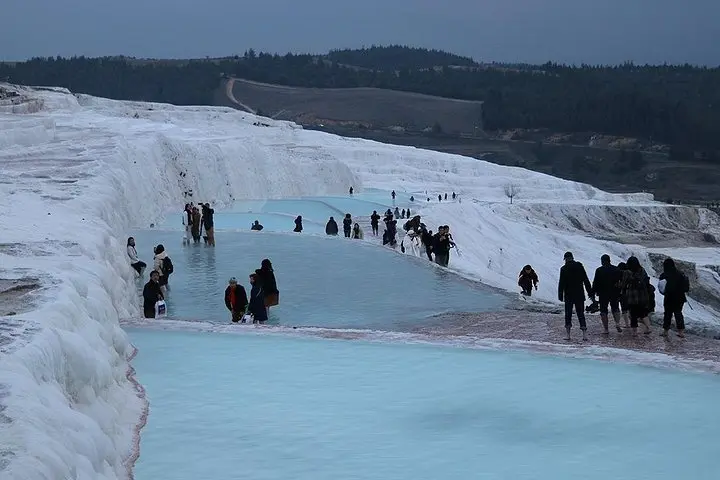
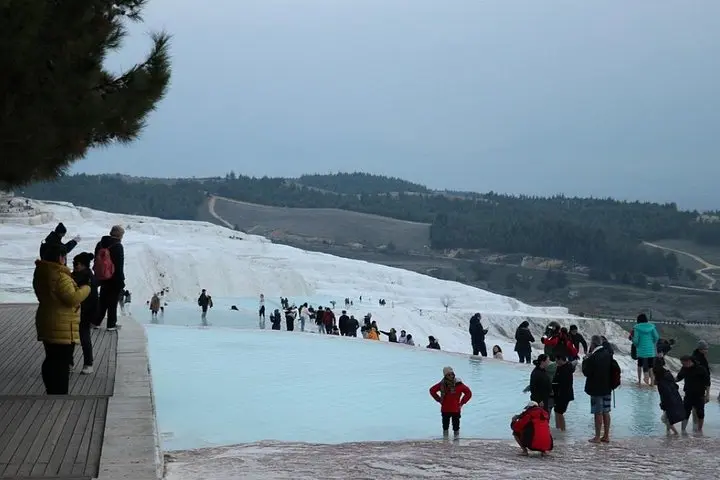
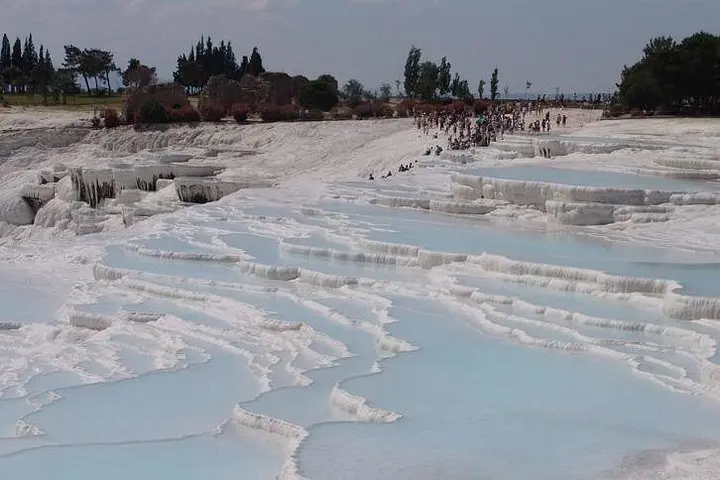
Step from the van into a stark white world where mineral-laden water has carved shelves of bright calcium carbonate that catch the sun like glass. The terraces at Pamukkale push forward across the slope, their shallow pools reflecting a spare Anatolian sky while the ruins of Hierapolis sit above, stones warmed by centuries of visitors and bathing cultures.
Verified experiences and guided adventures in the surrounding area.
Operated by Turkey Travel Mart · Pamukkale, Denizli Province
Step from the van into a stark white world where mineral-laden water has carved shelves of bright calcium carbonate that catch the sun like glass. The terraces at Pamukkale push forward across the slope, their shallow pools reflecting a spare Anatolian sky while the ruins of Hierapolis sit above, stones warmed by centuries of visitors and bathing cultures.
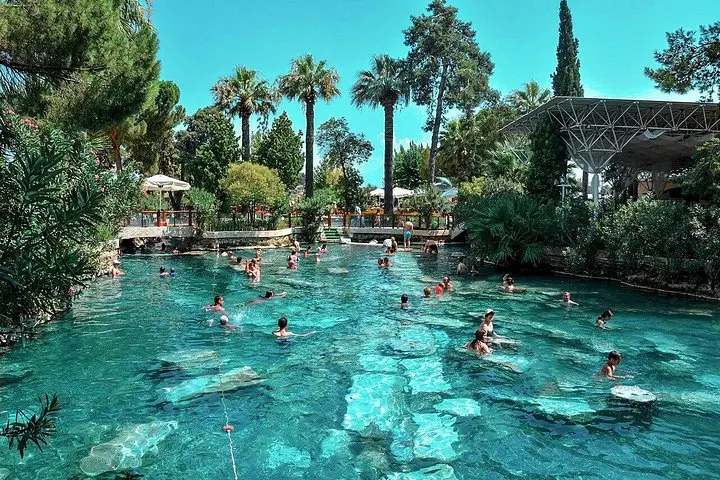
Geology here is immediate: hot springs rising through limestone deposit travertine, building the tiered terraces over millennia. Hierapolis began as a Hellenistic healing center and later grew under Roman rule; its theatre, necropolis and the antique pool speak to a city built around thermal therapy and ritual. Culturally, locals have long combined agriculture in the surrounding plains with pilgrim and spa traffic, and the modern site balances tourism with conservation measures designed to slow travertine erosion.
On a typical day tour from Istanbul you’ll travel by private transport, walk the travertine rim (often barefoot on protected paths), and explore Hierapolis with a guide while enjoying lunch and included entrance fees.
Practical guidance: arrive early to avoid midday crowds and harsh light for photos; carry plenty of water, sun protection and a towel if you plan to use the designated thermal pools. Expect paved and uneven stone surfaces—comfortable mobility and a steady pace make the visit more enjoyable. Respect signage: some terraces are closed to protect the formation, and swimming is restricted to the restored antique pool. With basic planning and a light kit, the contrast of white terraces, blue water and Roman ruins makes Pamukkale a compact, high-impact day trip.
A guided day trip typically involves an early morning flight or a long bus transfer; total door-to-door time often makes this a 9–12 hour excursion.
This tour commonly includes entrance fees and lunch; confirm the booking details for specific inclusions.
Swimming on the terraces is generally prohibited to protect deposits; bathing is allowed in designated pools such as the restored antique (Cleopatra) pool at Hierapolis.
Yes—many areas require barefoot walking to avoid damaging the travertine; bring easy-to-remove footwear and a towel.
Turkey Travel Mart operates guided outdoor trips and adventures with an emphasis on safety, stewardship, and memorable experiences.
Step from the van into a stark white world where mineral-laden water has carved shelves of bright calcium carbonate that catch the sun like glass. The terraces at Pamukkale push forward across the slope, their shallow pools reflecting a spare Anatolian sky while the ruins of Hierapolis sit above, stones warmed by centuries of visitors and bathing cultures.
Step from the van into a stark white world where mineral-laden water has carved shelves of bright calcium carbonate that catch the sun like glass. The terraces at Pamukkale push forward across the slope, their shallow pools reflecting a spare Anatolian sky while the ruins of Hierapolis sit above, stones warmed by centuries of visitors and bathing cultures.
Geology here is immediate: hot springs rising through limestone deposit travertine, building the tiered terraces over millennia. Hierapolis began as a Hellenistic healing center and later grew under Roman rule; its theatre, necropolis and the antique pool speak to a city built around thermal therapy and ritual. Culturally, locals have long combined agriculture in the surrounding plains with pilgrim and spa traffic, and the modern site balances tourism with conservation measures designed to slow travertine erosion.
On a typical day tour from Istanbul you’ll travel by private transport, walk the travertine rim (often barefoot on protected paths), and explore Hierapolis with a guide while enjoying lunch and included entrance fees.
Practical guidance: arrive early to avoid midday crowds and harsh light for photos; carry plenty of water, sun protection and a towel if you plan to use the designated thermal pools. Expect paved and uneven stone surfaces—comfortable mobility and a steady pace make the visit more enjoyable. Respect signage: some terraces are closed to protect the formation, and swimming is restricted to the restored antique pool. With basic planning and a light kit, the contrast of white terraces, blue water and Roman ruins makes Pamukkale a compact, high-impact day trip.