THE ADVENTURE COLLECTIVE® · Independent discovery and booking for outdoor travel

A full-day private transfer from Jaipur gives you time to visit Pushkar’s unique Brahma Temple, stroll its sacred lake, and experience a camel safari across nearby dunes. Expect a mix of cultural sites and desert scenery, with practical tips for timing and etiquette.
A full-day private transfer from Jaipur gives you time to visit Pushkar’s unique Brahma Temple, stroll its sacred lake, and experience a camel safari across nearby dunes. Expect a mix of cultural sites and desert scenery, with practical tips for timing and etiquette.
You leave Jaipur before dawn and the road narrows into the old folds of the Aravalli, hills sliding by like a slow-motion coastline. By mid-morning Pushkar appears — whitewashed temples clustered around a green-blue lake, desert scrub and small dunes punctuating the horizon. The town has a compact, walkable center; the Brahma Temple’s red roof and carved entrance draw the eye and the crowd.
Verified experiences and guided adventures in the surrounding area.
Operated by Raj Tours Jaipur · Pushkar, Rajasthan
You leave Jaipur before dawn and the road narrows into the old folds of the Aravalli, hills sliding by like a slow-motion coastline. By mid-morning Pushkar appears — whitewashed temples clustered around a green-blue lake, desert scrub and small dunes punctuating the horizon. The town has a compact, walkable center; the Brahma Temple’s red roof and carved entrance draw the eye and the crowd.
Pushkar’s religious heartbeat goes back centuries: its lake is a pilgrimage hub with over 400 temples layered around the ghats. Geologically the town sits along one of the world’s oldest ranges — the Aravalli — whose weathered ridges sculpt short dunes and farming pockets that fringe the Thar. Culturally you’ll encounter priests, local craft stalls, and the slow commerce of camel handlers; during the Camel Fair the town fills with traders and riders from across Rajasthan.
Expect a balance of quiet temple visits and active desert time: a short walking tour of the lake and bazaars, a visit to Brahma Temple, then a camel safari and optional jeep ride on nearby dunes. The camel moves at a deliberate rhythm that forces you to slow down; the jeep slices the desert and throws the landscape forward. Carry water, wear sun protection, and dress modestly for temple access. Plan for a full day — travel time from Jaipur is about 3 hours each way — and leave room for spontaneous stops at roadside tea stalls.
Practical tips: photograph respectfully at ghats, tip guides and camel handlers, and respect lake rituals. The town’s compactness makes it simple to explore on foot between stops, but the desert section rewards sturdy shoes and a flexible schedule.
The drive typically takes about 2.5–3 hours one way depending on traffic; plan for a full-day outing.
Yes — camel safaris are low-speed and guided; choose experienced handlers and voice any concerns before mounting.
Most temples welcome visitors but require modest clothing and shoe removal; follow signs and staff instructions.
Yes — vegetarian options are common; advise the operator at booking to confirm any special meal requests.
Raj Tours Jaipur operates guided outdoor trips and adventures with an emphasis on safety, stewardship, and memorable experiences.


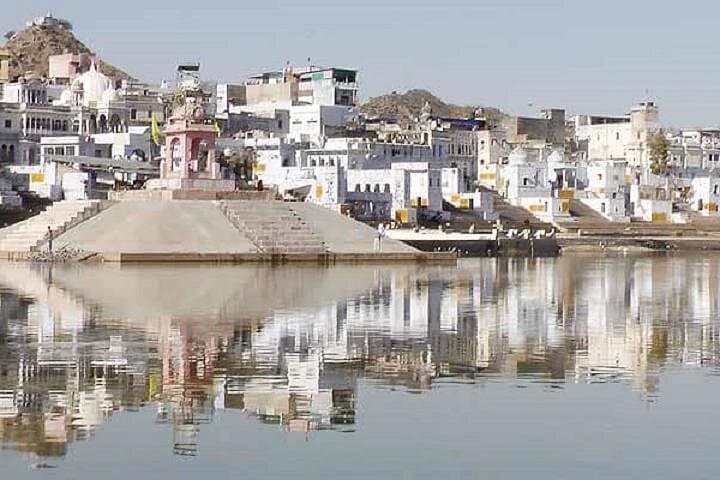
You leave Jaipur before dawn and the road narrows into the old folds of the Aravalli, hills sliding by like a slow-motion coastline. By mid-morning Pushkar appears — whitewashed temples clustered around a green-blue lake, desert scrub and small dunes punctuating the horizon. The town has a compact, walkable center; the Brahma Temple’s red roof and carved entrance draw the eye and the crowd.
You leave Jaipur before dawn and the road narrows into the old folds of the Aravalli, hills sliding by like a slow-motion coastline. By mid-morning Pushkar appears — whitewashed temples clustered around a green-blue lake, desert scrub and small dunes punctuating the horizon. The town has a compact, walkable center; the Brahma Temple’s red roof and carved entrance draw the eye and the crowd.
Pushkar’s religious heartbeat goes back centuries: its lake is a pilgrimage hub with over 400 temples layered around the ghats. Geologically the town sits along one of the world’s oldest ranges — the Aravalli — whose weathered ridges sculpt short dunes and farming pockets that fringe the Thar. Culturally you’ll encounter priests, local craft stalls, and the slow commerce of camel handlers; during the Camel Fair the town fills with traders and riders from across Rajasthan.
Expect a balance of quiet temple visits and active desert time: a short walking tour of the lake and bazaars, a visit to Brahma Temple, then a camel safari and optional jeep ride on nearby dunes. The camel moves at a deliberate rhythm that forces you to slow down; the jeep slices the desert and throws the landscape forward. Carry water, wear sun protection, and dress modestly for temple access. Plan for a full day — travel time from Jaipur is about 3 hours each way — and leave room for spontaneous stops at roadside tea stalls.
Practical tips: photograph respectfully at ghats, tip guides and camel handlers, and respect lake rituals. The town’s compactness makes it simple to explore on foot between stops, but the desert section rewards sturdy shoes and a flexible schedule.