THE ADVENTURE COLLECTIVE® · Independent discovery and booking for outdoor travel

A full-day cultural and nature drive from Samarkand to Shakhrisabz that pairs monumental Timurid architecture with wind-sculpted mountain scenery. Expect short walks, photo stops at the Valley of Demons and Heart-stone, and a chance to sample local tandoor cuisine.
A full-day cultural and nature drive from Samarkand to Shakhrisabz that pairs monumental Timurid architecture with wind-sculpted mountain scenery. Expect short walks, photo stops at the Valley of Demons and Heart-stone, and a chance to sample local tandoor cuisine.
Morning light slices across the steppe as the minibus leaves Samarkand and the road climbs toward Shakhrisabz. By the time the valley opens, wind-polished boulders of the Valley of Demons loom like watchful figures, and a naturally pierced “heart-stone” frames the sky like a camera lens.
Verified experiences and guided adventures in the surrounding area.
Operated by Fayoziddin · Shakhrisabz, Qashqadaryo Region
Morning light slices across the steppe as the minibus leaves Samarkand and the road climbs toward Shakhrisabz. By the time the valley opens, wind-polished boulders of the Valley of Demons loom like watchful figures, and a naturally pierced “heart-stone” frames the sky like a camera lens.
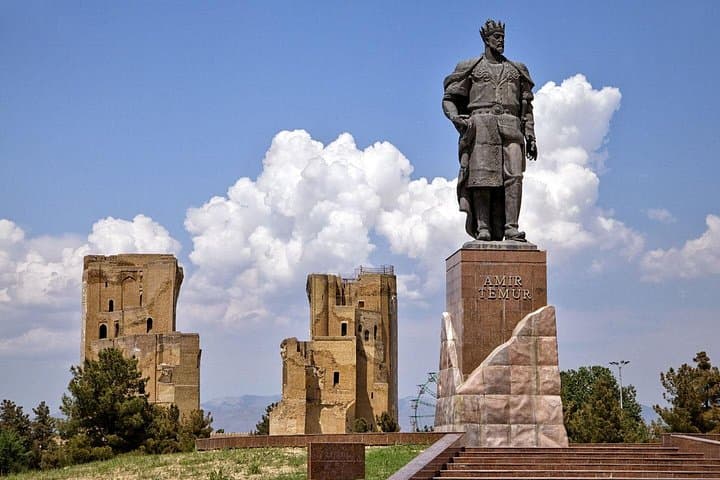
Shakhrisabz is best experienced as a compact mosaic of history and geology. It was the birthplace and symbolic home of Amir Temur (Tamerlane), whose late-14th-century commissions left enormous portal ruins at Ak-Saray and a funerary ensemble spanning centuries. The surrounding hills are part of the Gissar-Alai foothills; erosion and seasonal torrents have sculpted limestone and conglomerate into the strange silhouettes that give places like the Valley of Demons their character.
The day combines short, accessible walks between sites with cultural moments: mosque courtyards, tile-work portals, and a chance to taste regional tandoor-gush at a roadside eatery. Guides typically stop for photographs at the heart-stone and the Valley, then lead a measured visit through the Jahangir complex and the surviving mosque domes; entry to major monuments is modest (around $3 per site) and usually paid on arrival.
Practical guidance: expect a 6–8 hour round trip from Samarkand with an air-conditioned vehicle and several photo stops. Terrain at ruins is uneven and includes steps; bring sun protection and a refillable bottle in summer, a wind layer for spring and autumn, and warmer clothing in winter. Allow time for roadside mountain views and a leisurely meal before the return drive.
Most tours run 6–8 hours round trip, including driving time, photo stops, and visits at several monuments.
Entrance fees are typically paid on-site; major monuments charge modest fees (around $3 per site) which can usually be paid in cash or card.
The day is labeled physically easy with short walks, but some monuments have uneven stone steps—infants can ride and minimal mobility issues are manageable with assistance.
Guides for this route commonly speak Russian and Uzbek; English-speaking guides are often available but should be requested when booking.
Fayoziddin operates guided outdoor trips and adventures with an emphasis on safety, stewardship, and memorable experiences.


Morning light slices across the steppe as the minibus leaves Samarkand and the road climbs toward Shakhrisabz. By the time the valley opens, wind-polished boulders of the Valley of Demons loom like watchful figures, and a naturally pierced “heart-stone” frames the sky like a camera lens.
Morning light slices across the steppe as the minibus leaves Samarkand and the road climbs toward Shakhrisabz. By the time the valley opens, wind-polished boulders of the Valley of Demons loom like watchful figures, and a naturally pierced “heart-stone” frames the sky like a camera lens.
Shakhrisabz is best experienced as a compact mosaic of history and geology. It was the birthplace and symbolic home of Amir Temur (Tamerlane), whose late-14th-century commissions left enormous portal ruins at Ak-Saray and a funerary ensemble spanning centuries. The surrounding hills are part of the Gissar-Alai foothills; erosion and seasonal torrents have sculpted limestone and conglomerate into the strange silhouettes that give places like the Valley of Demons their character.
The day combines short, accessible walks between sites with cultural moments: mosque courtyards, tile-work portals, and a chance to taste regional tandoor-gush at a roadside eatery. Guides typically stop for photographs at the heart-stone and the Valley, then lead a measured visit through the Jahangir complex and the surviving mosque domes; entry to major monuments is modest (around $3 per site) and usually paid on arrival.
Practical guidance: expect a 6–8 hour round trip from Samarkand with an air-conditioned vehicle and several photo stops. Terrain at ruins is uneven and includes steps; bring sun protection and a refillable bottle in summer, a wind layer for spring and autumn, and warmer clothing in winter. Allow time for roadside mountain views and a leisurely meal before the return drive.