THE ADVENTURE COLLECTIVE® · Independent discovery and booking for outdoor travel

Travel from Alexandria to Cairo for a full-day guided visit to the Giza Pyramids, Papyrus Institute, lunch at a local restaurant and the Egyptian Museum. Expect long days, uneven ground, and close-up encounters with some of ancient Egypt’s most iconic sites.
Travel from Alexandria to Cairo for a full-day guided visit to the Giza Pyramids, Papyrus Institute, lunch at a local restaurant and the Egyptian Museum. Expect long days, uneven ground, and close-up encounters with some of ancient Egypt’s most iconic sites.
You step out of an air-conditioned minivan and the desert air hits like a warm, dry hand—wide, sun-bleached stones rising against the Cairo skyline. The Giza Plateau unfolds before you: the Great Pyramid’s massive geometry, the Great Sphinx keeping watch in the valley, and a faint chorus of vendors and camel handlers at the edges.
Verified experiences and guided adventures in the surrounding area.
Operated by NORTH AFRICAN SHIPPING AND TOURISM COMPANY (NASCO TOURS) · Giza, Giza Governorate
You step out of an air-conditioned minivan and the desert air hits like a warm, dry hand—wide, sun-bleached stones rising against the Cairo skyline. The Giza Plateau unfolds before you: the Great Pyramid’s massive geometry, the Great Sphinx keeping watch in the valley, and a faint chorus of vendors and camel handlers at the edges.
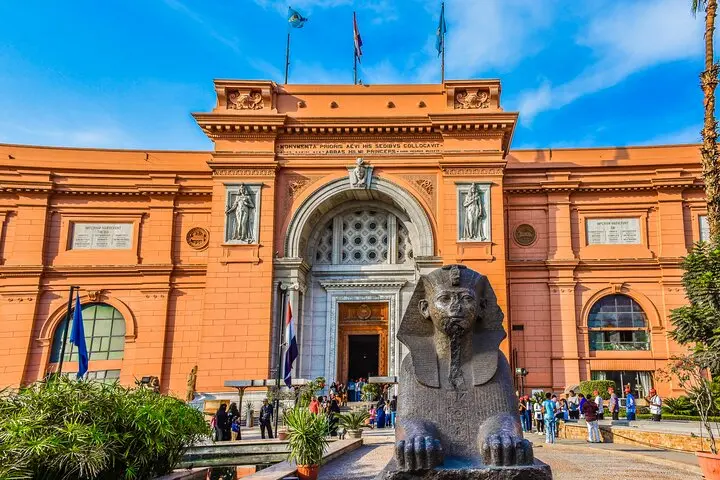
This is a route through 4,500 years of history compressed into a single day. The pyramids date to Egypt’s Fourth Dynasty (c. 2600–2500 BCE) and were built as monumental tombs; the plateau’s limestone and bedrock reveal the geology of the Nile’s ancient floodplain and the quarrying that shaped it. Later, in the Egyptian Museum you’ll move indoors to millennia of artifacts—gold from Tutankhamun’s tomb, funerary masks, and mummified remains that speak to evolving burial rites and state power.
Culturally, the day threads urban Cairo’s bustle with quieter archaeological spaces; expect local guides reciting layered histories and artisans at the Papyrus Institute demonstrating age-old papermaking.
Practicalities: this is a long, guided day—plan for 12–13 hours with several short walks, stairways, and uneven surfaces around the monuments. Bring a wide-brim hat, sunscreen, a full water bottle, and comfortable walking shoes. Photography is generally allowed outdoors but restricted inside some museum halls; climbing the pyramids is prohibited. Timings often avoid Cairo’s worst traffic, but mornings are best for clearer light and cooler temperatures. Travel light, carry local currency for small purchases, and leave extra time to absorb both the scale of stone and the details of crafted antiquities.
According to the itinerary, admissions to the Giza Plateau and Egyptian Museum are included; confirm at booking for any special exhibitions that may charge extra.
Travel time varies with traffic but expect a multi-hour drive each way; the full tour is approximately 12–13 hours from hotel pickup to return.
The tour is suitable for most ages but involves uneven ground and steps; travelers with serious mobility constraints should request details and accessible options before booking.
Photography rules vary by hall and item—flash and tripods are often restricted and some rooms may prohibit photography; follow museum signage and guide instructions.
NORTH AFRICAN SHIPPING AND TOURISM COMPANY (NASCO TOURS) operates guided outdoor trips and adventures with an emphasis on safety, stewardship, and memorable experiences.
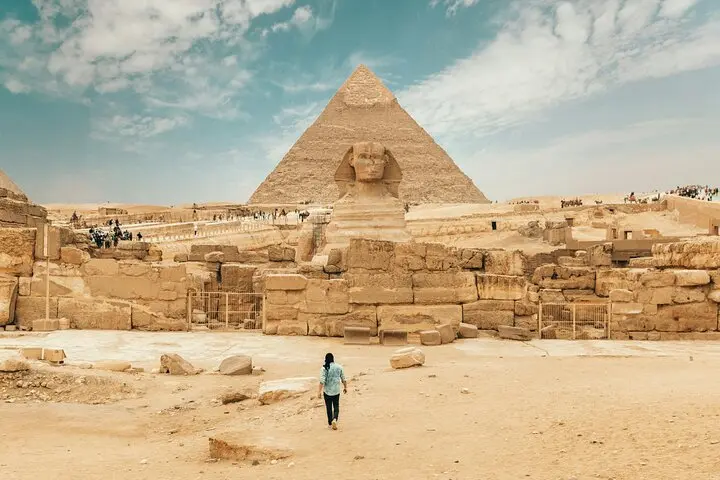
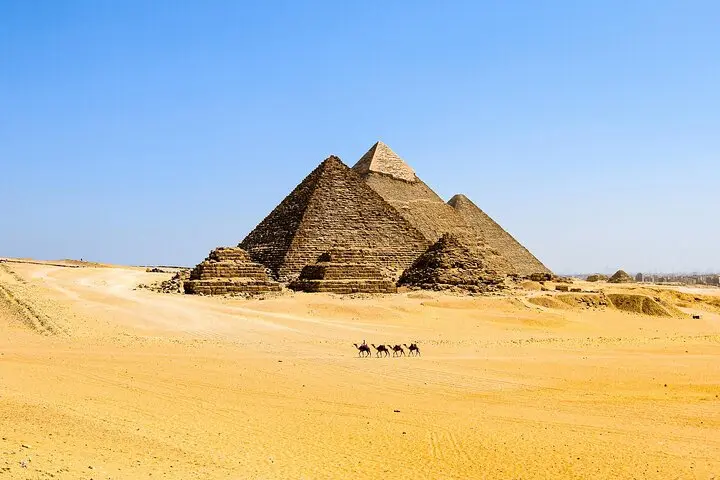
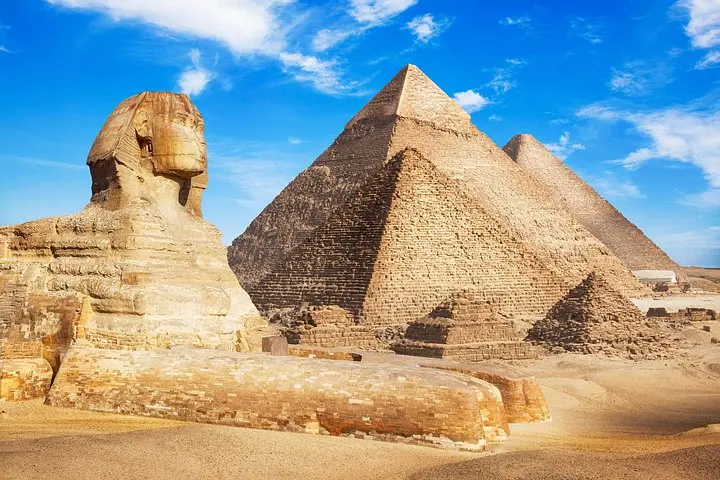
You step out of an air-conditioned minivan and the desert air hits like a warm, dry hand—wide, sun-bleached stones rising against the Cairo skyline. The Giza Plateau unfolds before you: the Great Pyramid’s massive geometry, the Great Sphinx keeping watch in the valley, and a faint chorus of vendors and camel handlers at the edges.
You step out of an air-conditioned minivan and the desert air hits like a warm, dry hand—wide, sun-bleached stones rising against the Cairo skyline. The Giza Plateau unfolds before you: the Great Pyramid’s massive geometry, the Great Sphinx keeping watch in the valley, and a faint chorus of vendors and camel handlers at the edges.
This is a route through 4,500 years of history compressed into a single day. The pyramids date to Egypt’s Fourth Dynasty (c. 2600–2500 BCE) and were built as monumental tombs; the plateau’s limestone and bedrock reveal the geology of the Nile’s ancient floodplain and the quarrying that shaped it. Later, in the Egyptian Museum you’ll move indoors to millennia of artifacts—gold from Tutankhamun’s tomb, funerary masks, and mummified remains that speak to evolving burial rites and state power.
Culturally, the day threads urban Cairo’s bustle with quieter archaeological spaces; expect local guides reciting layered histories and artisans at the Papyrus Institute demonstrating age-old papermaking.
Practicalities: this is a long, guided day—plan for 12–13 hours with several short walks, stairways, and uneven surfaces around the monuments. Bring a wide-brim hat, sunscreen, a full water bottle, and comfortable walking shoes. Photography is generally allowed outdoors but restricted inside some museum halls; climbing the pyramids is prohibited. Timings often avoid Cairo’s worst traffic, but mornings are best for clearer light and cooler temperatures. Travel light, carry local currency for small purchases, and leave extra time to absorb both the scale of stone and the details of crafted antiquities.