THE ADVENTURE COLLECTIVE® · Independent discovery and booking for outdoor travel

A full-day trip from Delhi that pairs the Taj Mahal’s luminous marble with the red-stone ramparts of Agra Fort. Practical logistics, local context, and on-the-ground tips to help you make the most of a long but rewarding day.
A full-day trip from Delhi that pairs the Taj Mahal’s luminous marble with the red-stone ramparts of Agra Fort. Practical logistics, local context, and on-the-ground tips to help you make the most of a long but rewarding day.
Before dawn the highway pulls you away from Delhi and toward a low, white silhouette on the Yamuna’s plain—by midmorning the Taj Mahal rises out of heat-hazed air like a carved promise. You enter the complex on foot, marble under your shoes, gardens pushing you forward toward the plinth where the mausoleum’s domes and minarets translate centuries of Mughal ambition into a single, exacting view.
Verified experiences and guided adventures in the surrounding area.
Operated by Divyan Holidays · Agra, Uttar Pradesh
Before dawn the highway pulls you away from Delhi and toward a low, white silhouette on the Yamuna’s plain—by midmorning the Taj Mahal rises out of heat-hazed air like a carved promise. You enter the complex on foot, marble under your shoes, gardens pushing you forward toward the plinth where the mausoleum’s domes and minarets translate centuries of Mughal ambition into a single, exacting view.
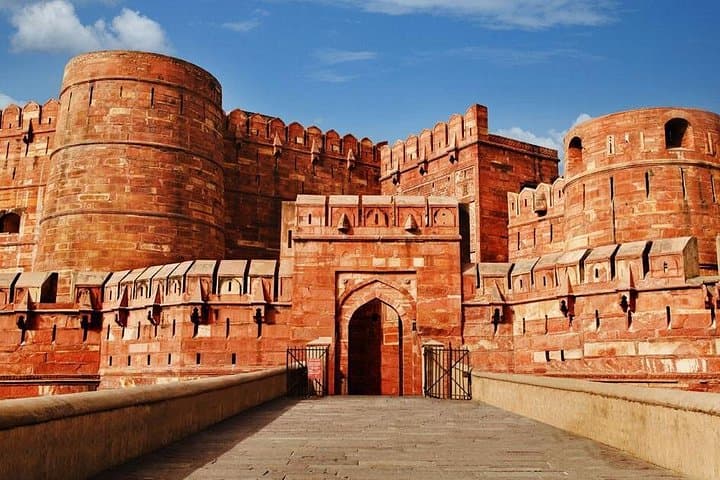
The day pairs two UNESCO sites: Shah Jahan’s Taj Mahal (completed 1653) and the red sandstone Agra Fort begun under Akbar in the 16th century. Geologically the plain is alluvial—flat, easy walking but dusty—and the nearby Yamuna River has shaped the city’s plan and supplied clay and silt that supported Mughal gardens. Culturally, Agra was a capital where court life, crafts, and stonework converged; look for pietra dura inlays and calligraphic panels that reveal craftsmen’s routes between workshops and courts.
Practical guidance: expect a full day (roughly 12–13 hours from a Delhi pickup), with 2–4 km of walking inside sites on mostly flat terrain and minimal elevation gain. Carry official ID for ticket checks, arrive early to avoid crowds and heat, and note that the Taj is closed on Fridays. Photography is allowed in most exterior spaces but restricted in some interiors; modest dress speeds entry. Hydrate frequently—bottled water is standard—and wear supportive shoes for paved and uneven paths.
Plan for vehicle drop-off and short restaurant breaks; the experience is as much about timing and logistics as it is about the monuments themselves.
The Taj Mahal is closed on Fridays; plan visits for other days and check local holidays that can affect opening hours.
Monument fees are included in some packages; this tour notes skip-the-line access, but you should still arrive early for the smoothest experience.
Photography is allowed in most exterior areas; some interiors restrict tripods, flash, or professional setups—follow on-site signage and guide instructions.
Both sites have many stairs and uneven surfaces; travelers with mobility limitations should plan for assistance and notify operators in advance.
Divyan Holidays operates guided outdoor trips and adventures with an emphasis on safety, stewardship, and memorable experiences.

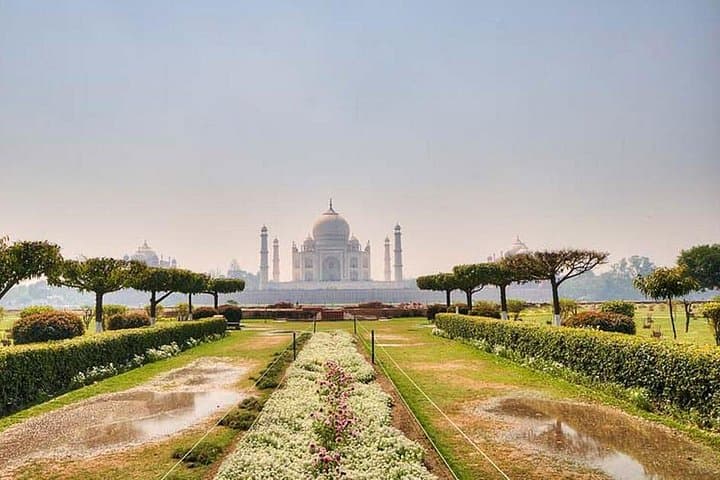

Before dawn the highway pulls you away from Delhi and toward a low, white silhouette on the Yamuna’s plain—by midmorning the Taj Mahal rises out of heat-hazed air like a carved promise. You enter the complex on foot, marble under your shoes, gardens pushing you forward toward the plinth where the mausoleum’s domes and minarets translate centuries of Mughal ambition into a single, exacting view.
Before dawn the highway pulls you away from Delhi and toward a low, white silhouette on the Yamuna’s plain—by midmorning the Taj Mahal rises out of heat-hazed air like a carved promise. You enter the complex on foot, marble under your shoes, gardens pushing you forward toward the plinth where the mausoleum’s domes and minarets translate centuries of Mughal ambition into a single, exacting view.
The day pairs two UNESCO sites: Shah Jahan’s Taj Mahal (completed 1653) and the red sandstone Agra Fort begun under Akbar in the 16th century. Geologically the plain is alluvial—flat, easy walking but dusty—and the nearby Yamuna River has shaped the city’s plan and supplied clay and silt that supported Mughal gardens. Culturally, Agra was a capital where court life, crafts, and stonework converged; look for pietra dura inlays and calligraphic panels that reveal craftsmen’s routes between workshops and courts.
Practical guidance: expect a full day (roughly 12–13 hours from a Delhi pickup), with 2–4 km of walking inside sites on mostly flat terrain and minimal elevation gain. Carry official ID for ticket checks, arrive early to avoid crowds and heat, and note that the Taj is closed on Fridays. Photography is allowed in most exterior spaces but restricted in some interiors; modest dress speeds entry. Hydrate frequently—bottled water is standard—and wear supportive shoes for paved and uneven paths.
Plan for vehicle drop-off and short restaurant breaks; the experience is as much about timing and logistics as it is about the monuments themselves.