THE ADVENTURE COLLECTIVE® · Independent discovery and booking for outdoor travel

Leave Zagreb for a private day tour that pairs the 13th-century watchtower-turned-castle of Trakoščan with Varaždin’s baroque streets and local wine. Expect easy walking, scenic drives and clear historic context with practical guidance for each stop.
Leave Zagreb for a private day tour that pairs the 13th-century watchtower-turned-castle of Trakoščan with Varaždin’s baroque streets and local wine. Expect easy walking, scenic drives and clear historic context with practical guidance for each stop.
The day begins with Zagreb receding in the rearview and the road opening into rolling fields; after an hour the castle appears above a glassy lake, its stone face and parkland cutting a clear line against the sky.
Verified experiences and guided adventures in the surrounding area.
Operated by Permansio Tours · Varaždin, Varaždin County
The day begins with Zagreb receding in the rearview and the road opening into rolling fields; after an hour the castle appears above a glassy lake, its stone face and parkland cutting a clear line against the sky.
Trakoščan Castle started life in the 13th century as a compact watchtower guarding routes through the northwest. Its current 19th-century revival turned the defensive site into a romantic residence surrounded by an English-style park and a small lake fed by upland streams. From there the tour slips into Varaždin, a provincial city whose baroque facades, Sermage Palace and cobbled squares speak to a long history of trade and craft.
Geology here is gentle—rolling hills of continental Croatia, karst influences to the west, and mixed beech-conifer woodlands that attract deer and boar. Culturally the region bridges Hungarian and Austrian influences; expect rococo interiors, street-side bakeries, and local wine styles influenced by continental vines.
Practical details: this is a private, full-day drive (about 9 hours total including transfers) with low-intensity walking—castle grounds and town center strolls. Admission to attractions is often not included; check ahead for museum tickets. The operator commonly provides an air-conditioned vehicle, bottled water and onboard Wi‑Fi. Pack comfortable walking shoes, a lightweight layer for lakeside breezes, a small daypack and a charged camera.
Timing your visit for late spring through early fall gives best weather and open museum hours; winter visits offer quiet lanes but shorter opening times. Respect marked paths in the castle park and leave no trace—these sites are maintained for visitors and local communities.
The listing indicates admissions are often not included—verify with the operator and bring cash or purchase tickets in advance if needed.
Pick-up is from your designated location in Zagreb; confirm exact address and time with the operator when booking.
Walking is short and low-impact: castle grounds, a lakeside loop and strolling Varaždin’s old town—suitable for most fitness levels.
The tour description mentions a traditional Croatian dinner with wine tasting; confirm with the operator whether dinner and tastings are included or optional.
Permansio Tours operates guided outdoor trips and adventures with an emphasis on safety, stewardship, and memorable experiences.
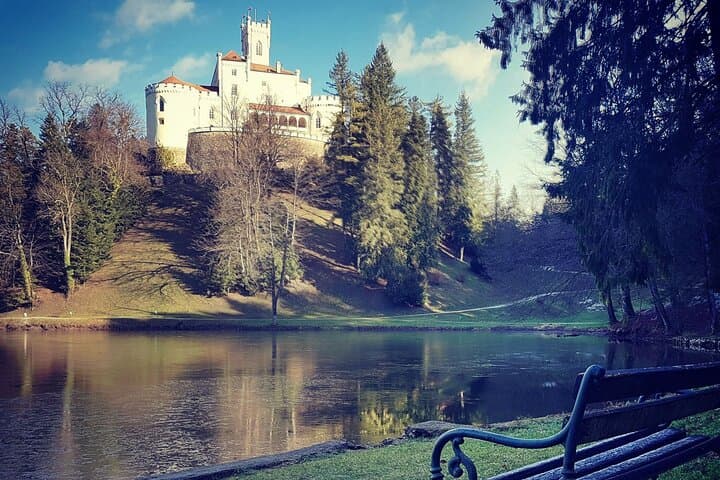

The day begins with Zagreb receding in the rearview and the road opening into rolling fields; after an hour the castle appears above a glassy lake, its stone face and parkland cutting a clear line against the sky.
The day begins with Zagreb receding in the rearview and the road opening into rolling fields; after an hour the castle appears above a glassy lake, its stone face and parkland cutting a clear line against the sky.
Trakoščan Castle started life in the 13th century as a compact watchtower guarding routes through the northwest. Its current 19th-century revival turned the defensive site into a romantic residence surrounded by an English-style park and a small lake fed by upland streams. From there the tour slips into Varaždin, a provincial city whose baroque facades, Sermage Palace and cobbled squares speak to a long history of trade and craft.
Geology here is gentle—rolling hills of continental Croatia, karst influences to the west, and mixed beech-conifer woodlands that attract deer and boar. Culturally the region bridges Hungarian and Austrian influences; expect rococo interiors, street-side bakeries, and local wine styles influenced by continental vines.
Practical details: this is a private, full-day drive (about 9 hours total including transfers) with low-intensity walking—castle grounds and town center strolls. Admission to attractions is often not included; check ahead for museum tickets. The operator commonly provides an air-conditioned vehicle, bottled water and onboard Wi‑Fi. Pack comfortable walking shoes, a lightweight layer for lakeside breezes, a small daypack and a charged camera.
Timing your visit for late spring through early fall gives best weather and open museum hours; winter visits offer quiet lanes but shorter opening times. Respect marked paths in the castle park and leave no trace—these sites are maintained for visitors and local communities.