THE ADVENTURE COLLECTIVE® · Independent discovery and booking for outdoor travel

Escape Budapest for a focused day trip to Zagreb that pairs a scenic drive along Lake Balaton with a guided stroll through Zagreb’s historic Upper Town. Expect cultural landmarks, local food options, and practical tips for crossing the border and making the most of your day.
Escape Budapest for a focused day trip to Zagreb that pairs a scenic drive along Lake Balaton with a guided stroll through Zagreb’s historic Upper Town. Expect cultural landmarks, local food options, and practical tips for crossing the border and making the most of your day.
A morning highway unfurls beneath the coach as Budapest recedes and Lake Balaton eases into view, its surface daring the wind and reflecting the sky like a slow, inland sea. The drive sets the tone: lakeshore coffee stops, broad fields, and a quiet border crossing before Zagreb’s compact skyline appears.
Verified experiences and guided adventures in the surrounding area.
Operated by Poland Travel · Zagreb, Zagreb County
A morning highway unfurls beneath the coach as Budapest recedes and Lake Balaton eases into view, its surface daring the wind and reflecting the sky like a slow, inland sea. The drive sets the tone: lakeshore coffee stops, broad fields, and a quiet border crossing before Zagreb’s compact skyline appears.
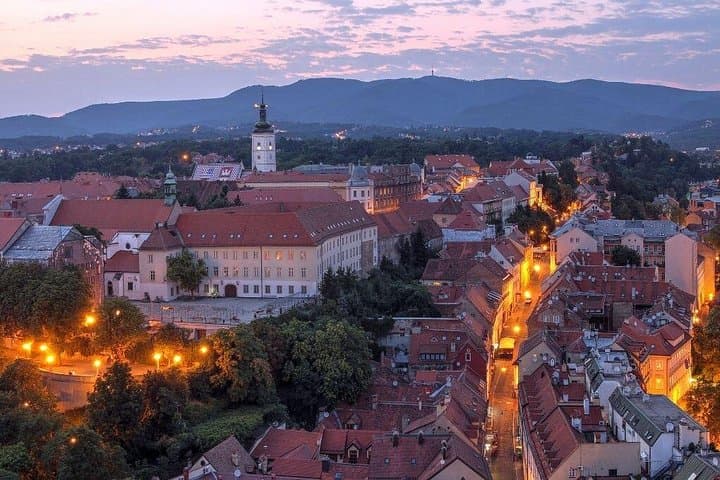
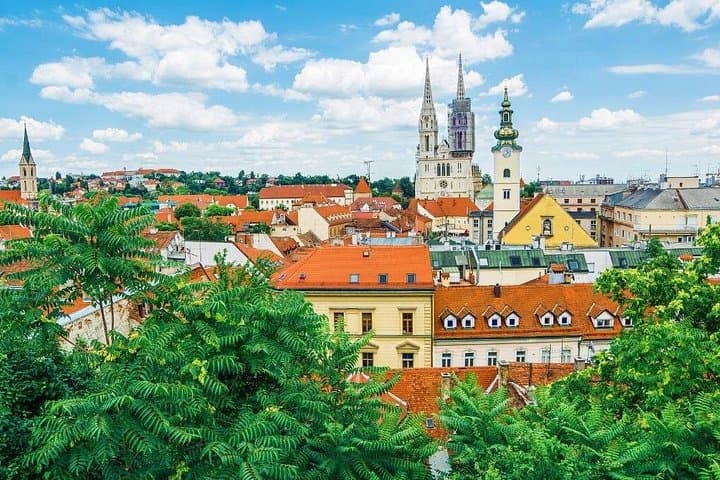
Zagreb’s Upper Town (Gornji Grad) is where the city keeps its oldest stories. Cobblestone lanes climb toward Lotrščak Tower and St. Mark’s Church with its striking tiled roof—icons that record medieval civic life and the shifting borders of Central Europe. Geology here is gentle: low karst ridges and alluvial plains shaped trade routes and settlement patterns, while the city’s Austro-Hungarian architecture and Croatian folk traditions create its present-day rhythm.
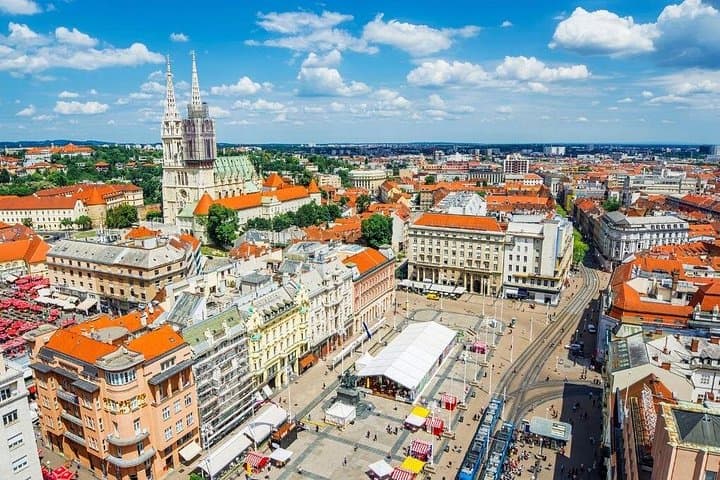
Cultural life centers in Ban Jelačić Square downstairs—bustling tramlines, bakeries, and markets where locals shop for seasonal produce. Walks through the Upper Town reward with narrow viewpoints; Lotrščak’s bell still marks noon in a way that threads the past into an otherwise modern day.
Practically: expect 12–13 hours total, including round-trip driving and roughly three to four hours exploring Zagreb on foot. Wear comfortable walking shoes, carry a travel ID for border formalities, and bring layers—weather shifts faster than the schedule. Lunch is typically independent; seek local bistro fare or the Dolac Market for quick bites. For travelers wanting a measured, culture-forward day, this private tour pairs steady transit with concentrated city time—efficient, vivid, and easy on fitness while rich in historical context.
Yes—hotel pickup and drop-off in Budapest are included; you’ll confirm pickup details when booking.
This tour focuses on guided sightseeing and transport; specific museum or tower admissions are generally not included unless stated.
Expect roughly 3–4 hours each way depending on traffic and border controls; total tour time is about 12–13 hours.
Yes—logistics note stroller accessibility, though cobbled streets in the Upper Town can be uneven for wheels.
Poland Travel operates guided outdoor trips and adventures with an emphasis on safety, stewardship, and memorable experiences.
A morning highway unfurls beneath the coach as Budapest recedes and Lake Balaton eases into view, its surface daring the wind and reflecting the sky like a slow, inland sea. The drive sets the tone: lakeshore coffee stops, broad fields, and a quiet border crossing before Zagreb’s compact skyline appears.
A morning highway unfurls beneath the coach as Budapest recedes and Lake Balaton eases into view, its surface daring the wind and reflecting the sky like a slow, inland sea. The drive sets the tone: lakeshore coffee stops, broad fields, and a quiet border crossing before Zagreb’s compact skyline appears.
Zagreb’s Upper Town (Gornji Grad) is where the city keeps its oldest stories. Cobblestone lanes climb toward Lotrščak Tower and St. Mark’s Church with its striking tiled roof—icons that record medieval civic life and the shifting borders of Central Europe. Geology here is gentle: low karst ridges and alluvial plains shaped trade routes and settlement patterns, while the city’s Austro-Hungarian architecture and Croatian folk traditions create its present-day rhythm.
Cultural life centers in Ban Jelačić Square downstairs—bustling tramlines, bakeries, and markets where locals shop for seasonal produce. Walks through the Upper Town reward with narrow viewpoints; Lotrščak’s bell still marks noon in a way that threads the past into an otherwise modern day.
Practically: expect 12–13 hours total, including round-trip driving and roughly three to four hours exploring Zagreb on foot. Wear comfortable walking shoes, carry a travel ID for border formalities, and bring layers—weather shifts faster than the schedule. Lunch is typically independent; seek local bistro fare or the Dolac Market for quick bites. For travelers wanting a measured, culture-forward day, this private tour pairs steady transit with concentrated city time—efficient, vivid, and easy on fitness while rich in historical context.