THE ADVENTURE COLLECTIVE® · Independent discovery and booking for outdoor travel

Leave the Strip before dawn and arrive in Death Valley as the desert wakes. This small-group, full-day tour from Las Vegas delivers the park’s salt pans, dunes and high overlooks with guided context, chilled logistics and plenty of photo opportunities.
Leave the Strip before dawn and arrive in Death Valley as the desert wakes. This small-group, full-day tour from Las Vegas delivers the park’s salt pans, dunes and high overlooks with guided context, chilled logistics and plenty of photo opportunities.
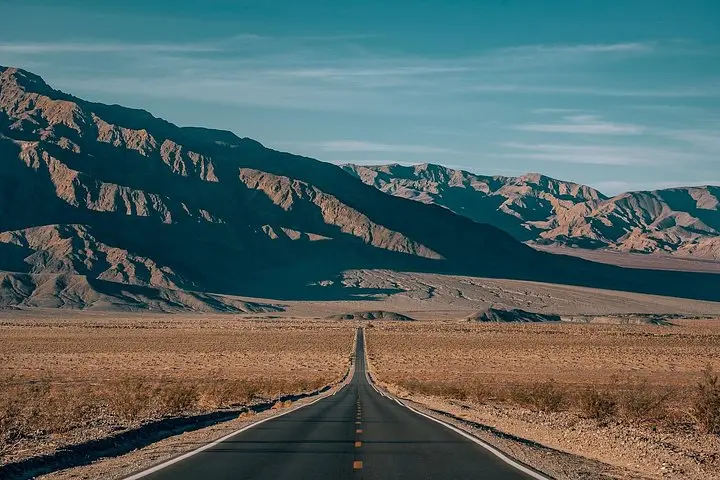
At 5:30 a.m. the shuttle eases away from the neon of the Las Vegas Strip and the world compresses into highway and horizon. By the time the sun scrapes the panhandle of the desert you’re already inside Death Valley National Park, where the air feels huge and the light throws shadows like calligraphy across badlands and salt crust. The small-group format keeps the rhythm intimate: a single driver-guide folds geology, history and local lore into each stop while the park’s features—dune, basin, and ridge—unspool outside the windows.
Verified experiences and guided adventures in the surrounding area.
Operated by Experience Tours LLC · Furnace Creek, California
At 5:30 a.m. the shuttle eases away from the neon of the Las Vegas Strip and the world compresses into highway and horizon. By the time the sun scrapes the panhandle of the desert you’re already inside Death Valley National Park, where the air feels huge and the light throws shadows like calligraphy across badlands and salt crust. The small-group format keeps the rhythm intimate: a single driver-guide folds geology, history and local lore into each stop while the park’s features—dune, basin, and ridge—unspool outside the windows.
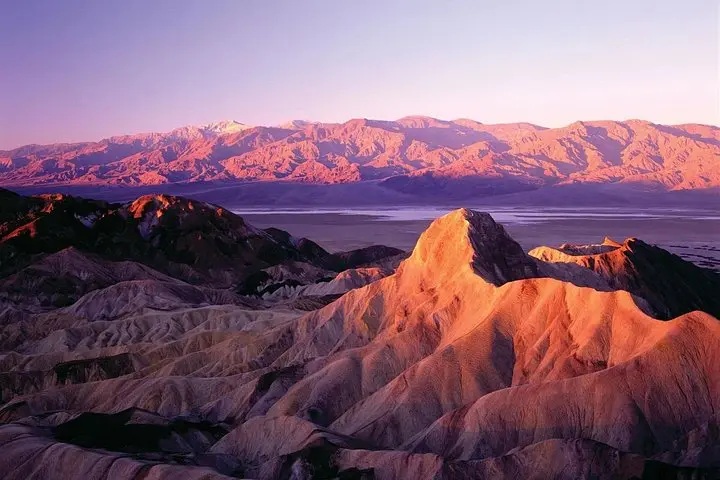
Geology in Death Valley reads like an accelerated Earth history book. The valley is a graben: a chunk of land dropped between faults while the surrounding ranges rose, creating the basin that traps sediments and briny water. Where water evaporated, it left salt pans so reflective they can look like frozen sky; at Badwater Basin you stand 282 feet below sea level and watch hexagonal salt tiles stretch toward the horizon. Dante’s View, high on the Black Mountains, gives the opposite perspective—an overlook that peers down into the valley bowl from more than 5,000 feet.
Culturally, the park is layered with Timbisha Shoshone presence and the marks of miners and pioneers who chased borax and gold through this harsh country. Those human stories are small against the scale of the Mojave, but guides often point to relics and homestead ruins and connect them to the patchwork of survival that shaped the region.
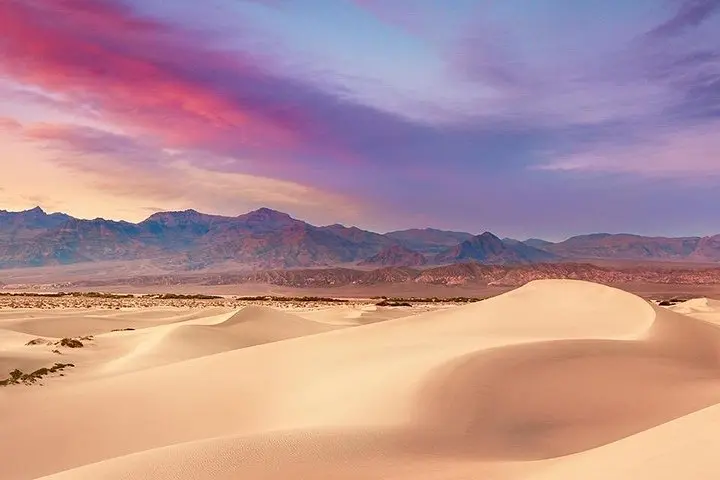
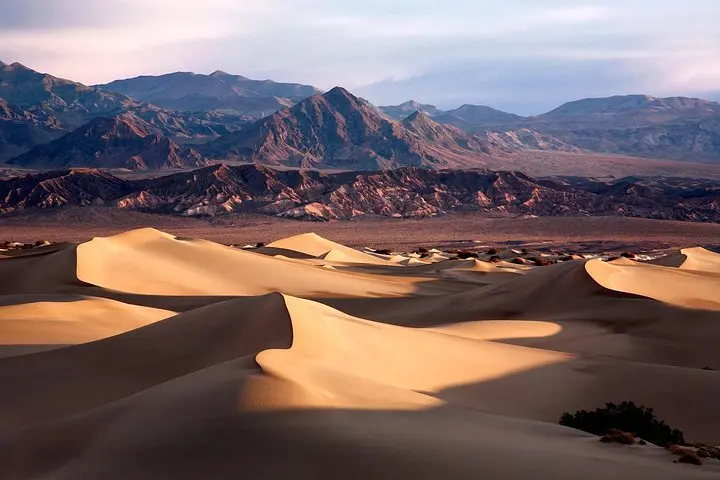
On this full-day tour you’ll move mostly by van, stopping for short walks: Mesquite Flat Sand Dunes for soft-surface scrambling and photos, Badwater Basin for an otherworldly salt flat walk (easy, flat, but exposed), and viewpoint pulls at Zabriskie and Dante’s View. Expect 0.5–2 miles of walking at each stop; total elevation gain is minimal except at high overlooks where short climbs may add a few hundred feet.
Practicalities matter here. Temperatures swing wildly—cold nights and searing summer days—so timing, hydration and sun protection dominate the checklist. The tour supplies bottled water and lunch, and pickups are from Las Vegas hotels between 5:00–5:30 a.m., returning in the evening. Wear sturdy closed-toe shoes for dune edges and salt crusts, bring a wide-brim hat and at least 2 liters of water per person on top of what’s provided. If you have back or heart issues, note that the operator flags the trip as unsuitable for travelers with serious spinal or cardiovascular conditions.
For photographers and wilderness-minded travelers, Death Valley rewards early light and low-angle shadows; the landscape isn’t gentle, but it’s honest—salt and stone that refuse to be prettified. The guide-led format removes route-finding stress and gives historical and ecological context so the day feels less like ticking boxes and more like learning the rules of a place that keeps its distance.
The tour lasts about 7 hours (420 minutes) and departs early—hotel pickups are typically between 5:00 and 5:30 a.m.
No technical fitness is required; expect short walks (0.5–2 miles) on uneven sand and salt surfaces—average mobility is sufficient.
Bring at least 2 liters of water beyond what’s provided, sun protection (hat, sunscreen, sunglasses), and light, breathable clothing; avoid midday exposure in summer.
Yes, the tour includes lunch and unlimited bottled water as part of the inclusions.
The operator notes the tour is not recommended for those with serious spinal or cardiovascular conditions—contact the supplier before booking to discuss accommodations.
Sunrise at Mesquite Dunes, the reflective salt pans at Badwater Basin, and sweeping panoramas from Dante’s View are the top photo stops—bring a wide-angle and a telephoto lens.
Experience Tours LLC operates guided outdoor trips and adventures with an emphasis on safety, stewardship, and memorable experiences.
At 5:30 a.m. the shuttle eases away from the neon of the Las Vegas Strip and the world compresses into highway and horizon. By the time the sun scrapes the panhandle of the desert you’re already inside Death Valley National Park, where the air feels huge and the light throws shadows like calligraphy across badlands and salt crust. The small-group format keeps the rhythm intimate: a single driver-guide folds geology, history and local lore into each stop while the park’s features—dune, basin, and ridge—unspool outside the windows.
At 5:30 a.m. the shuttle eases away from the neon of the Las Vegas Strip and the world compresses into highway and horizon. By the time the sun scrapes the panhandle of the desert you’re already inside Death Valley National Park, where the air feels huge and the light throws shadows like calligraphy across badlands and salt crust. The small-group format keeps the rhythm intimate: a single driver-guide folds geology, history and local lore into each stop while the park’s features—dune, basin, and ridge—unspool outside the windows.
Geology in Death Valley reads like an accelerated Earth history book. The valley is a graben: a chunk of land dropped between faults while the surrounding ranges rose, creating the basin that traps sediments and briny water. Where water evaporated, it left salt pans so reflective they can look like frozen sky; at Badwater Basin you stand 282 feet below sea level and watch hexagonal salt tiles stretch toward the horizon. Dante’s View, high on the Black Mountains, gives the opposite perspective—an overlook that peers down into the valley bowl from more than 5,000 feet.
Culturally, the park is layered with Timbisha Shoshone presence and the marks of miners and pioneers who chased borax and gold through this harsh country. Those human stories are small against the scale of the Mojave, but guides often point to relics and homestead ruins and connect them to the patchwork of survival that shaped the region.
On this full-day tour you’ll move mostly by van, stopping for short walks: Mesquite Flat Sand Dunes for soft-surface scrambling and photos, Badwater Basin for an otherworldly salt flat walk (easy, flat, but exposed), and viewpoint pulls at Zabriskie and Dante’s View. Expect 0.5–2 miles of walking at each stop; total elevation gain is minimal except at high overlooks where short climbs may add a few hundred feet.
Practicalities matter here. Temperatures swing wildly—cold nights and searing summer days—so timing, hydration and sun protection dominate the checklist. The tour supplies bottled water and lunch, and pickups are from Las Vegas hotels between 5:00–5:30 a.m., returning in the evening. Wear sturdy closed-toe shoes for dune edges and salt crusts, bring a wide-brim hat and at least 2 liters of water per person on top of what’s provided. If you have back or heart issues, note that the operator flags the trip as unsuitable for travelers with serious spinal or cardiovascular conditions.
For photographers and wilderness-minded travelers, Death Valley rewards early light and low-angle shadows; the landscape isn’t gentle, but it’s honest—salt and stone that refuse to be prettified. The guide-led format removes route-finding stress and gives historical and ecological context so the day feels less like ticking boxes and more like learning the rules of a place that keeps its distance.