THE ADVENTURE COLLECTIVE® · Independent discovery and booking for outdoor travel

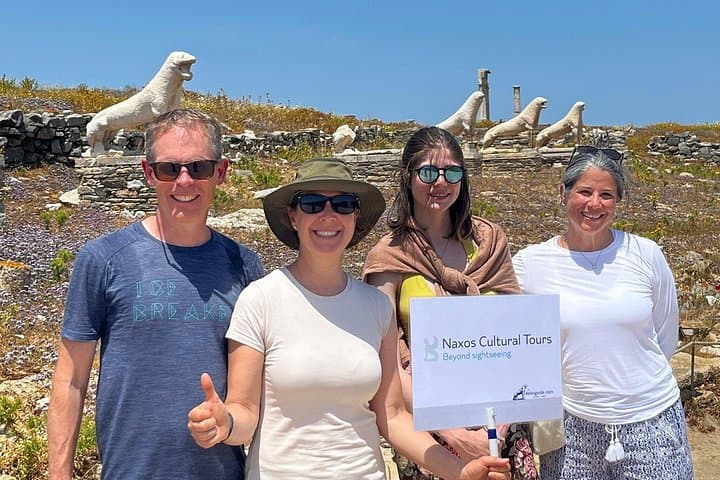
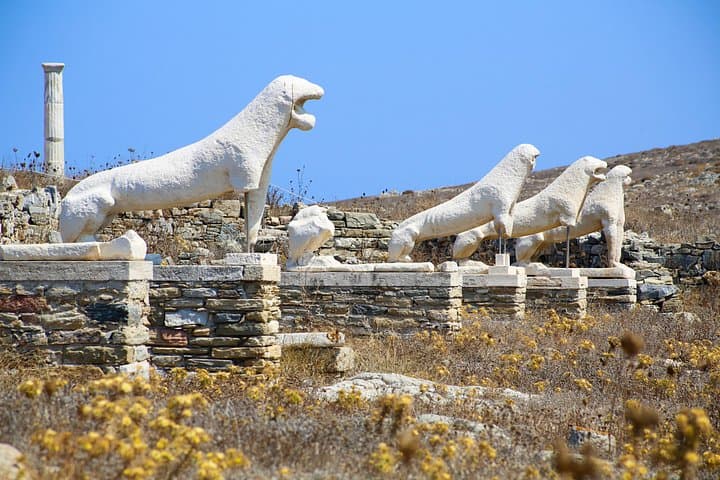
Board a short ferry from Mykonos and spend four hours exploring Delos with a licensed guide. Walk the Avenue of the Lions, visit temples and mosaics, and learn why this tiny island anchored ancient Mediterranean trade.
Board a short ferry from Mykonos and spend four hours exploring Delos with a licensed guide. Walk the Avenue of the Lions, visit temples and mosaics, and learn why this tiny island anchored ancient Mediterranean trade.
A salt wind meets your face as the boat slips away from Mykonos and Delos unrolls on the horizon: pale stone ruins sitting low against a blaze of Aegean blue. You step ashore to a place that once pulsed with commerce and ritual — temples, open-air markets, and a theater carved into limestone where the island’s stories still echo.
Verified experiences and guided adventures in the surrounding area.
Operated by Naxos Cultural Tours · Delos, South Aegean
A salt wind meets your face as the boat slips away from Mykonos and Delos unrolls on the horizon: pale stone ruins sitting low against a blaze of Aegean blue. You step ashore to a place that once pulsed with commerce and ritual — temples, open-air markets, and a theater carved into limestone where the island’s stories still echo.
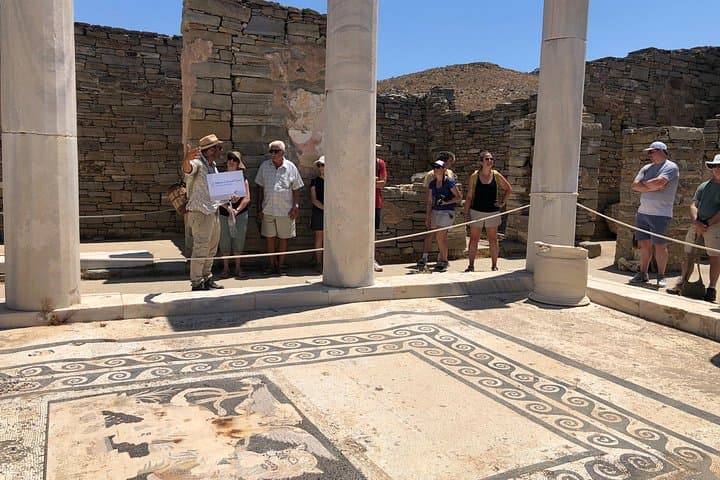
Delos is a compact atlas of ancient Greek life. Archaeologists uncovered sanctuaries to Apollo and Artemis, the Avenue of the Lions, multi-roomed houses with mosaic floors, and inscriptions that chart maritime trade across the Mediterranean. Geologically, Delos is a low, rocky limestone outcrop whose scrub and shallow soils preserve ruins rather than conceal them; exposure to wind and salt shapes the site as much as centuries of human hands.
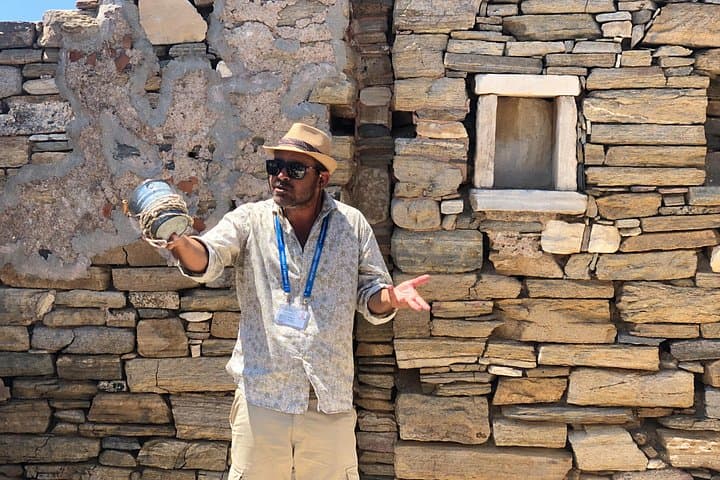
Culturally, the island was a pan-Hellenic religious center and a bustling free port; today it’s protected as a UNESCO site and curated in a modest on-island museum. A licensed guide brings those layers to life, pointing out iconography on a lintel or the alignment of a temple to morning light.
Practically: tours are about four hours including boat transit. Expect uneven stone paths and wide-open exposures — sun, wind, and little shade. Bring sun protection, steady footwear, and water. Photography is unrestricted but respectful distance from fragile mosaics is enforced. Timing your visit for morning or late afternoon reduces heat and the busiest boat rotations. The experience balances archaeology and open-air adventure: you end the walk with a clearer sense of how this small island once commanded a large role in the ancient world.
The total experience is about four hours: meeting, round-trip local boat transit from Mykonos, and a roughly two-hour guided walk on Delos.
Yes — the tour includes local boat transport and skip-the-line entrance tickets; your guide hands these to you at departure.
The site has uneven ancient stone and some steps; it’s generally suitable for children used to walking but may be challenging for limited-mobility visitors.
Yes — photography is allowed on the ruins, and the Delos Archaeological Museum is part of the visit; refrain from touching mosaics and follow guide instructions.
Naxos Cultural Tours operates guided outdoor trips and adventures with an emphasis on safety, stewardship, and memorable experiences.
A salt wind meets your face as the boat slips away from Mykonos and Delos unrolls on the horizon: pale stone ruins sitting low against a blaze of Aegean blue. You step ashore to a place that once pulsed with commerce and ritual — temples, open-air markets, and a theater carved into limestone where the island’s stories still echo.
A salt wind meets your face as the boat slips away from Mykonos and Delos unrolls on the horizon: pale stone ruins sitting low against a blaze of Aegean blue. You step ashore to a place that once pulsed with commerce and ritual — temples, open-air markets, and a theater carved into limestone where the island’s stories still echo.
Delos is a compact atlas of ancient Greek life. Archaeologists uncovered sanctuaries to Apollo and Artemis, the Avenue of the Lions, multi-roomed houses with mosaic floors, and inscriptions that chart maritime trade across the Mediterranean. Geologically, Delos is a low, rocky limestone outcrop whose scrub and shallow soils preserve ruins rather than conceal them; exposure to wind and salt shapes the site as much as centuries of human hands.
Culturally, the island was a pan-Hellenic religious center and a bustling free port; today it’s protected as a UNESCO site and curated in a modest on-island museum. A licensed guide brings those layers to life, pointing out iconography on a lintel or the alignment of a temple to morning light.
Practically: tours are about four hours including boat transit. Expect uneven stone paths and wide-open exposures — sun, wind, and little shade. Bring sun protection, steady footwear, and water. Photography is unrestricted but respectful distance from fragile mosaics is enforced. Timing your visit for morning or late afternoon reduces heat and the busiest boat rotations. The experience balances archaeology and open-air adventure: you end the walk with a clearer sense of how this small island once commanded a large role in the ancient world.