THE ADVENTURE COLLECTIVE® · Independent discovery and booking for outdoor travel

A half-day boat tour from Mykonos to Delos delivers a compact encounter with Greece’s ancient religious center—open-air ruins, a small museum, and windswept Aegean crossings. Practical tips on timing, terrain and what to bring make it easy to plan.
A half-day boat tour from Mykonos to Delos delivers a compact encounter with Greece’s ancient religious center—open-air ruins, a small museum, and windswept Aegean crossings. Practical tips on timing, terrain and what to bring make it easy to plan.
You step off the boat into bright, thin air—the Aegean sun pressing against the white stone, the sea still daring you from where you arrived. Narrow sandy tracks lead between low ruins and stripped terraces; gulls wheel and call while the guide outlines the island’s civic plan, and the sense of a once-bustling port returns in fragments of marble and mosaic.
Verified experiences and guided adventures in the surrounding area.
Operated by Let's Book Travel · Mykonos, South Aegean
You step off the boat into bright, thin air—the Aegean sun pressing against the white stone, the sea still daring you from where you arrived. Narrow sandy tracks lead between low ruins and stripped terraces; gulls wheel and call while the guide outlines the island’s civic plan, and the sense of a once-bustling port returns in fragments of marble and mosaic.
Delos was the religious and commercial hub of the Cyclades for millennia and is often described as the mythical birthplace of Apollo and Artemis. Geologically it’s limestone outcrop—low relief, wind-scarred and salt-bleached—so ancient streets run over uneven paving and cisterns carved into bedrock hint at an engineered water economy. Cultural layers here include Greek sanctuaries, Roman infrastructure and an Egyptian temple, all concentrated within a compact archaeological zone and an on-site museum with restored mosaics and statuary.
On the practical side, the whole excursion is a half-day: expect about 45 minutes each way by ferry from Mykonos and roughly two hours on Delos. Terrain is easy but exposed; shade is rare and paths are rocky. Bring water, sun protection and shoes with decent traction. Photography is excellent but respect barriers—this is a protected UNESCO area.
Timing matters: morning crossings are cooler and less windy; post-lunch trips can be busy. There are limited facilities on the island, so plan bathroom and snack needs in Mykonos beforehand. For a short, concentrated dive into classical archaeology framed by open sea, this tour gives immediate access to one of the Aegean’s most compelling open-air museums.
The crossing takes about 40–50 minutes each way depending on sea conditions.
Yes—boat tickets, admission to Delos and a professional guide with a wireless audio system are typically included on this tour.
The site has uneven stone surfaces and limited shade; while children can enjoy the ruins, visitors with mobility issues may find some areas difficult without assistance.
Facilities are very limited; use restrooms and grab snacks in Mykonos before boarding as services on Delos are minimal.
Let's Book Travel operates guided outdoor trips and adventures with an emphasis on safety, stewardship, and memorable experiences.
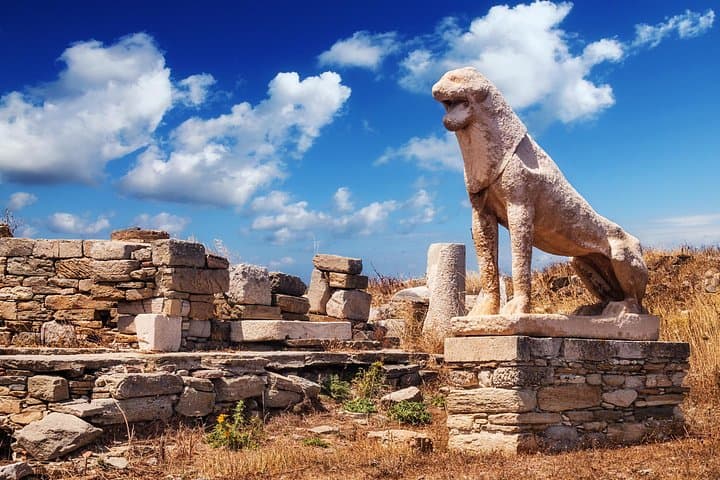


You step off the boat into bright, thin air—the Aegean sun pressing against the white stone, the sea still daring you from where you arrived. Narrow sandy tracks lead between low ruins and stripped terraces; gulls wheel and call while the guide outlines the island’s civic plan, and the sense of a once-bustling port returns in fragments of marble and mosaic.
You step off the boat into bright, thin air—the Aegean sun pressing against the white stone, the sea still daring you from where you arrived. Narrow sandy tracks lead between low ruins and stripped terraces; gulls wheel and call while the guide outlines the island’s civic plan, and the sense of a once-bustling port returns in fragments of marble and mosaic.
Delos was the religious and commercial hub of the Cyclades for millennia and is often described as the mythical birthplace of Apollo and Artemis. Geologically it’s limestone outcrop—low relief, wind-scarred and salt-bleached—so ancient streets run over uneven paving and cisterns carved into bedrock hint at an engineered water economy. Cultural layers here include Greek sanctuaries, Roman infrastructure and an Egyptian temple, all concentrated within a compact archaeological zone and an on-site museum with restored mosaics and statuary.
On the practical side, the whole excursion is a half-day: expect about 45 minutes each way by ferry from Mykonos and roughly two hours on Delos. Terrain is easy but exposed; shade is rare and paths are rocky. Bring water, sun protection and shoes with decent traction. Photography is excellent but respect barriers—this is a protected UNESCO area.
Timing matters: morning crossings are cooler and less windy; post-lunch trips can be busy. There are limited facilities on the island, so plan bathroom and snack needs in Mykonos beforehand. For a short, concentrated dive into classical archaeology framed by open sea, this tour gives immediate access to one of the Aegean’s most compelling open-air museums.