THE ADVENTURE COLLECTIVE® · Independent discovery and booking for outdoor travel

A two-day private drive from Athens that pairs Delphi’s oracle and ruins with Meteora’s cliff-top monasteries. Expect early starts, uneven walking, and spectacular sunrise/sunset viewpoints.
A two-day private drive from Athens that pairs Delphi’s oracle and ruins with Meteora’s cliff-top monasteries. Expect early starts, uneven walking, and spectacular sunrise/sunset viewpoints.
You step out of the car as the mountain air of Parnassus pushes against you, the ruins above you seeming to watch like an old judge. The road from Athens moves through olive groves and limestone ridges; by afternoon the marble columns and the worn steps of Delphi bring the past close enough to touch. That night the landscape changes again—toward Meteora, where monasteries cliff themselves onto toothlike pillars of stone and the wind dares you to stay quiet.
Verified experiences and guided adventures in the surrounding area.
Operated by CATTAXI · Kalambaka, Thessaly
You step out of the car as the mountain air of Parnassus pushes against you, the ruins above you seeming to watch like an old judge. The road from Athens moves through olive groves and limestone ridges; by afternoon the marble columns and the worn steps of Delphi bring the past close enough to touch. That night the landscape changes again—toward Meteora, where monasteries cliff themselves onto toothlike pillars of stone and the wind dares you to stay quiet.
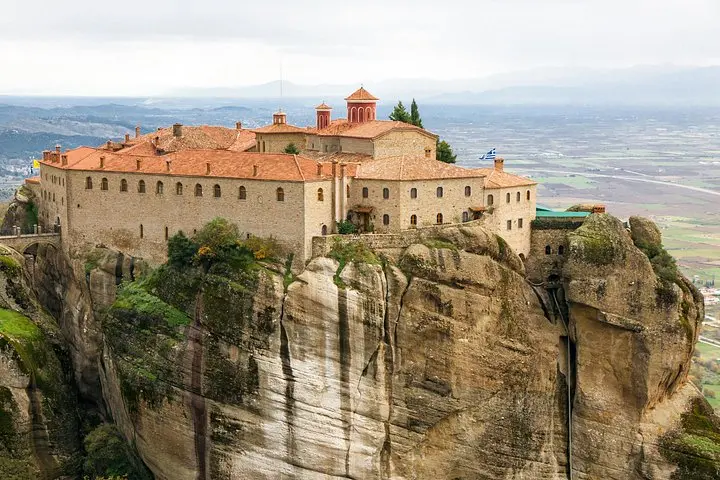
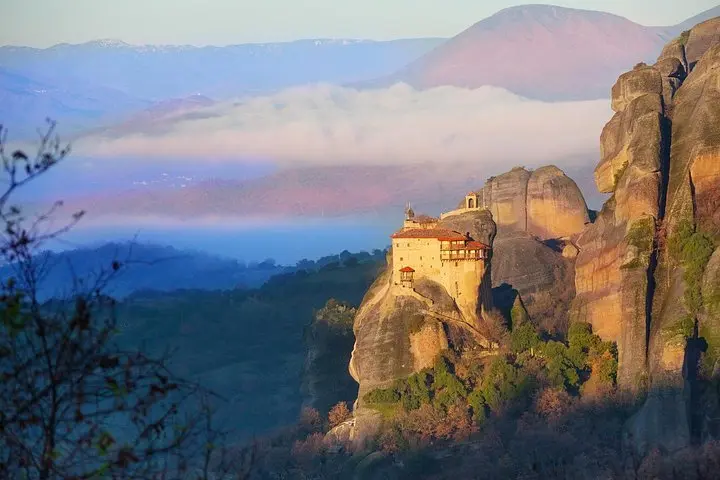
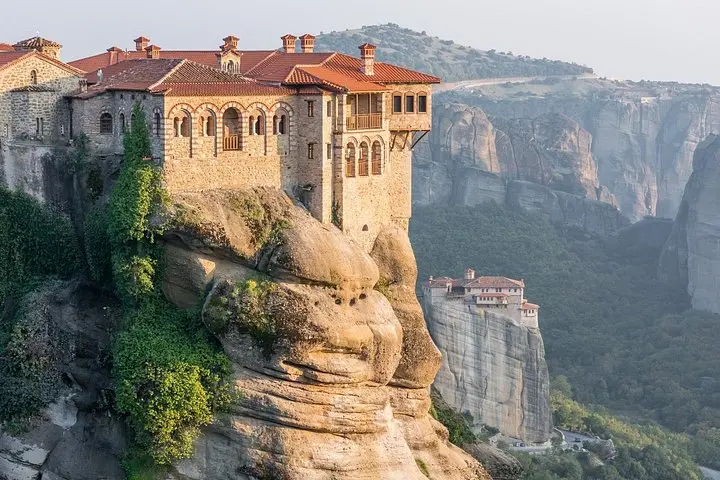
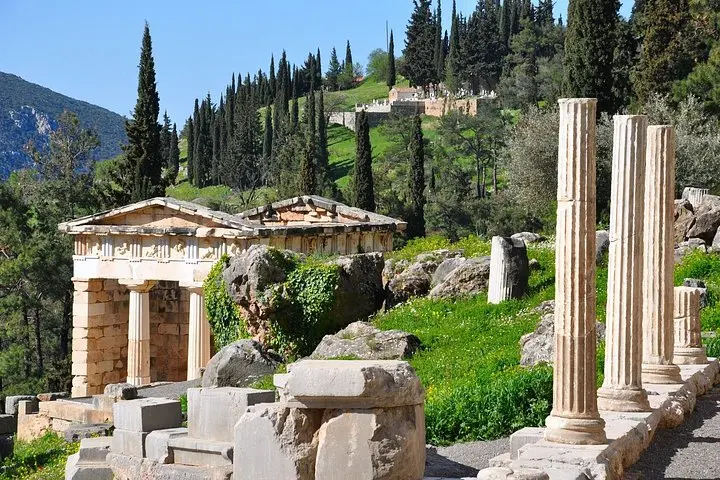
Delphi was Greece’s religious center: the Temple of Apollo, the treasuries and the theatre sit on terraces carved into the mountainside. Geologically, Parnassus is folded limestone; the site’s exposures reveal ancient seabeds and uplifted strata that guided pilgrimage routes for centuries. Meteora’s sandstone towers formed from river deposits and tectonic uplift; monks arrived in the 14th century, hauling ropes and ladders to claim those heights for solitude and prayer. Local culture is equal parts Orthodox ritual, mountain shepherding, and tavern hospitality—expect small-town warmth in Arachova and Kalambaka.
Practical guidance: pack sturdy shoes for uneven archaeological paths and the monastery steps; modest clothing is required at monastic sites (knees and shoulders covered). Expect full days of driving—departure from Athens is early—so plan to hydrate and keep a light daypack handy. Photography is excellent at sunrise and sunset; some monastery interiors restrict photos. If mobility is limited, request vehicle-side stops; guides can tailor the walk lengths. Weather can shift quickly at elevation, so layer up and schedule outdoor time first in cool months. With a private driver and local guides, this two-day circuit balances history, geology and contemplative landscapes into a compact, transportive experience.
Some monasteries charge small entrance fees and Delphi’s museum can be busy; guides often handle admissions, but check with your operator if skip-the-line access is included.
Yes—this is a private tour with flexible pacing, but participants should be able to walk on uneven ground and climb stairs; request vehicle-side stops if mobility is limited.
Expect several hours of driving over two days: Athens to Delphi ~2–2.5 hours, Delphi to Thermopylae ~1 hour, and then onward to Meteora ~3–4 hours, depending on stops and traffic.
Photography policies vary by monastery—many allow exterior photos but restrict interior photography; follow posted rules and your guide’s instructions.
CATTAXI operates guided outdoor trips and adventures with an emphasis on safety, stewardship, and memorable experiences.
You step out of the car as the mountain air of Parnassus pushes against you, the ruins above you seeming to watch like an old judge. The road from Athens moves through olive groves and limestone ridges; by afternoon the marble columns and the worn steps of Delphi bring the past close enough to touch. That night the landscape changes again—toward Meteora, where monasteries cliff themselves onto toothlike pillars of stone and the wind dares you to stay quiet.
You step out of the car as the mountain air of Parnassus pushes against you, the ruins above you seeming to watch like an old judge. The road from Athens moves through olive groves and limestone ridges; by afternoon the marble columns and the worn steps of Delphi bring the past close enough to touch. That night the landscape changes again—toward Meteora, where monasteries cliff themselves onto toothlike pillars of stone and the wind dares you to stay quiet.
Delphi was Greece’s religious center: the Temple of Apollo, the treasuries and the theatre sit on terraces carved into the mountainside. Geologically, Parnassus is folded limestone; the site’s exposures reveal ancient seabeds and uplifted strata that guided pilgrimage routes for centuries. Meteora’s sandstone towers formed from river deposits and tectonic uplift; monks arrived in the 14th century, hauling ropes and ladders to claim those heights for solitude and prayer. Local culture is equal parts Orthodox ritual, mountain shepherding, and tavern hospitality—expect small-town warmth in Arachova and Kalambaka.
Practical guidance: pack sturdy shoes for uneven archaeological paths and the monastery steps; modest clothing is required at monastic sites (knees and shoulders covered). Expect full days of driving—departure from Athens is early—so plan to hydrate and keep a light daypack handy. Photography is excellent at sunrise and sunset; some monastery interiors restrict photos. If mobility is limited, request vehicle-side stops; guides can tailor the walk lengths. Weather can shift quickly at elevation, so layer up and schedule outdoor time first in cool months. With a private driver and local guides, this two-day circuit balances history, geology and contemplative landscapes into a compact, transportive experience.