THE ADVENTURE COLLECTIVE® · Independent discovery and booking for outdoor travel

See Dendera’s Hathor temple and the royal tombs in the Valley of the Kings in one flexible day from Luxor. This private driver service gives you transport, timing control, and time to explore the sites independently.
See Dendera’s Hathor temple and the royal tombs in the Valley of the Kings in one flexible day from Luxor. This private driver service gives you transport, timing control, and time to explore the sites independently.
You step into the car as the Nile valley slips by—mud-brick villages, irrigation canals, and palm groves—while the driver threads a steady line toward two of Egypt’s most compelling sites.
Verified experiences and guided adventures in the surrounding area.
Operated by Eyes of Egypt · Luxor, Luxor Governorate
You step into the car as the Nile valley slips by—mud-brick villages, irrigation canals, and palm groves—while the driver threads a steady line toward two of Egypt’s most compelling sites.
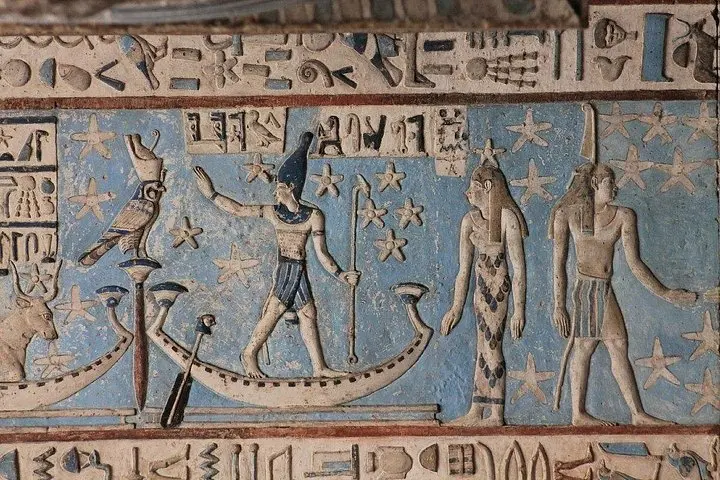
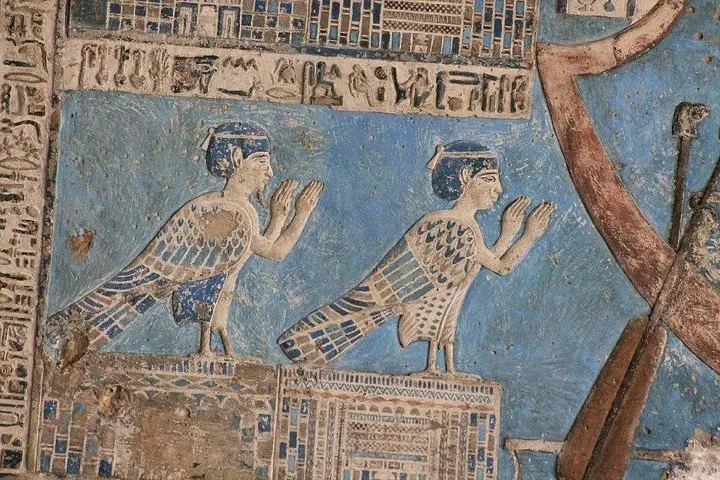
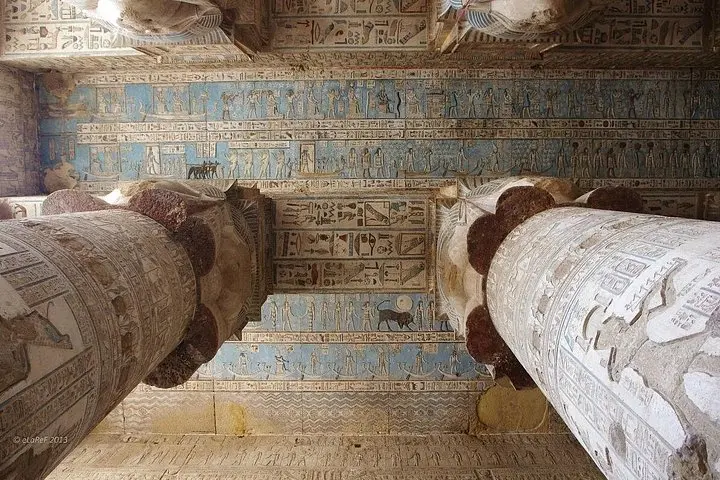
At Dendera the stone cools under a vaulted hypostyle hall; columns loom, painted reliefs still hold pigments, and the Zodiac ceiling draws the eye upward. Later the road returns you to Luxor’s West Bank, where the Valley of the Kings opens like a desert incision—tombs cut into ochre cliffs, their painted chambers descended by narrow passageways and low light.
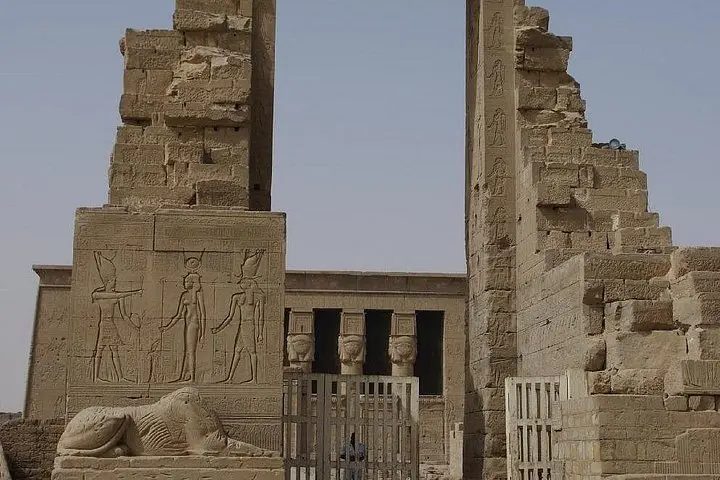
These sites bookend different chapters of Pharaonic history: Dendera is a Ptolemaic and Roman-era temple dedicated to Hathor with notable astronomical iconography, while the Valley of the Kings is the New Kingdom necropolis for pharaohs such as Thutmose III and Ramses II. Geologically, the valley’s limestone and sandstone strata made deep, durable tomb-cutting possible; those same soft layers now require ongoing conservation to protect fragile pigments and reliefs.
Culturally, you’ll encounter living local rhythms—shawarma stalls, Nile-side feluccas moored at dusk, and villagers tending felucca reeds—reminders that ancient and modern Egypt coexist here.
Practical guidance: plan 5–6 hours, bring cash for entrance tickets, and wear sun protection and sturdy shoes for uneven surfaces and shallow staircases. Photography rules vary by tomb; check at entrances and buy any required tickets on site. Start early to avoid mid-day heat and allow time for restroom breaks between sites. With a private driver you control the pace—use that freedom to linger where the carvings speak loudest.
No—entrance tickets to Dendera and the Valley of the Kings are purchased on site; certain tombs require additional tickets bought at the Valley ticket office.
The driver provides transport and local logistics but does not give in-depth commentary inside temples or tombs, leaving you free to explore independently.
Pickup and vehicle transport are wheelchair accessible, but many tomb interiors and temple areas have stairs and uneven ground that limit full access.
Start early in the morning to avoid peak heat and crowds—spring and fall mornings are especially pleasant for both Dendera and the Valley.
Eyes of Egypt operates guided outdoor trips and adventures with an emphasis on safety, stewardship, and memorable experiences.
You step into the car as the Nile valley slips by—mud-brick villages, irrigation canals, and palm groves—while the driver threads a steady line toward two of Egypt’s most compelling sites.
You step into the car as the Nile valley slips by—mud-brick villages, irrigation canals, and palm groves—while the driver threads a steady line toward two of Egypt’s most compelling sites.
At Dendera the stone cools under a vaulted hypostyle hall; columns loom, painted reliefs still hold pigments, and the Zodiac ceiling draws the eye upward. Later the road returns you to Luxor’s West Bank, where the Valley of the Kings opens like a desert incision—tombs cut into ochre cliffs, their painted chambers descended by narrow passageways and low light.
These sites bookend different chapters of Pharaonic history: Dendera is a Ptolemaic and Roman-era temple dedicated to Hathor with notable astronomical iconography, while the Valley of the Kings is the New Kingdom necropolis for pharaohs such as Thutmose III and Ramses II. Geologically, the valley’s limestone and sandstone strata made deep, durable tomb-cutting possible; those same soft layers now require ongoing conservation to protect fragile pigments and reliefs.
Culturally, you’ll encounter living local rhythms—shawarma stalls, Nile-side feluccas moored at dusk, and villagers tending felucca reeds—reminders that ancient and modern Egypt coexist here.
Practical guidance: plan 5–6 hours, bring cash for entrance tickets, and wear sun protection and sturdy shoes for uneven surfaces and shallow staircases. Photography rules vary by tomb; check at entrances and buy any required tickets on site. Start early to avoid mid-day heat and allow time for restroom breaks between sites. With a private driver you control the pace—use that freedom to linger where the carvings speak loudest.