THE ADVENTURE COLLECTIVE® · Independent discovery and booking for outdoor travel
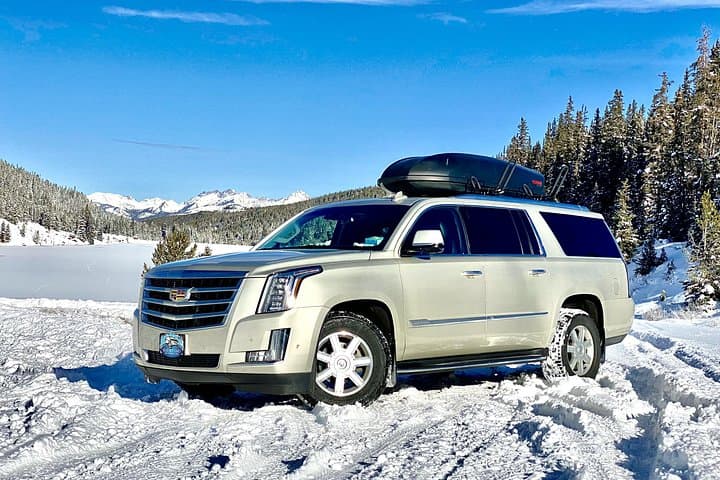
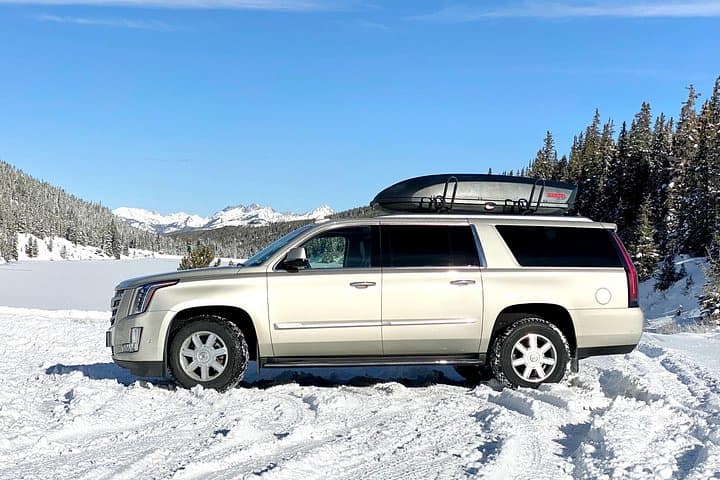
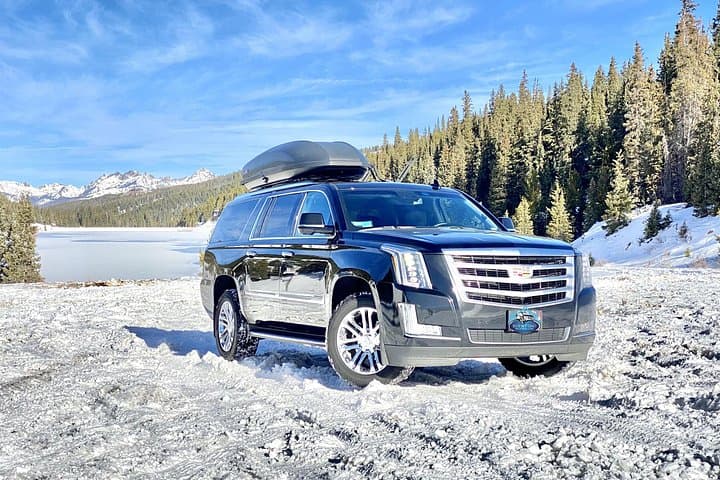
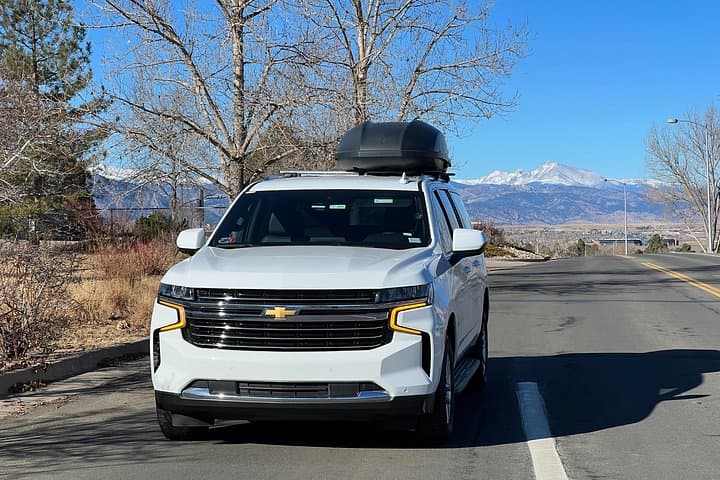
A private SUV shuttle from Denver International Airport to Edwards blends comfort with mountain-ready practicality. Expect a scenic 2.5–3 hour drive along I‑70, rooftop ski storage, onboard Wi‑Fi and drivers familiar with winter conditions.
A private SUV shuttle from Denver International Airport to Edwards blends comfort with mountain-ready practicality. Expect a scenic 2.5–3 hour drive along I‑70, rooftop ski storage, onboard Wi‑Fi and drivers familiar with winter conditions.
The first sight after the airport is the city letting go: the plains thin out and the highway rolls toward the mountains, a steady climb that signals you're leaving urban grid for high-country air. On the Denver to Edwards run the road becomes a narrative—concrete giving way to tunneled passes, river-cut canyons and open sky. Riders watch the Continental Divide push across the horizon as the SUV hums west.
Verified experiences and guided adventures in the surrounding area.
Operated by Blue Sky Limo · Edwards, Colorado
The first sight after the airport is the city letting go: the plains thin out and the highway rolls toward the mountains, a steady climb that signals you're leaving urban grid for high-country air. On the Denver to Edwards run the road becomes a narrative—concrete giving way to tunneled passes, river-cut canyons and open sky. Riders watch the Continental Divide push across the horizon as the SUV hums west.
This corridor follows decades of Colorado travel history: the transcontinental push of the mid-20th century, the I-70 engineering that threaded valleys and tunneled through the Rockies, and the evolution of Eagle County from ranching and mining to ski-centered towns. Geology is immediate here—granite walls, glacially carved valleys, and the Eagle River cutting a deliberate route through sedimentary benches.
Culture along the way is practical and outdoors-first: ski racks on SUVs, coffee joints at exit ramps, and small mountain towns that still trade weather updates like currency. Locals will tell you timing matters; storms can change a three-hour drive into something slower.
For travelers, this transfer is straightforward and service-forward: luxury SUV capacity for up to six, rooftop ski/cargo option, onboard Wi‑Fi and bottled water, and drivers who can stop for groceries or gear. Expect about 2.5–3 hours on I‑70 (roughly 125 miles) depending on traffic and weather. Pack layers, allow extra time for winter passes, and share flight details before arrival so drivers can meet you inside the terminal. With practical planning this transfer removes the friction, leaving you ready to step into the mountains rather than into logistics.
Expect roughly 2.5–3 hours depending on traffic and weather; the operator lists a fixed duration of about 180 minutes.
Yes — drivers can help load and unload luggage and skis, and a rooftop ski/cargo box is available on request.
Provide flight details at booking; drivers monitor flight status and will adjust pickup timing within the operator's scheduling window—still confirm via the driver's contact info sent with your reservation.
The service notes wheelchair accessibility and specialized seating options; indicate accessibility needs when booking so appropriate vehicle and assistance can be arranged.
Blue Sky Limo operates guided outdoor trips and adventures with an emphasis on safety, stewardship, and memorable experiences.
The first sight after the airport is the city letting go: the plains thin out and the highway rolls toward the mountains, a steady climb that signals you're leaving urban grid for high-country air. On the Denver to Edwards run the road becomes a narrative—concrete giving way to tunneled passes, river-cut canyons and open sky. Riders watch the Continental Divide push across the horizon as the SUV hums west.
The first sight after the airport is the city letting go: the plains thin out and the highway rolls toward the mountains, a steady climb that signals you're leaving urban grid for high-country air. On the Denver to Edwards run the road becomes a narrative—concrete giving way to tunneled passes, river-cut canyons and open sky. Riders watch the Continental Divide push across the horizon as the SUV hums west.
This corridor follows decades of Colorado travel history: the transcontinental push of the mid-20th century, the I-70 engineering that threaded valleys and tunneled through the Rockies, and the evolution of Eagle County from ranching and mining to ski-centered towns. Geology is immediate here—granite walls, glacially carved valleys, and the Eagle River cutting a deliberate route through sedimentary benches.
Culture along the way is practical and outdoors-first: ski racks on SUVs, coffee joints at exit ramps, and small mountain towns that still trade weather updates like currency. Locals will tell you timing matters; storms can change a three-hour drive into something slower.
For travelers, this transfer is straightforward and service-forward: luxury SUV capacity for up to six, rooftop ski/cargo option, onboard Wi‑Fi and bottled water, and drivers who can stop for groceries or gear. Expect about 2.5–3 hours on I‑70 (roughly 125 miles) depending on traffic and weather. Pack layers, allow extra time for winter passes, and share flight details before arrival so drivers can meet you inside the terminal. With practical planning this transfer removes the friction, leaving you ready to step into the mountains rather than into logistics.
