THE ADVENTURE COLLECTIVE® · Independent discovery and booking for outdoor travel

Descend beneath Kraków to explore the UNESCO-listed Wieliczka Salt Mine — an underground world of carved chapels, salt sculptures and subterranean lakes. This guided hotel pickup tour makes the 700-year story of salt accessible in a single day trip.
Descend beneath Kraków to explore the UNESCO-listed Wieliczka Salt Mine — an underground world of carved chapels, salt sculptures and subterranean lakes. This guided hotel pickup tour makes the 700-year story of salt accessible in a single day trip.
You step off the minivan into a cool, dim corridor and the air seems to rearrange itself — salt crystals sparkle like distant streetlights and the sound of footsteps echoes down stone. The Wieliczka Salt Mine drops visitors into 700 years of human labor: carved passages, vaulted chambers, and a chapel hewn entirely from salt.
Verified experiences and guided adventures in the surrounding area.
Operated by CRACOW TIME · Wieliczka, Lesser Poland Voivodeship
You step off the minivan into a cool, dim corridor and the air seems to rearrange itself — salt crystals sparkle like distant streetlights and the sound of footsteps echoes down stone. The Wieliczka Salt Mine drops visitors into 700 years of human labor: carved passages, vaulted chambers, and a chapel hewn entirely from salt.
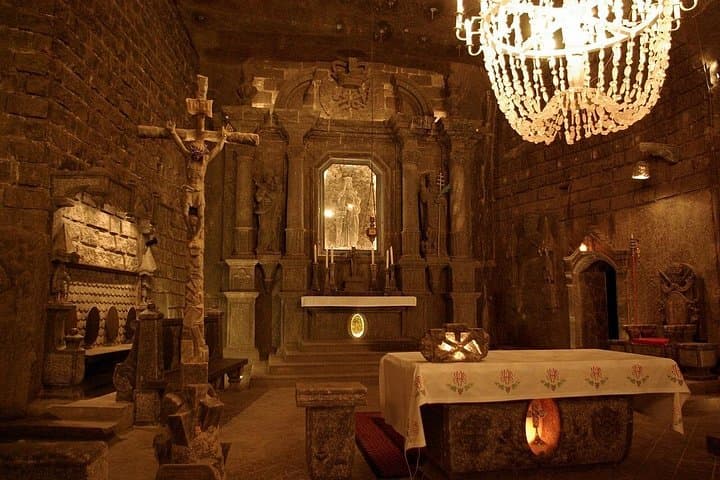
Originally worked from the 13th century, Wieliczka supplied salt that funded medieval castles and fed trade routes across Europe. Geologically it’s a layered halite deposit carved by miners over centuries; the mine’s depth and galleries record both natural formation and human ingenuity. Culture here is tied to mining technique and devotion — St. Kinga’s Chapel and salt-carved reliefs are as much memorial as spectacle.
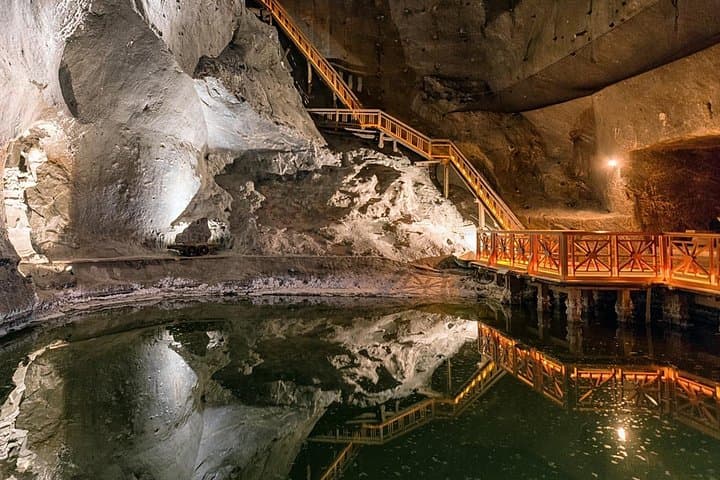
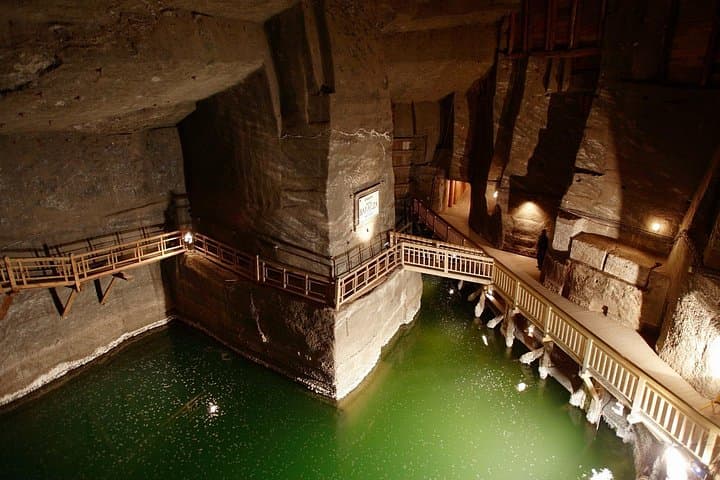
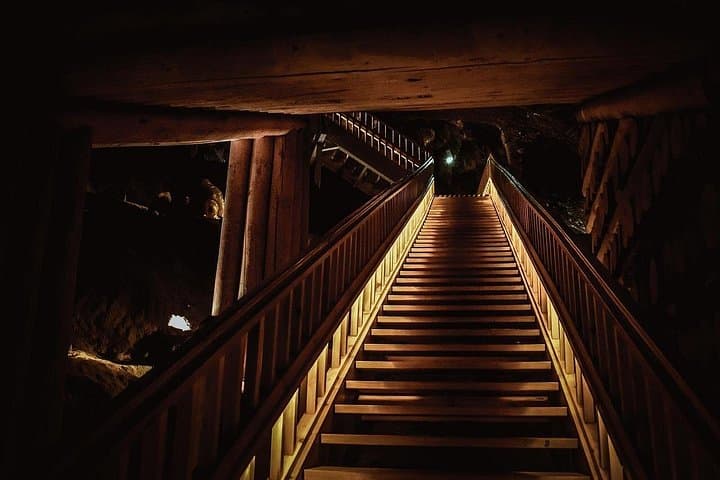
Expect about 2–3 hours underground within a 4–5 hour door-to-door excursion including pickup and transit from Kraków. The walk includes stone steps, sloping ramps and narrow corridors; rooms are cool year-round (roughly 14°C / 57°F). Guides narrate mining methods, salt geology, and the social history of Wieliczka while pausing at carved altars, an underground lake, and miners’ sculptures.
Practical guidance: wear sturdy shoes with grip and a warm layer, bring a small water bottle, and be ready for stairs — many tours ask for reasonable fitness. Photography is generally allowed but be respectful of the art and other visitors. The site is heavily managed for conservation; stay on marked routes and follow your guide. With careful planning this guided tour is a compact, accessible plunge into Poland’s working past.
Public routes descend to around 135 meters; the guided tour follows maintained galleries and stops at main chambers including St. Kinga’s Chapel.
Children can attend but infants must sit on laps; expect many stairs and long walking segments—assess based on your child’s mobility.
Photography is generally permitted in most chambers; some specific areas may restrict flash to protect salt carvings—follow your guide’s instructions.
The service includes driver pickup, transportation to and from Wieliczka, entrance fee, and a guided tour in the chosen language; confirm pickup point when booking.
CRACOW TIME operates guided outdoor trips and adventures with an emphasis on safety, stewardship, and memorable experiences.
You step off the minivan into a cool, dim corridor and the air seems to rearrange itself — salt crystals sparkle like distant streetlights and the sound of footsteps echoes down stone. The Wieliczka Salt Mine drops visitors into 700 years of human labor: carved passages, vaulted chambers, and a chapel hewn entirely from salt.
You step off the minivan into a cool, dim corridor and the air seems to rearrange itself — salt crystals sparkle like distant streetlights and the sound of footsteps echoes down stone. The Wieliczka Salt Mine drops visitors into 700 years of human labor: carved passages, vaulted chambers, and a chapel hewn entirely from salt.
Originally worked from the 13th century, Wieliczka supplied salt that funded medieval castles and fed trade routes across Europe. Geologically it’s a layered halite deposit carved by miners over centuries; the mine’s depth and galleries record both natural formation and human ingenuity. Culture here is tied to mining technique and devotion — St. Kinga’s Chapel and salt-carved reliefs are as much memorial as spectacle.
Expect about 2–3 hours underground within a 4–5 hour door-to-door excursion including pickup and transit from Kraków. The walk includes stone steps, sloping ramps and narrow corridors; rooms are cool year-round (roughly 14°C / 57°F). Guides narrate mining methods, salt geology, and the social history of Wieliczka while pausing at carved altars, an underground lake, and miners’ sculptures.
Practical guidance: wear sturdy shoes with grip and a warm layer, bring a small water bottle, and be ready for stairs — many tours ask for reasonable fitness. Photography is generally allowed but be respectful of the art and other visitors. The site is heavily managed for conservation; stay on marked routes and follow your guide. With careful planning this guided tour is a compact, accessible plunge into Poland’s working past.