THE ADVENTURE COLLECTIVE® · Independent discovery and booking for outdoor travel

Swap poolside lights for a desert canopy of stars on a Marsa Alam evening. Ride a camel to a clifftop sunset, share a Bedouin meal, then peer through a 15" telescope to meet planets and nebulae.
Swap poolside lights for a desert canopy of stars on a Marsa Alam evening. Ride a camel to a clifftop sunset, share a Bedouin meal, then peer through a 15" telescope to meet planets and nebulae.
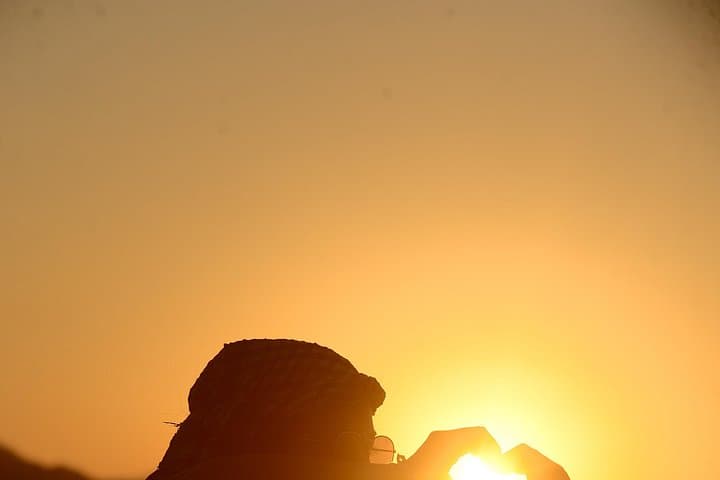
Dusk in the Eastern Desert folds the Red Sea coast into a long, dark bowl; camels cast slow profiles on the ridgeline while the first stars prick the sky. On this Marsa Alam evening tour you trade hotel lights for a horizon that seems intentionally wide — an Arctic of black velvet where constellations feel close enough to reach.
Verified experiences and guided adventures in the surrounding area.
Operated by SPACE OBSERVERS EGYPT · Marsa Alam, Red Sea Governorate
Dusk in the Eastern Desert folds the Red Sea coast into a long, dark bowl; camels cast slow profiles on the ridgeline while the first stars prick the sky. On this Marsa Alam evening tour you trade hotel lights for a horizon that seems intentionally wide — an Arctic of black velvet where constellations feel close enough to reach.
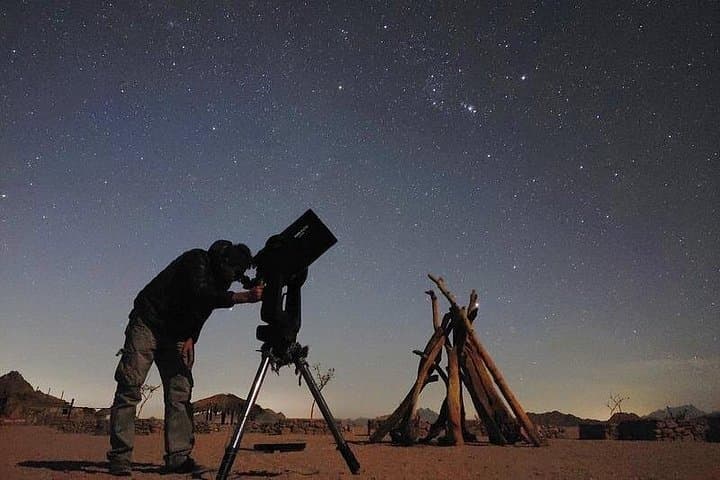
The landscape here is layered granite and wind-swept sand carved over millennia; Bedouin tribes have read these dunes and cliffs for generations, guiding nomads and caravans between the coast and inland wells. Guides blend that local knowledge with modern astronomy: a GPS-directed 15" Meade telescope brings planets, star clusters, and distant nebulae into sharp relief.
Expect a sequence of small adventures — a buggy or quad transfer into the desert, a short camel ride and a climb to a sunset vantage, then a simple, wood-fired Bedouin dinner and herbal tea. After dark, the astronomer sets up the observatory; the group cycles through eyepieces, guided explanations, and wide-sky storytelling.
Practically: the site has low light pollution and is accessible from Marsa Alam hotels with included Jeep pick-up. Nights are chilly even after hot days, so wear insulating layers and solid footwear for rocky footing. Bring a headlamp with a red filter, a camera with a tripod if you want long exposures, and patience — telescopic viewing requires stillness and time. The tour suits families and first-time stargazers and delivers an easy, immersive way to read both the desert and the sky.
Yes — the tour includes Jeep pickup and drop-off from Marsa Alam area hotels as listed at booking.
Yes — the tour is family-friendly; infants must sit on laps for safety during transfers and some activities.
Depending on season and conditions, guides typically show planets, open clusters, double stars, and bright nebulae through the 15" Meade telescope.
The operator notes wheelchair-accessible transportation and surfaces for portions of the experience, though some viewpoints may require short uneven walks.
SPACE OBSERVERS EGYPT operates guided outdoor trips and adventures with an emphasis on safety, stewardship, and memorable experiences.


Dusk in the Eastern Desert folds the Red Sea coast into a long, dark bowl; camels cast slow profiles on the ridgeline while the first stars prick the sky. On this Marsa Alam evening tour you trade hotel lights for a horizon that seems intentionally wide — an Arctic of black velvet where constellations feel close enough to reach.
Dusk in the Eastern Desert folds the Red Sea coast into a long, dark bowl; camels cast slow profiles on the ridgeline while the first stars prick the sky. On this Marsa Alam evening tour you trade hotel lights for a horizon that seems intentionally wide — an Arctic of black velvet where constellations feel close enough to reach.
The landscape here is layered granite and wind-swept sand carved over millennia; Bedouin tribes have read these dunes and cliffs for generations, guiding nomads and caravans between the coast and inland wells. Guides blend that local knowledge with modern astronomy: a GPS-directed 15" Meade telescope brings planets, star clusters, and distant nebulae into sharp relief.
Expect a sequence of small adventures — a buggy or quad transfer into the desert, a short camel ride and a climb to a sunset vantage, then a simple, wood-fired Bedouin dinner and herbal tea. After dark, the astronomer sets up the observatory; the group cycles through eyepieces, guided explanations, and wide-sky storytelling.
Practically: the site has low light pollution and is accessible from Marsa Alam hotels with included Jeep pick-up. Nights are chilly even after hot days, so wear insulating layers and solid footwear for rocky footing. Bring a headlamp with a red filter, a camera with a tripod if you want long exposures, and patience — telescopic viewing requires stillness and time. The tour suits families and first-time stargazers and delivers an easy, immersive way to read both the desert and the sky.