THE ADVENTURE COLLECTIVE® · Independent discovery and booking for outdoor travel

A short, four-hour drive from Doha transforms urban edge into a stark desert gallery—towering Richard Serra plates and wind-carved mushroom rocks at Zekreet. This practical guide explains what to expect, when to go, and how to prepare.
A short, four-hour drive from Doha transforms urban edge into a stark desert gallery—towering Richard Serra plates and wind-carved mushroom rocks at Zekreet. This practical guide explains what to expect, when to go, and how to prepare.
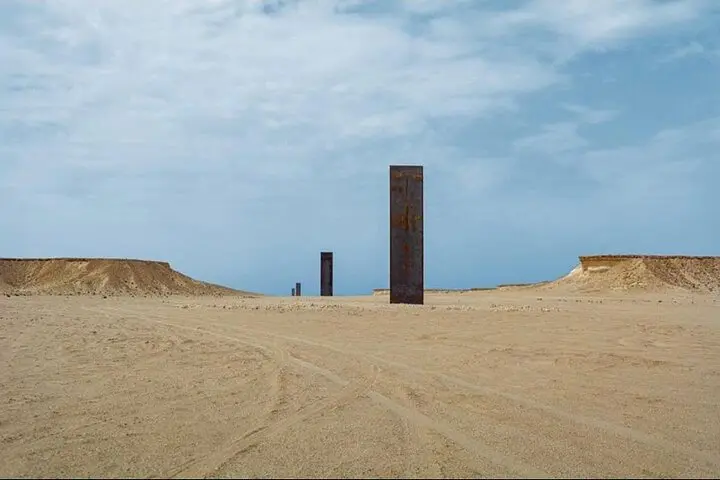
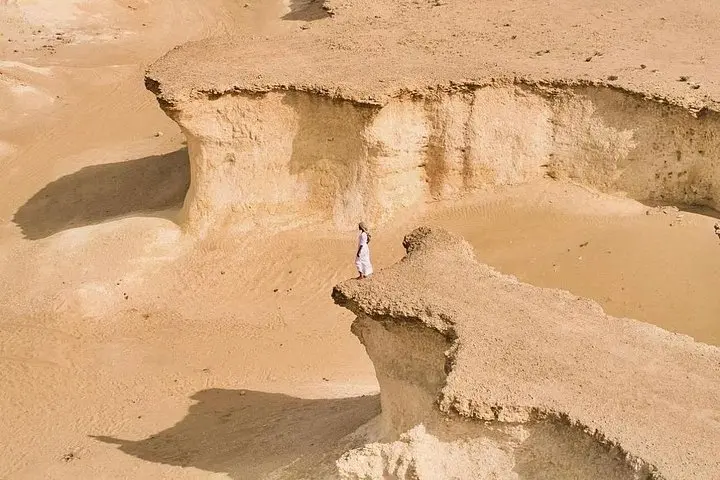
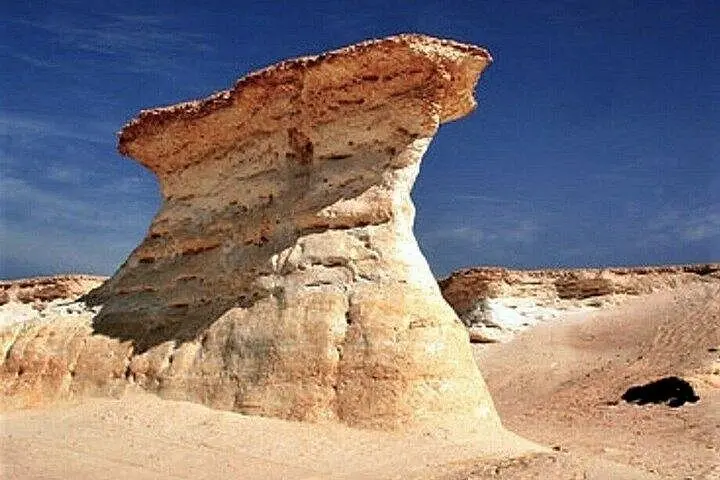
The wind cuts across the pale expanse and the desert answers back—steel plates rising like a human-made canyon, white limestone outcrops shaped into mushroom caps by relentless sand and time. On a four-hour west-coast run from Doha you move from sealed road to raw landscape, passing camel tracks and low, wind-sculpted cliffs until the Richard Serra installation appears, a sequence of towering steel walls aligned to the horizon.
Verified experiences and guided adventures in the surrounding area.
Operated by Horizon Tour For Tourism Services · Zekreet, Al-Shahaniyah
The wind cuts across the pale expanse and the desert answers back—steel plates rising like a human-made canyon, white limestone outcrops shaped into mushroom caps by relentless sand and time. On a four-hour west-coast run from Doha you move from sealed road to raw landscape, passing camel tracks and low, wind-sculpted cliffs until the Richard Serra installation appears, a sequence of towering steel walls aligned to the horizon.
Zekreet Fort, dated to the late 18th or early 19th century, anchors the region’s modest human history; nearby the Brouq (Ras Abrouq) reserve records older geological processes—soft limestone eroded into the mushroom rocks and serrated cliffs you’ll see. Serra’s East-West/West-East uses the plain’s subtle undulations to amplify scale: each plate rises over 14 meters and stretches alignment across more than a kilometer, drawing the eye out to the Arabian Gulf.
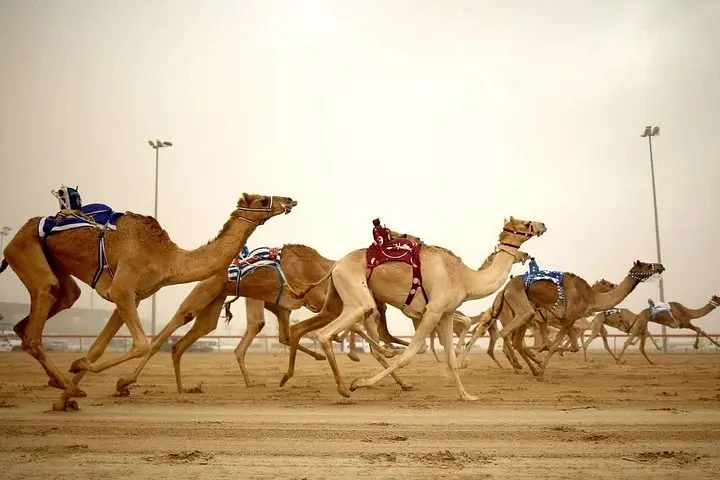
Local life here is sparse but legible—camel training grounds, scattered fishermen, and a few settlements in Ash-Shahaniyah—so visits feel private and elemental. Expect short, uneven walks on compacted sand and limestone; the terrain is easy but exposed.
Practical guidance: go early or late to avoid heat, bring 2+ liters of water, sun protection, and sturdy closed-toe shoes for walking on slick limestone. Photography is spectacular at low sun—steel burns orange and shadows sharpen the rock forms. Respect fragile formations, stay off eroded caps, and follow your guide’s route—this is desert ecology that recovers slowly from footprints. The tour is compact, cinematic, and approachable for anyone with moderate fitness and a taste for big, quiet places.
The tour lasts about four hours round trip from Doha and typically includes private transport, a guide, bottled water, and light refreshments.
Yes—infants must sit on an adult’s lap. The tour is family-friendly but keep children close near cliffs and delicate rock formations.
The installation is in a nature reserve accessible by road; joining a guided tour simplifies navigation and ensures minimal environmental impact.
Autumn through spring offers cooler temperatures and more comfortable touring conditions; avoid midday in summer due to extreme heat.
Horizon Tour For Tourism Services operates guided outdoor trips and adventures with an emphasis on safety, stewardship, and memorable experiences.
The wind cuts across the pale expanse and the desert answers back—steel plates rising like a human-made canyon, white limestone outcrops shaped into mushroom caps by relentless sand and time. On a four-hour west-coast run from Doha you move from sealed road to raw landscape, passing camel tracks and low, wind-sculpted cliffs until the Richard Serra installation appears, a sequence of towering steel walls aligned to the horizon.
The wind cuts across the pale expanse and the desert answers back—steel plates rising like a human-made canyon, white limestone outcrops shaped into mushroom caps by relentless sand and time. On a four-hour west-coast run from Doha you move from sealed road to raw landscape, passing camel tracks and low, wind-sculpted cliffs until the Richard Serra installation appears, a sequence of towering steel walls aligned to the horizon.
Zekreet Fort, dated to the late 18th or early 19th century, anchors the region’s modest human history; nearby the Brouq (Ras Abrouq) reserve records older geological processes—soft limestone eroded into the mushroom rocks and serrated cliffs you’ll see. Serra’s East-West/West-East uses the plain’s subtle undulations to amplify scale: each plate rises over 14 meters and stretches alignment across more than a kilometer, drawing the eye out to the Arabian Gulf.
Local life here is sparse but legible—camel training grounds, scattered fishermen, and a few settlements in Ash-Shahaniyah—so visits feel private and elemental. Expect short, uneven walks on compacted sand and limestone; the terrain is easy but exposed.
Practical guidance: go early or late to avoid heat, bring 2+ liters of water, sun protection, and sturdy closed-toe shoes for walking on slick limestone. Photography is spectacular at low sun—steel burns orange and shadows sharpen the rock forms. Respect fragile formations, stay off eroded caps, and follow your guide’s route—this is desert ecology that recovers slowly from footprints. The tour is compact, cinematic, and approachable for anyone with moderate fitness and a taste for big, quiet places.