THE ADVENTURE COLLECTIVE® · Independent discovery and booking for outdoor travel

Crossing the Namib from Windhoek to the Atlantic, this five-day Desert-to-Coast route pairs Sossusvlei’s towering dunes with Swakopmund’s marine drama. Expect early sunrises, long drives through Gaub and Kuiseb passes, and a catamaran cruise at Walvis Bay.
Crossing the Namib from Windhoek to the Atlantic, this five-day Desert-to-Coast route pairs Sossusvlei’s towering dunes with Swakopmund’s marine drama. Expect early sunrises, long drives through Gaub and Kuiseb passes, and a catamaran cruise at Walvis Bay.
The engine hums to life before dawn in Windhoek and the headlights carve a ribbon through the low desert light. In the van, the dunes begin as distant, ochre illusions and grow into a landscape that demands attention: wind-sculpted ridges, salt pans flashing like mirrors, and the lonely silhouettes of camel-thorn trees standing guard over clay pans. This is Namibia’s extreme geography in motion — a five-day corridor that pushes from the inland red of Sossusvlei to the cool, briny air of Swakopmund and Walvis Bay.
Verified experiences and guided adventures in the surrounding area.
Operated by Chena Tours & Safaris Namibia · Windhoek, Khomas
The engine hums to life before dawn in Windhoek and the headlights carve a ribbon through the low desert light. In the van, the dunes begin as distant, ochre illusions and grow into a landscape that demands attention: wind-sculpted ridges, salt pans flashing like mirrors, and the lonely silhouettes of camel-thorn trees standing guard over clay pans. This is Namibia’s extreme geography in motion — a five-day corridor that pushes from the inland red of Sossusvlei to the cool, briny air of Swakopmund and Walvis Bay.
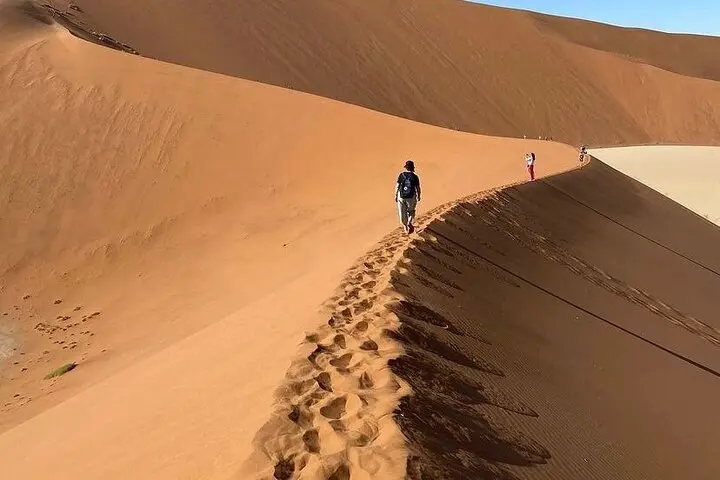
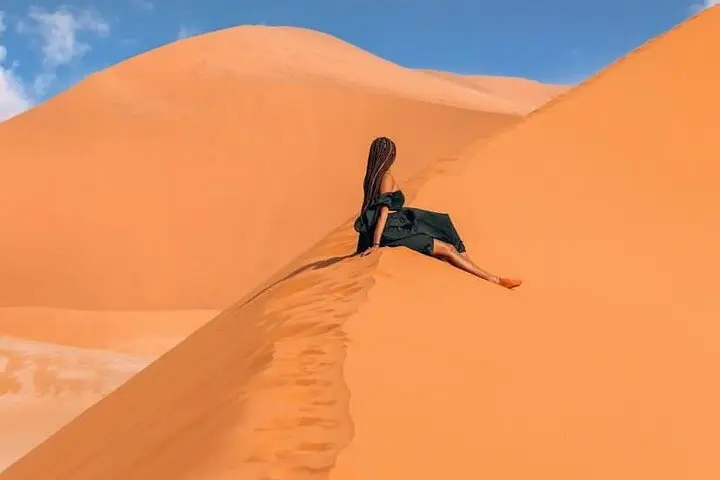
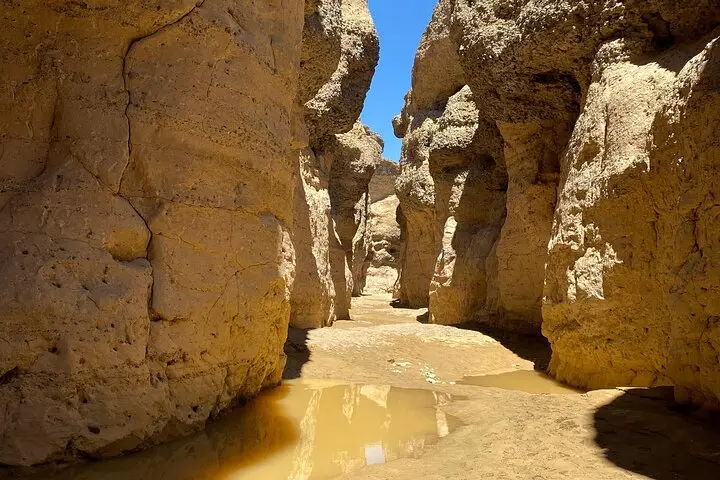
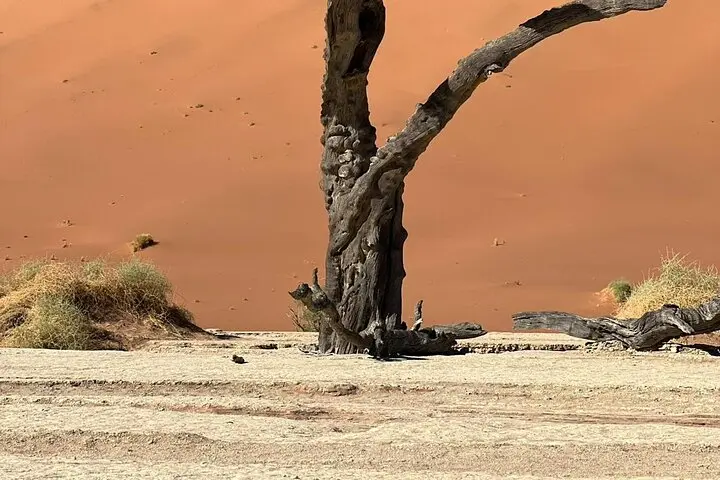
Sossusvlei’s signature scenes — Dune 45, Big Daddy and Deadvlei — are geological theater. The dunes are old mountains of sand: Big Daddy rises roughly 300–325 meters and shifts with every wind season. Sesriem Canyon, carved by the intermittent Tsauchab River, offers a counterpoint: narrow, shady cuts in the rock that tell a slow story of water where there is now aridity. Along the route, small settlements like Solitaire provide human punctuation — a general store, an outpost bakery famous for apple pie, and a scattering of rusting cars that nod to the motoring history of desert travel.
Culturally, the region sits on the edge of Nama and Herero territories, and local guides will often share oral histories that link present-day pastoral life to these arid landscapes. Conservation has shaped access: Sossusvlei’s dramatic pans and dunes are inside Namib-Naukluft National Park, and management focuses on controlled visitation and community benefits from tourism.
Practicalities anchor the romance. Expect long drives — 4–5 hours between Windhoek and Sossusvlei, and roughly 4 hours from Sossusvlei to Swakopmund — so travel days require patience and good pack choices. Early starts are essential; the best light and coolest temperatures for climbing Dune 45 or Big Daddy are at sunrise. Bring at least 3 liters of water per person on desert excursion days, a sun hat, and layered clothing: desert days burn hot but nights can fall sharply cold. The boat cruise from Walvis Bay takes 2.5–3 hours and is the region’s marine counterpoint, offering pelicans, Cape fur seals, and seasonal whales between June and November.
The tour’s small-group format (max ~10) means time to pause at viewpoints like Spreetshoogte and Kuiseb Pass and to taste local hospitality at desert lodges. For those planning the trip: book early for June–September (peak whale and mild temperatures), prepare for sand and sun, and verify park entrance fees and vehicle arrangements. The desert will test your rhythm — it dares you to slow down, lift your eyes, and measure distance by the quality of light rather than the clock.
Entrance to Namib-Naukluft National Park and Sossusvlei requires park fees — these are usually arranged by the tour operator and may be included in your booking; confirm before departure.
Big Daddy is steep and sandy — expect a heavy cardiovascular effort for 20–60 minutes depending on pace and fitness; walking poles can help but are not required.
Humpback and southern right whales are most commonly sighted in Walvis Bay between June and November, with peak sightings mid-winter to early spring.
The itinerary is family-friendly but involves long vehicle transfers and dune climbing; check mobility needs and inform the operator about any special requirements.
Bring insulated layers, a warm hat, and a sleeping layer; temperatures can drop significantly after sunset even when days are hot.
The advertised tour includes selected meals (breakfasts, lunches, dinners as listed) and handpicked lodges or camps; confirm specific meal and room arrangements with the operator.
Chena Tours & Safaris Namibia operates guided outdoor trips and adventures with an emphasis on safety, stewardship, and memorable experiences.
The engine hums to life before dawn in Windhoek and the headlights carve a ribbon through the low desert light. In the van, the dunes begin as distant, ochre illusions and grow into a landscape that demands attention: wind-sculpted ridges, salt pans flashing like mirrors, and the lonely silhouettes of camel-thorn trees standing guard over clay pans. This is Namibia’s extreme geography in motion — a five-day corridor that pushes from the inland red of Sossusvlei to the cool, briny air of Swakopmund and Walvis Bay.
The engine hums to life before dawn in Windhoek and the headlights carve a ribbon through the low desert light. In the van, the dunes begin as distant, ochre illusions and grow into a landscape that demands attention: wind-sculpted ridges, salt pans flashing like mirrors, and the lonely silhouettes of camel-thorn trees standing guard over clay pans. This is Namibia’s extreme geography in motion — a five-day corridor that pushes from the inland red of Sossusvlei to the cool, briny air of Swakopmund and Walvis Bay.
Sossusvlei’s signature scenes — Dune 45, Big Daddy and Deadvlei — are geological theater. The dunes are old mountains of sand: Big Daddy rises roughly 300–325 meters and shifts with every wind season. Sesriem Canyon, carved by the intermittent Tsauchab River, offers a counterpoint: narrow, shady cuts in the rock that tell a slow story of water where there is now aridity. Along the route, small settlements like Solitaire provide human punctuation — a general store, an outpost bakery famous for apple pie, and a scattering of rusting cars that nod to the motoring history of desert travel.
Culturally, the region sits on the edge of Nama and Herero territories, and local guides will often share oral histories that link present-day pastoral life to these arid landscapes. Conservation has shaped access: Sossusvlei’s dramatic pans and dunes are inside Namib-Naukluft National Park, and management focuses on controlled visitation and community benefits from tourism.
Practicalities anchor the romance. Expect long drives — 4–5 hours between Windhoek and Sossusvlei, and roughly 4 hours from Sossusvlei to Swakopmund — so travel days require patience and good pack choices. Early starts are essential; the best light and coolest temperatures for climbing Dune 45 or Big Daddy are at sunrise. Bring at least 3 liters of water per person on desert excursion days, a sun hat, and layered clothing: desert days burn hot but nights can fall sharply cold. The boat cruise from Walvis Bay takes 2.5–3 hours and is the region’s marine counterpoint, offering pelicans, Cape fur seals, and seasonal whales between June and November.
The tour’s small-group format (max ~10) means time to pause at viewpoints like Spreetshoogte and Kuiseb Pass and to taste local hospitality at desert lodges. For those planning the trip: book early for June–September (peak whale and mild temperatures), prepare for sand and sun, and verify park entrance fees and vehicle arrangements. The desert will test your rhythm — it dares you to slow down, lift your eyes, and measure distance by the quality of light rather than the clock.