THE ADVENTURE COLLECTIVE® · Independent discovery and booking for outdoor travel

Stand before Dettifoss and feel the force of Europe’s most powerful waterfall. This Super-Jeep tour from Reykjahlíð pairs a short rugged hike with up-close views of Dettifoss, Selfoss and — when roads allow — Hafragilsfoss.
Stand before Dettifoss and feel the force of Europe’s most powerful waterfall. This Super-Jeep tour from Reykjahlíð pairs a short rugged hike with up-close views of Dettifoss, Selfoss and — when roads allow — Hafragilsfoss.
The first sight arrives with a boom rather than a whisper — brown glacial water hurling itself over a basalt lip, spray cutting the cool Icelandic air. You step from a super jeep onto gravel braided with meltwater, boots sinking a little, and the falls immediately demand attention: Dettifoss pushes forward like a living machine, louder than conversation and colder than the wind.
Verified experiences and guided adventures in the surrounding area.
Operated by Geo Travel ehf · Reykjahlid, Northeast Region
The first sight arrives with a boom rather than a whisper — brown glacial water hurling itself over a basalt lip, spray cutting the cool Icelandic air. You step from a super jeep onto gravel braided with meltwater, boots sinking a little, and the falls immediately demand attention: Dettifoss pushes forward like a living machine, louder than conversation and colder than the wind.
This corridor of north Iceland is shaped by ice and volcanic breath. The Jökulsá á Fjöllum river that feeds Dettifoss was carve-cut through layered basalt and palagonite, exposing cliffs and dramatic terraces. Nearby Selfoss breaks the river into a crescent of smaller cascades, while Hafragilsfoss drops into a narrow gorge accessible only by high-clearance vehicles; these neighbors show different moods of the same river system.
Local communities around Mývatn have long read the land for sheep grazing and geothermal heat, and the falls sit inside a landscape used for both livelihood and study; guide narration often touches on the last glacial flows and the volcanic events that made the cliffs.
Practicalities are straightforward: tours run about 4–5 hours with roughly 2.5 km of walking (can be longer in good weather) and 2–3 hours spent at the main viewpoints. Trails are uneven, often wet or icy outside summer; a super jeep handles rough access to Hafragilsfoss when roads permit. Dress in windproof, waterproof layers, bring sturdy boots, and expect changing light and weather within an hour. Time your visit for calmer days if you want longer vantage stays; morning or late afternoon light reveals textures in the basalt and reduces mid-day crowds.
The guided hike is about 2.5 km total from the parking area, but can be longer if weather and conditions allow extended viewpoints.
Hafragilsfoss is only accessible by super jeep and only when road conditions permit; guides will visit when safe and allowed.
Children with good stamina who can manage uneven terrain are fine, but the area is exposed and requires close supervision near edges and fast water.
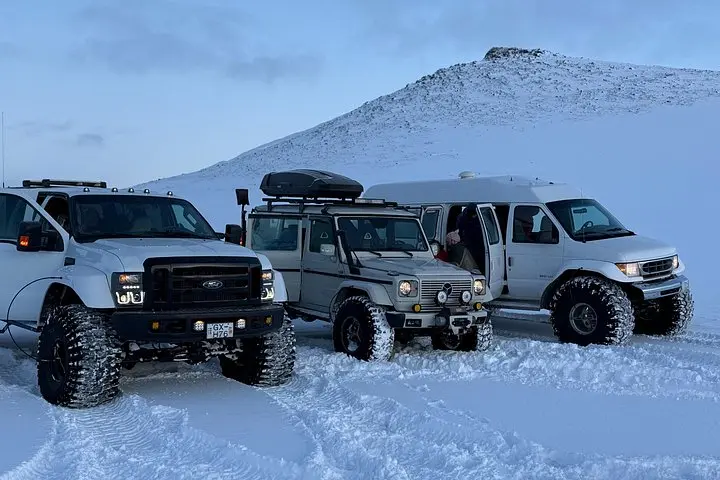
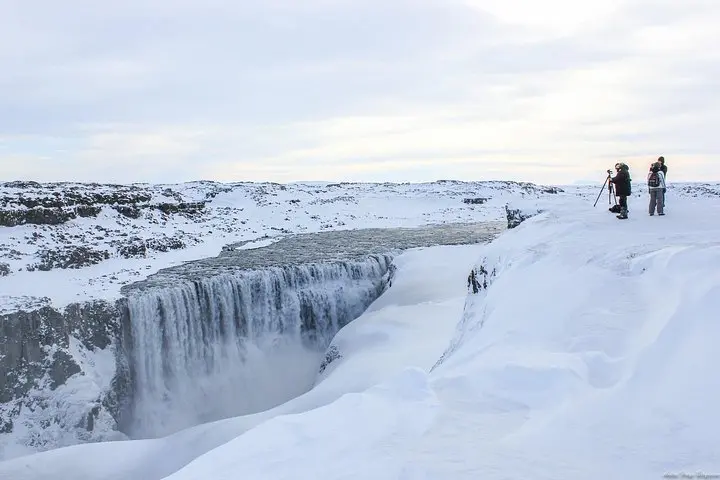
Summer offers the easiest road access and milder conditions; late spring and early fall are quieter but can be wet, while winter requires special vehicle access and may be canceled for safety.
Geo Travel ehf operates guided outdoor trips and adventures with an emphasis on safety, stewardship, and memorable experiences.
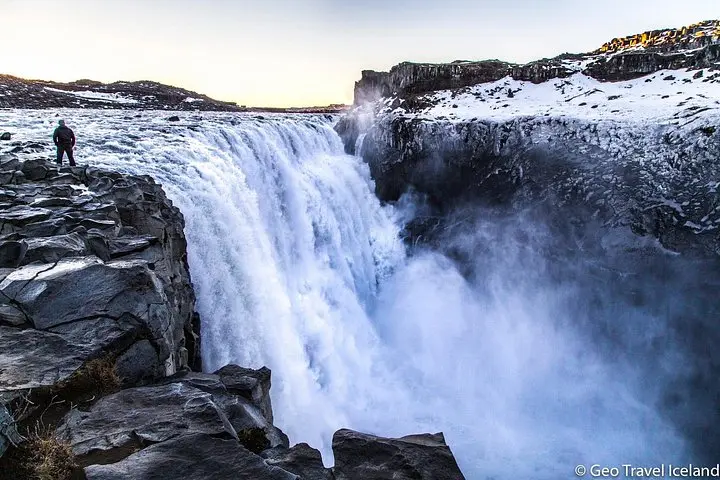
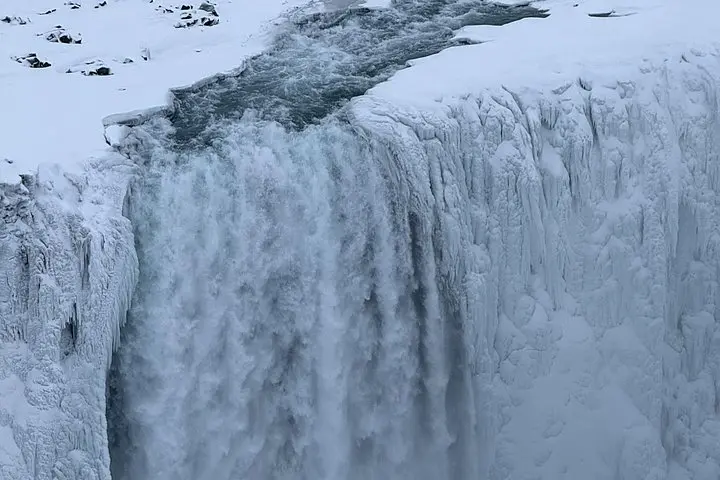
The first sight arrives with a boom rather than a whisper — brown glacial water hurling itself over a basalt lip, spray cutting the cool Icelandic air. You step from a super jeep onto gravel braided with meltwater, boots sinking a little, and the falls immediately demand attention: Dettifoss pushes forward like a living machine, louder than conversation and colder than the wind.
The first sight arrives with a boom rather than a whisper — brown glacial water hurling itself over a basalt lip, spray cutting the cool Icelandic air. You step from a super jeep onto gravel braided with meltwater, boots sinking a little, and the falls immediately demand attention: Dettifoss pushes forward like a living machine, louder than conversation and colder than the wind.
This corridor of north Iceland is shaped by ice and volcanic breath. The Jökulsá á Fjöllum river that feeds Dettifoss was carve-cut through layered basalt and palagonite, exposing cliffs and dramatic terraces. Nearby Selfoss breaks the river into a crescent of smaller cascades, while Hafragilsfoss drops into a narrow gorge accessible only by high-clearance vehicles; these neighbors show different moods of the same river system.
Local communities around Mývatn have long read the land for sheep grazing and geothermal heat, and the falls sit inside a landscape used for both livelihood and study; guide narration often touches on the last glacial flows and the volcanic events that made the cliffs.
Practicalities are straightforward: tours run about 4–5 hours with roughly 2.5 km of walking (can be longer in good weather) and 2–3 hours spent at the main viewpoints. Trails are uneven, often wet or icy outside summer; a super jeep handles rough access to Hafragilsfoss when roads permit. Dress in windproof, waterproof layers, bring sturdy boots, and expect changing light and weather within an hour. Time your visit for calmer days if you want longer vantage stays; morning or late afternoon light reveals textures in the basalt and reduces mid-day crowds.