THE ADVENTURE COLLECTIVE® · Independent discovery and booking for outdoor travel

Trade Pokhara’s lakefront for stone steps, rice terraces and close-up Annapurna views on a one-day private trek to Dhampus. This compact route delivers cultural encounters, changing forest zones and panoramic mountain viewpoints in a manageable 4–6 hour outing.
Trade Pokhara’s lakefront for stone steps, rice terraces and close-up Annapurna views on a one-day private trek to Dhampus. This compact route delivers cultural encounters, changing forest zones and panoramic mountain viewpoints in a manageable 4–6 hour outing.
A single dusty switchback opens onto a bowl of terraced rice fields and the Himalaya pins itself on the horizon — Annapurna South and the needle of Machhapuchhre dominate the skyline. You start in Pokhara, trade city hum for mule tracks at Phedi, and climb through mixed forest into the small village of Dhampus where the peaks feel close enough to touch.
Verified experiences and guided adventures in the surrounding area.
Operated by Breathe Nepal Trekking · Dhampus, Gandaki Province
A single dusty switchback opens onto a bowl of terraced rice fields and the Himalaya pins itself on the horizon — Annapurna South and the needle of Machhapuchhre dominate the skyline. You start in Pokhara, trade city hum for mule tracks at Phedi, and climb through mixed forest into the small village of Dhampus where the peaks feel close enough to touch.
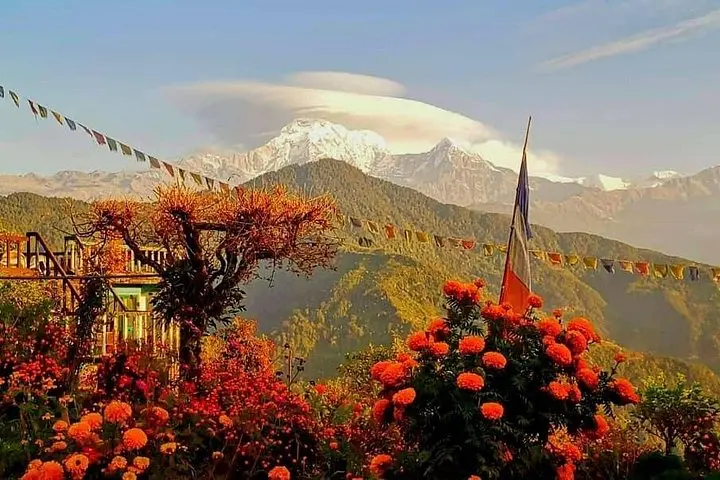
The route follows centuries-old mule paths used by Gurung and Magar communities, passing stone houses and prayer flags that mark local cultural rites. Geologically, you move from fertile river terraces carved by monsoon-fed streams up into metamorphic slopes of the Lesser Himalaya; the landscape shifts from humid subtropical growth to stunted rhododendron and oak near 2,000 m.
Culturally, Dhampus is a living village: farmers tend rice paddies in season and hospitality is straightforward and personal — tea, dal bhat and a seat with a view. Along the trail you may catch colorful pheasants and hear langur calls, small reminders that this is still working land, not a postcard.
Practical guide: the loop is roughly 9.6 km, about 945 m total ascent and 388 m descent, highest point ~2,062 m; expect 4–6 hours depending on pace. Start after breakfast to avoid afternoon clouds, wear sturdy boots for uneven stone steps, carry 2 L of water and a lightweight rain shell — weather in the Annapurnas shifts fast. Facilities are basic: local tea houses serve lunch, but buy snacks in Pokhara. The private tour includes transport from Pokhara and an English-speaking guide, making this a compact, manageable alpine day that gives a real taste of Annapurna life without a multi-day commitment.
The route is moderate: 9.6 km with about 945 m ascent; fit walkers can complete it in 4–6 hours with breaks.
For a private day trip from Pokhara, a guide is normally provided and no special trekking permit is required for this short route.
Basic tea houses and a lunch stop in Dhampus offer food and simple squat or drop-style toilets; carry toilet paper and hand sanitizer.
Unlikely for most people—the highest point is around 2,062 m, but acclimatize in Pokhara if you’ve recently arrived from near sea level.
Breathe Nepal Trekking operates guided outdoor trips and adventures with an emphasis on safety, stewardship, and memorable experiences.
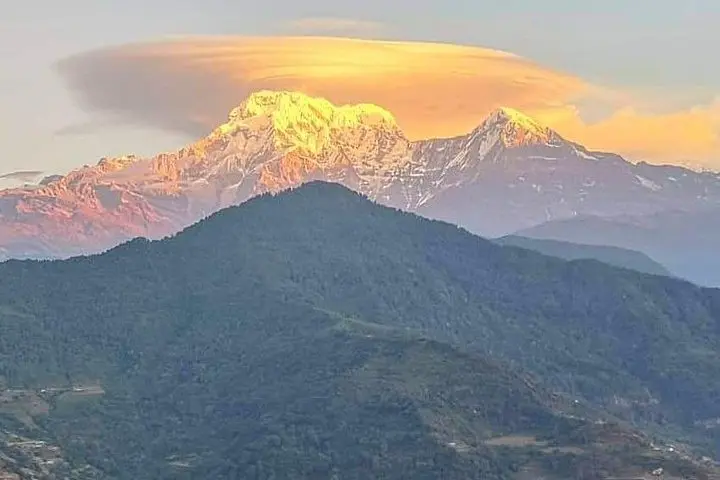
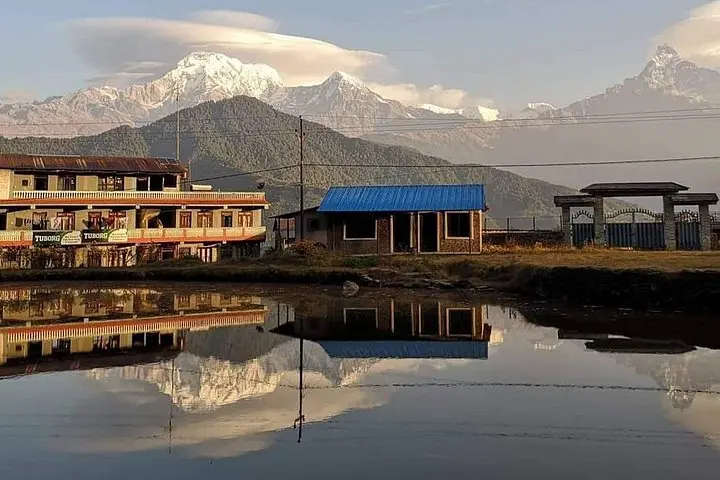
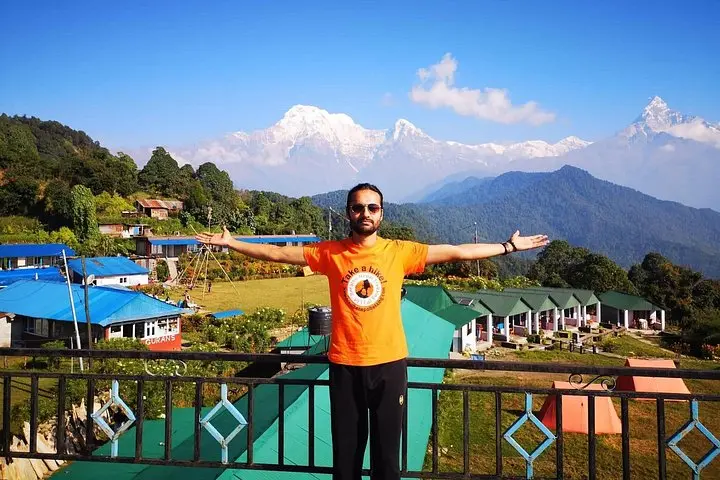
A single dusty switchback opens onto a bowl of terraced rice fields and the Himalaya pins itself on the horizon — Annapurna South and the needle of Machhapuchhre dominate the skyline. You start in Pokhara, trade city hum for mule tracks at Phedi, and climb through mixed forest into the small village of Dhampus where the peaks feel close enough to touch.
A single dusty switchback opens onto a bowl of terraced rice fields and the Himalaya pins itself on the horizon — Annapurna South and the needle of Machhapuchhre dominate the skyline. You start in Pokhara, trade city hum for mule tracks at Phedi, and climb through mixed forest into the small village of Dhampus where the peaks feel close enough to touch.
The route follows centuries-old mule paths used by Gurung and Magar communities, passing stone houses and prayer flags that mark local cultural rites. Geologically, you move from fertile river terraces carved by monsoon-fed streams up into metamorphic slopes of the Lesser Himalaya; the landscape shifts from humid subtropical growth to stunted rhododendron and oak near 2,000 m.
Culturally, Dhampus is a living village: farmers tend rice paddies in season and hospitality is straightforward and personal — tea, dal bhat and a seat with a view. Along the trail you may catch colorful pheasants and hear langur calls, small reminders that this is still working land, not a postcard.
Practical guide: the loop is roughly 9.6 km, about 945 m total ascent and 388 m descent, highest point ~2,062 m; expect 4–6 hours depending on pace. Start after breakfast to avoid afternoon clouds, wear sturdy boots for uneven stone steps, carry 2 L of water and a lightweight rain shell — weather in the Annapurnas shifts fast. Facilities are basic: local tea houses serve lunch, but buy snacks in Pokhara. The private tour includes transport from Pokhara and an English-speaking guide, making this a compact, manageable alpine day that gives a real taste of Annapurna life without a multi-day commitment.