THE ADVENTURE COLLECTIVE® · Independent discovery and booking for outdoor travel

Walk Mexico City’s historic core during Día de Muertos with a storyteller-guide who blends theatre, history, and street-level altar visits. This three-hour tour moves from the Zócalo through hidden corners to reveal how ritual, conquest, and everyday life keep company with the dead.
Walk Mexico City’s historic core during Día de Muertos with a storyteller-guide who blends theatre, history, and street-level altar visits. This three-hour tour moves from the Zócalo through hidden corners to reveal how ritual, conquest, and everyday life keep company with the dead.
You step off the tram into a plaza where orange marigolds push through cracks in the pavement and the city’s old stones seem to remember every procession.
Verified experiences and guided adventures in the surrounding area.
Operated by León R. Jáuregui · Mexico City, Ciudad de México
You step off the tram into a plaza where orange marigolds push through cracks in the pavement and the city’s old stones seem to remember every procession.
This three-hour walking tour threads through central Mexico City from the Zócalo to lesser-seen alleys, guided by an actor who folds history and performance into the route. You’ll encounter public altars, family ofrendas, and colonial facades that still hum with pre-Hispanic ritual — the ground here literally rests on the ruins of Tenochtitlan, a former island city in Lake Texcoco that compressed and settled under centuries of change.
The tour places Día de Muertos in context: indigenous ancestor veneration merged with Catholic All Saints traditions after the Spanish conquest, producing the colorful, ironic ceremonies you see today. Architecturally, the route alternates Baroque churches, 19th-century plazas, and modern asphalt that hides archaeological layers and Manila-galleon-era printing shops.
Expect immersive storytelling more than solemn lectures: theatrical monologues, sensory stops for spicy candy, and explanations of altar symbolism — marigolds as the pathway, copal smoke as invitation. The pace is gentle urban walking on mostly flat sidewalks with short stair sections.
Practical guidance: wear comfortable, broken-in walking shoes, bring a small bottle of water, and carry a lightweight jacket for evening breezes. Photography is welcome but be mindful of private family spaces and offerings. If you want quieter moments, ask your guide to linger at a small altar or the Templo Mayor viewing point before the group moves on.
Yes — the tour is family-friendly and marked as stroller and wheelchair accessible, though content includes mature cultural themes explained sensitively.
Yes — the itinerary includes the Zócalo and nearby historic sites with contextual storytelling, though some interior museum admissions are not included.
The tour includes a small tasting like Mexican spicy candy, but bring water and any extra snacks you may want for the walk.
The route covers short urban blocks over three hours with frequent stops; it’s low-impact but requires steady walking on uneven sidewalks.
León R. Jáuregui operates guided outdoor trips and adventures with an emphasis on safety, stewardship, and memorable experiences.
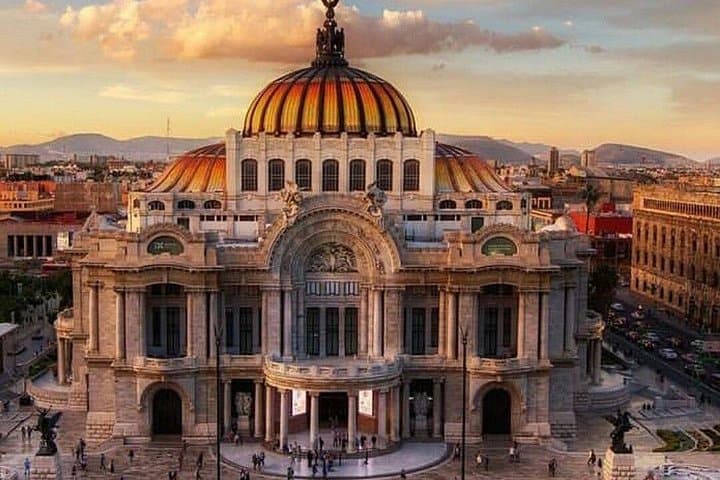


You step off the tram into a plaza where orange marigolds push through cracks in the pavement and the city’s old stones seem to remember every procession.
You step off the tram into a plaza where orange marigolds push through cracks in the pavement and the city’s old stones seem to remember every procession.
This three-hour walking tour threads through central Mexico City from the Zócalo to lesser-seen alleys, guided by an actor who folds history and performance into the route. You’ll encounter public altars, family ofrendas, and colonial facades that still hum with pre-Hispanic ritual — the ground here literally rests on the ruins of Tenochtitlan, a former island city in Lake Texcoco that compressed and settled under centuries of change.
The tour places Día de Muertos in context: indigenous ancestor veneration merged with Catholic All Saints traditions after the Spanish conquest, producing the colorful, ironic ceremonies you see today. Architecturally, the route alternates Baroque churches, 19th-century plazas, and modern asphalt that hides archaeological layers and Manila-galleon-era printing shops.
Expect immersive storytelling more than solemn lectures: theatrical monologues, sensory stops for spicy candy, and explanations of altar symbolism — marigolds as the pathway, copal smoke as invitation. The pace is gentle urban walking on mostly flat sidewalks with short stair sections.
Practical guidance: wear comfortable, broken-in walking shoes, bring a small bottle of water, and carry a lightweight jacket for evening breezes. Photography is welcome but be mindful of private family spaces and offerings. If you want quieter moments, ask your guide to linger at a small altar or the Templo Mayor viewing point before the group moves on.