THE ADVENTURE COLLECTIVE® · Independent discovery and booking for outdoor travel

Drive Iceland’s Diamond Circle in a day: thunderous Dettifoss, historic Goðafoss, bubbling Hverir and the bird-rich Tjornes peninsula. This full-day tour pairs geological spectacle with short, accessible hikes and coastal wildlife viewing.
Drive Iceland’s Diamond Circle in a day: thunderous Dettifoss, historic Goðafoss, bubbling Hverir and the bird-rich Tjornes peninsula. This full-day tour pairs geological spectacle with short, accessible hikes and coastal wildlife viewing.
A cold wind pushes across the bus windshield as the road unfolds into the high northern plateau—lava fields give way to mossy ridges and the first glimpse of Goðafoss curls like a white ribbon in the distance. For ten hours you ride the prescient northern light: waterfalls that roar, basalt cliffs that throw back voices, and volcanic ground steaming with mineral colors.
Verified experiences and guided adventures in the surrounding area.
Operated by Fox Adventure · Akureyri, Northeastern Region
A cold wind pushes across the bus windshield as the road unfolds into the high northern plateau—lava fields give way to mossy ridges and the first glimpse of Goðafoss curls like a white ribbon in the distance. For ten hours you ride the prescient northern light: waterfalls that roar, basalt cliffs that throw back voices, and volcanic ground steaming with mineral colors.
This route threads centuries of human and geological story. Goðafoss is tied to Iceland’s conversion to Christianity around 1000 CE—its name, "Waterfall of the Gods," hints at a dramatic past. The region bears the scars of Ice Age glaciers and more recent volcanic activity around Krafla; basalt columns and crater rings speak to long-buried eruptions and quick-cooling lava. Húsavík offers a coastal counterpoint: a small port town shaped by whaling and now whale-watching culture, plus a famously photogenic church.
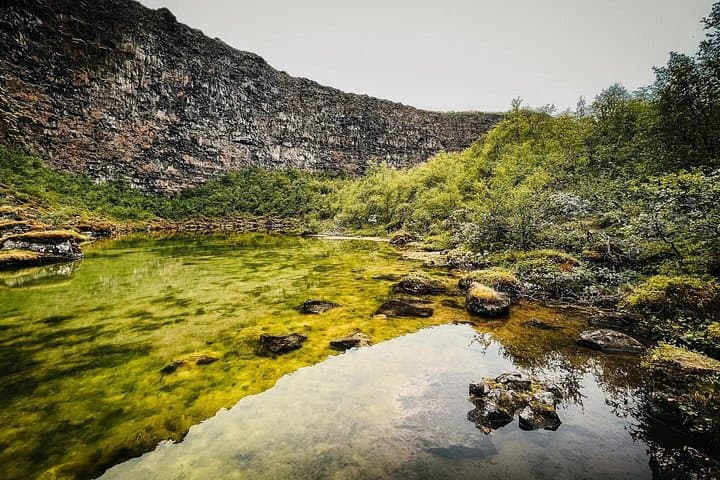
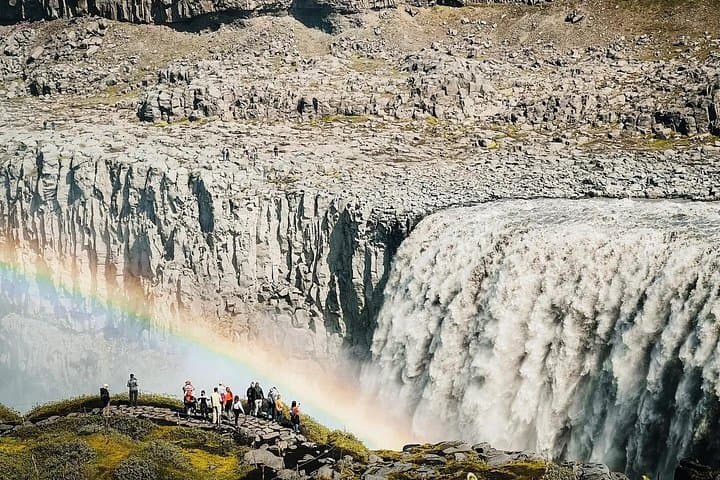
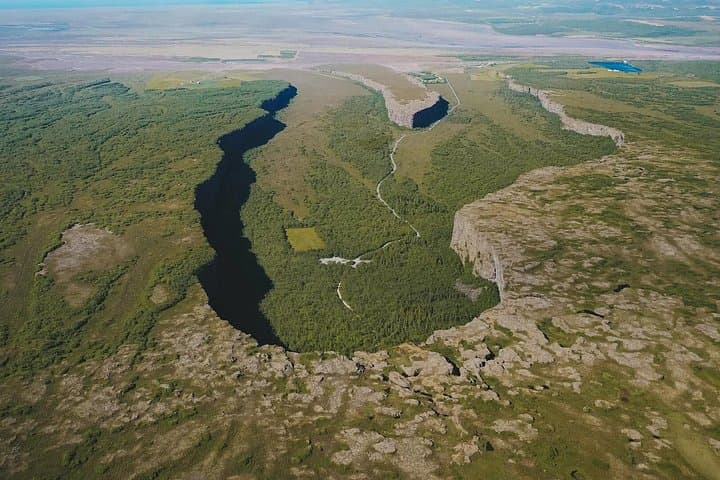
Expect multiple short walks—5–40 minute stops—at viewpoints and short trails: a 10-minute moderate approach to Dettifoss, 20–40 minute strolls at Ásbyrgi and Hverir, and quick puffin watches along Tjornes in summer.
Practical notes: layer for rapidly changing weather, waterproof footwear for muddy viewpoints, and a telephoto lens for birds and distant falls. Respect trail barriers in geothermal zones—the ground is brittle and sulfurous steam can sting. Facilities are limited to a few roadside shops and petrol stations; bring snacks and refillable water. If you want the fullest experience, travel between June and September for puffins and long daylight, or choose shoulder seasons for fewer crowds and dramatic, quieter skies.
The day runs about 10 hours with 8–10 short stops including Goðafoss, Húsavík, Tjornes puffin viewing, Ásbyrgi, the Echo Rocks, Dettifoss, Hverir and Víti crater.
Yes if they can manage short walks and step-based viewpoints; inform the operator about mobility needs to arrange appropriate seating and support.
Puffins are most reliably seen mid-June to early September on the Tjornes peninsula; Húsavík is a whale-watching hub but boat trips are separate—land-based whale sightings are possible but not guaranteed.
Basic facilities and a small food shop exist at several stops (e.g., Goðafoss, petrol stations near Ásbyrgi), but bring snacks and water for the full day.
Fox Adventure operates guided outdoor trips and adventures with an emphasis on safety, stewardship, and memorable experiences.
A cold wind pushes across the bus windshield as the road unfolds into the high northern plateau—lava fields give way to mossy ridges and the first glimpse of Goðafoss curls like a white ribbon in the distance. For ten hours you ride the prescient northern light: waterfalls that roar, basalt cliffs that throw back voices, and volcanic ground steaming with mineral colors.
A cold wind pushes across the bus windshield as the road unfolds into the high northern plateau—lava fields give way to mossy ridges and the first glimpse of Goðafoss curls like a white ribbon in the distance. For ten hours you ride the prescient northern light: waterfalls that roar, basalt cliffs that throw back voices, and volcanic ground steaming with mineral colors.
This route threads centuries of human and geological story. Goðafoss is tied to Iceland’s conversion to Christianity around 1000 CE—its name, "Waterfall of the Gods," hints at a dramatic past. The region bears the scars of Ice Age glaciers and more recent volcanic activity around Krafla; basalt columns and crater rings speak to long-buried eruptions and quick-cooling lava. Húsavík offers a coastal counterpoint: a small port town shaped by whaling and now whale-watching culture, plus a famously photogenic church.
Expect multiple short walks—5–40 minute stops—at viewpoints and short trails: a 10-minute moderate approach to Dettifoss, 20–40 minute strolls at Ásbyrgi and Hverir, and quick puffin watches along Tjornes in summer.
Practical notes: layer for rapidly changing weather, waterproof footwear for muddy viewpoints, and a telephoto lens for birds and distant falls. Respect trail barriers in geothermal zones—the ground is brittle and sulfurous steam can sting. Facilities are limited to a few roadside shops and petrol stations; bring snacks and refillable water. If you want the fullest experience, travel between June and September for puffins and long daylight, or choose shoulder seasons for fewer crowds and dramatic, quieter skies.