THE ADVENTURE COLLECTIVE® · Independent discovery and booking for outdoor travel

Spend a full day circling North Iceland’s most dramatic sites—Goðafoss, Dimmuborgir, Hverir, Dettifoss and Ásbyrgi—on a guided tour from Akureyri. Expect short hikes, geothermal steam, and powerful waterfalls on an 8–9 hour route.
Spend a full day circling North Iceland’s most dramatic sites—Goðafoss, Dimmuborgir, Hverir, Dettifoss and Ásbyrgi—on a guided tour from Akureyri. Expect short hikes, geothermal steam, and powerful waterfalls on an 8–9 hour route.
A cold wind from the lake snaps across the coach as it leaves Akureyri and the day unfurls: roaring water, black lava towers, and steam rising like breaths from the earth. Travelers first see Goðafoss’s broad curtain—water hurling itself over basalt ledges—before the road climbs northeast toward the lunar fields of Mývatn.
Verified experiences and guided adventures in the surrounding area.
Operated by The Traveling Viking · Akureyri, Northeastern Region
A cold wind from the lake snaps across the coach as it leaves Akureyri and the day unfurls: roaring water, black lava towers, and steam rising like breaths from the earth. Travelers first see Goðafoss’s broad curtain—water hurling itself over basalt ledges—before the road climbs northeast toward the lunar fields of Mývatn.
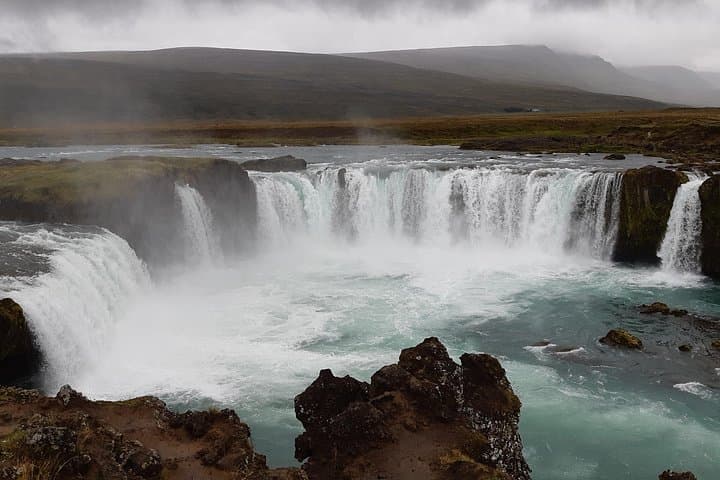
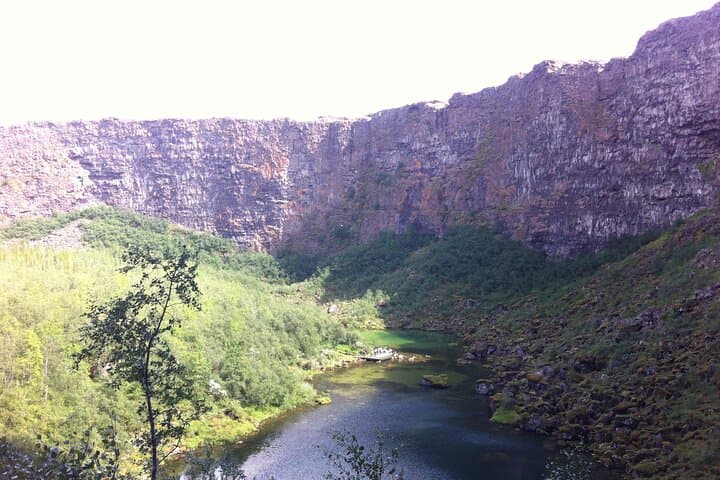
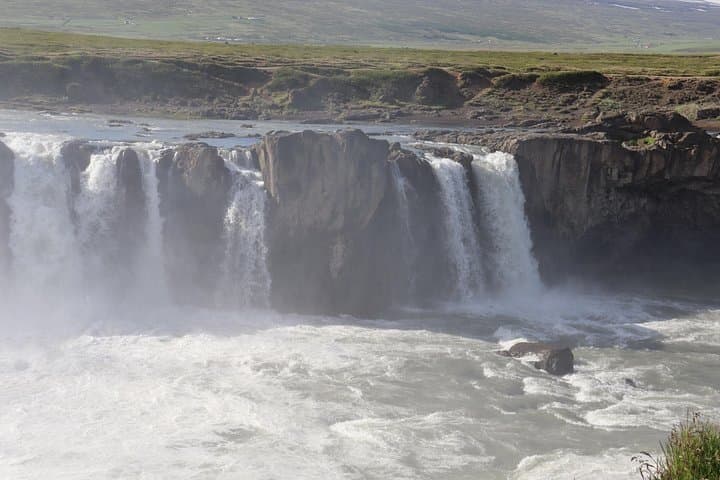
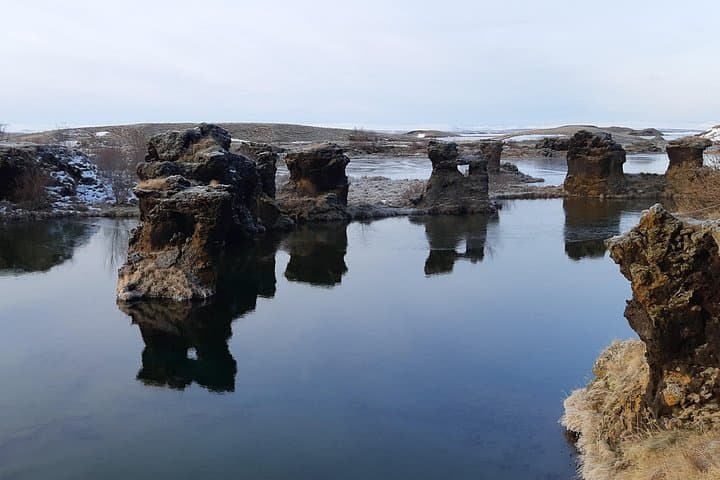
This route threads together clear geological chapters. Goðafoss (the Waterfall of the Gods) sits on basalt steps carved by glacial rivers; Dimmuborgir’s jagged lava pillars are the collapsed remains of a past eruption; Hverir bubbles and steams where geothermal heat meets groundwater; Dettifoss earns its reputation as Europe’s most powerful waterfall thanks to the glacial Jökulsá á Fjöllum river. Ásbyrgi’s horseshoe canyon—said in saga to be the imprint of Odin’s horse—offers sheltered birch and willow that contrast with the stark lava country nearby.
Expect mostly short walks and viewpoint stops: Goðafoss (~30 min), a stroll through Dimmuborgir (~50 min), a quick look at Hverir (~15 min), and an extended Dettifoss stop (~60 min), plus a brief hike at Ásbyrgi. Roads are gravel in places; weather can change within minutes. Guides provide local context on Icelandic sagas, geothermal processes, and the fragile tundra.
Practical edge: dress in waterproof layers, wear grippy boots, bring water and snacks, and keep camera batteries warm. Restroom access is limited between towns; plan for an 8–9 hour day with multiple short hikes and several photo stops.
The full tour runs about 8–9 hours with multiple drives between stops—expect 30–80 minute drives between major points with photo stops along the route.
Restrooms are available in towns and at some visitor areas, but stops between towns can be limited—plan accordingly and use facilities when available.
Short walks are family-friendly, but the day includes several transfers and some uneven terrain; travelers should have moderate mobility and be prepared for changing weather.
Tours often have limited seats—booking in advance is recommended, though some operators may accept last-minute bookings depending on availability.
The Traveling Viking operates guided outdoor trips and adventures with an emphasis on safety, stewardship, and memorable experiences.
A cold wind from the lake snaps across the coach as it leaves Akureyri and the day unfurls: roaring water, black lava towers, and steam rising like breaths from the earth. Travelers first see Goðafoss’s broad curtain—water hurling itself over basalt ledges—before the road climbs northeast toward the lunar fields of Mývatn.
A cold wind from the lake snaps across the coach as it leaves Akureyri and the day unfurls: roaring water, black lava towers, and steam rising like breaths from the earth. Travelers first see Goðafoss’s broad curtain—water hurling itself over basalt ledges—before the road climbs northeast toward the lunar fields of Mývatn.
This route threads together clear geological chapters. Goðafoss (the Waterfall of the Gods) sits on basalt steps carved by glacial rivers; Dimmuborgir’s jagged lava pillars are the collapsed remains of a past eruption; Hverir bubbles and steams where geothermal heat meets groundwater; Dettifoss earns its reputation as Europe’s most powerful waterfall thanks to the glacial Jökulsá á Fjöllum river. Ásbyrgi’s horseshoe canyon—said in saga to be the imprint of Odin’s horse—offers sheltered birch and willow that contrast with the stark lava country nearby.
Expect mostly short walks and viewpoint stops: Goðafoss (~30 min), a stroll through Dimmuborgir (~50 min), a quick look at Hverir (~15 min), and an extended Dettifoss stop (~60 min), plus a brief hike at Ásbyrgi. Roads are gravel in places; weather can change within minutes. Guides provide local context on Icelandic sagas, geothermal processes, and the fragile tundra.
Practical edge: dress in waterproof layers, wear grippy boots, bring water and snacks, and keep camera batteries warm. Restroom access is limited between towns; plan for an 8–9 hour day with multiple short hikes and several photo stops.