THE ADVENTURE COLLECTIVE® · Independent discovery and booking for outdoor travel

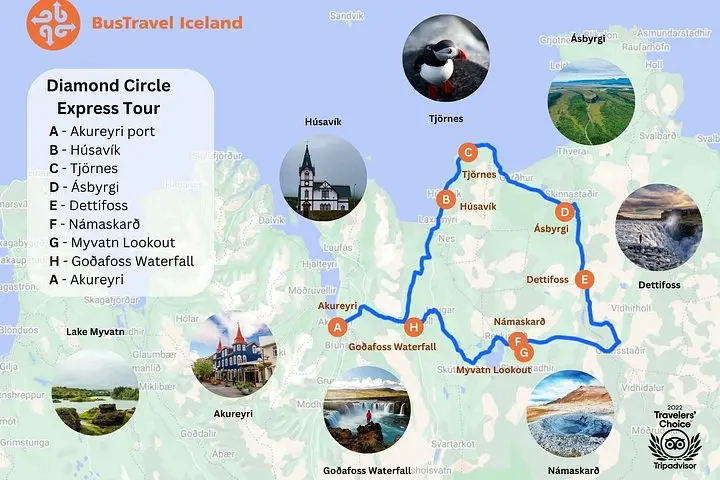
A full-day coach tour from Akureyri that links Godafoss, Dettifoss, Lake Mývatn, Námaskarð geothermal fields, Ásbyrgi canyon and Húsavík. Expect dramatic waterfalls, steaming geothermal terrain and coastal culture, all within an eight-hour loop.
A full-day coach tour from Akureyri that links Godafoss, Dettifoss, Lake Mývatn, Námaskarð geothermal fields, Ásbyrgi canyon and Húsavík. Expect dramatic waterfalls, steaming geothermal terrain and coastal culture, all within an eight-hour loop.
By morning the bus slips out of Akureyri and the coastline thins into open tundra and basalt scars. You feel the landscape change before you see it: cliffs get steeper, steam rises in the distance, and the road angles toward water that refuses to sit still.
Verified experiences and guided adventures in the surrounding area.
Operated by BusTravel Iceland · Akureyri, Northeast Iceland
By morning the bus slips out of Akureyri and the coastline thins into open tundra and basalt scars. You feel the landscape change before you see it: cliffs get steeper, steam rises in the distance, and the road angles toward water that refuses to sit still.
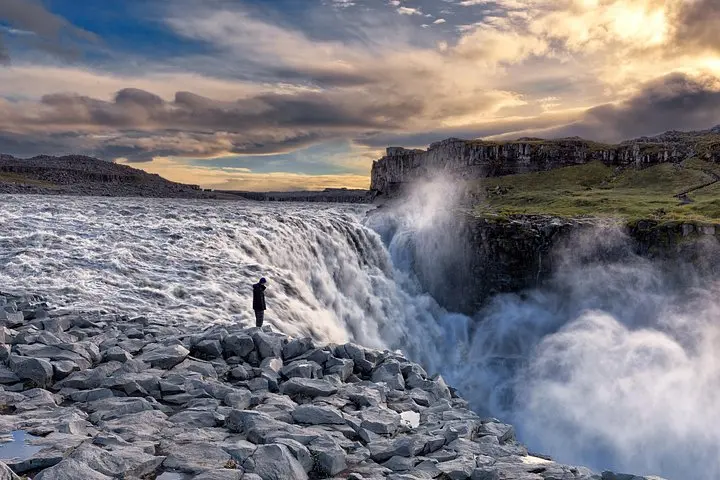
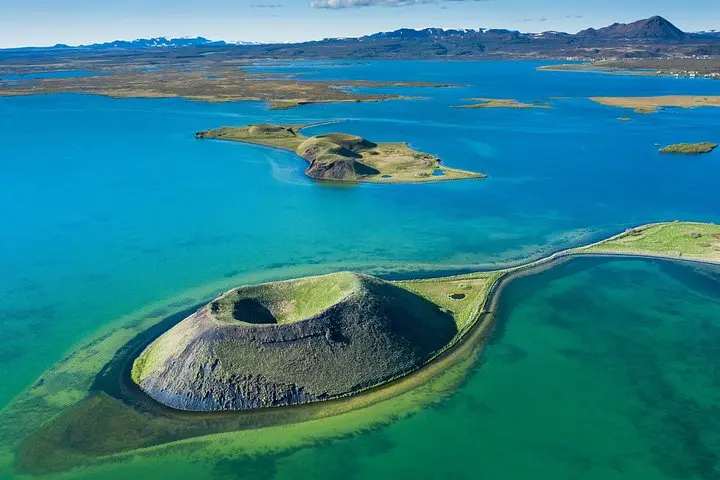
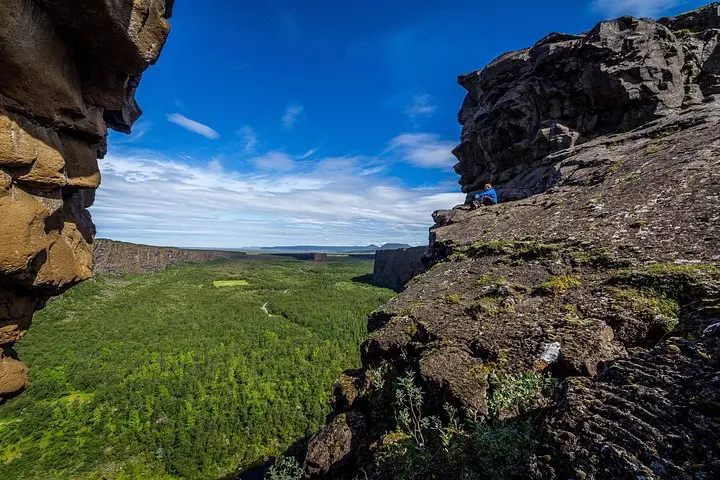
This single-day Diamond Circle route threads together Iceland’s raw geology and small-town culture. Godafoss — the "waterfall of the gods" — is an elegant curtain roughly 12 meters high where local legend links the falls to Iceland’s conversion to Christianity around the year 1000. Further east, Dettifoss crashes with relentless force; at about 44 meters tall it’s often called Europe’s most powerful waterfall. Lake Mývatn and the Námaskarð geothermal fields reveal the volcanic underlayer: pseudo-craters, steaming fumaroles and mineral-streaked ground. Ásbyrgi’s horseshoe canyon, carved by ancient glacial floods, offers vertical cliffs and a sheltered pond called Botnstjörn. The day closes with a short harbor stop in Húsavík, a tidy fishing town now famous for whale-watching.
Practical edge: the tour is eight hours by coach with several short walks and lookout stops; paths at major falls are maintained but can be wet and windy. Lunch is included; bring layered, waterproof clothing, sturdy shoes and a camera with a lens hood. Expect strong winds, sudden weather shifts and excellent daylight windows in summer — winter runs require flexibility for road conditions. Stick to marked trails around geothermal sites and leave no trace: the ground here heals slowly, and the views reward patience and respect.
The tour is approximately 8 hours and departs from Akureyri; guides meet at the bus parking lot by the cruise port or the designated parking on Gránufélagsgata 50.
Yes — the itinerary involves short, accessible walks and viewpoint platforms; those with limited mobility should notify the operator in advance for assistance.
A lunch pack with a chicken or vegan sandwich and water is included as part of the booking.
The stop in Húsavík is short (around 20 minutes) and does not include whale-watching; dedicated boat tours from Húsavík are recommended to see whales.
BusTravel Iceland operates guided outdoor trips and adventures with an emphasis on safety, stewardship, and memorable experiences.
By morning the bus slips out of Akureyri and the coastline thins into open tundra and basalt scars. You feel the landscape change before you see it: cliffs get steeper, steam rises in the distance, and the road angles toward water that refuses to sit still.
By morning the bus slips out of Akureyri and the coastline thins into open tundra and basalt scars. You feel the landscape change before you see it: cliffs get steeper, steam rises in the distance, and the road angles toward water that refuses to sit still.
This single-day Diamond Circle route threads together Iceland’s raw geology and small-town culture. Godafoss — the "waterfall of the gods" — is an elegant curtain roughly 12 meters high where local legend links the falls to Iceland’s conversion to Christianity around the year 1000. Further east, Dettifoss crashes with relentless force; at about 44 meters tall it’s often called Europe’s most powerful waterfall. Lake Mývatn and the Námaskarð geothermal fields reveal the volcanic underlayer: pseudo-craters, steaming fumaroles and mineral-streaked ground. Ásbyrgi’s horseshoe canyon, carved by ancient glacial floods, offers vertical cliffs and a sheltered pond called Botnstjörn. The day closes with a short harbor stop in Húsavík, a tidy fishing town now famous for whale-watching.
Practical edge: the tour is eight hours by coach with several short walks and lookout stops; paths at major falls are maintained but can be wet and windy. Lunch is included; bring layered, waterproof clothing, sturdy shoes and a camera with a lens hood. Expect strong winds, sudden weather shifts and excellent daylight windows in summer — winter runs require flexibility for road conditions. Stick to marked trails around geothermal sites and leave no trace: the ground here heals slowly, and the views reward patience and respect.