THE ADVENTURE COLLECTIVE® · Independent discovery and booking for outdoor travel

Three days across the Muong Thanh valley—battlefields, bunkers, and Black Thai culture—packed into a short flight from Hanoi. Expect museums, homestays, and landscape views that make history feel immediate.
Three days across the Muong Thanh valley—battlefields, bunkers, and Black Thai culture—packed into a short flight from Hanoi. Expect museums, homestays, and landscape views that make history feel immediate.
A wind carries rice-straw smoke across the Muong Thanh valley as you step off the plane into a highland that still holds the echoes of 1954. Low ridgelines press close; a wide green basin opens below, rivers daring you to follow their curves. Over three days you move from city sights to hidden headquarters, from bunkers sunk into the earth to a lakeshore where villagers fish at dawn.
Verified experiences and guided adventures in the surrounding area.
Operated by Authentic PHU QUOC · Dien Bien Phu, Dien Bien Province
A wind carries rice-straw smoke across the Muong Thanh valley as you step off the plane into a highland that still holds the echoes of 1954. Low ridgelines press close; a wide green basin opens below, rivers daring you to follow their curves. Over three days you move from city sights to hidden headquarters, from bunkers sunk into the earth to a lakeshore where villagers fish at dawn.
Dien Bien Phu sits in a tectonic bowl carved by uplifted mountains and river alluvium. The Muong Thanh Field—broad, flat, intensively farmed—contrasts with the limestone and sandstone ridges surrounding it. Culturally the region is rich: Black Thai manuscript traditions, Thai and Hmong homestays, and communal herbal baths that link daily life to older healing practices.
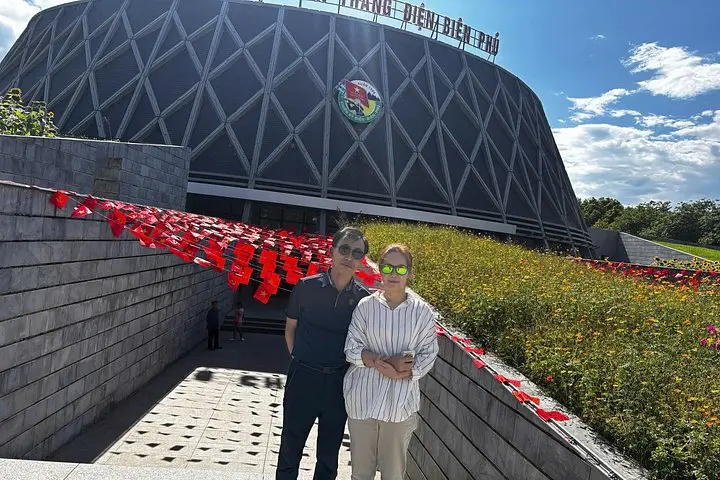
History here is direct and tangible: trenches, command posts, and the De Castries bunker narrate the 1954 campaign, while the Dien Bien Phu Victory Monument crowns D1 Hill with panoramic perspective. You’ll visit museums and battlefield positions, then slow down in Muong Phang’s jungle headquarters and Pa Khoang Lake’s quiet rim.
Practical guide: flights between Hanoi and Dien Bien Phu are brief—plan for early departures to maximize daylight. Expect modest hotels and at least one homestay; carry cash and small bills for villages. Terrain varies from paved roads to compacted dirt and short, steep trails—sturdy walking shoes and a light rain shell are useful year-round. Hydrate between stops, move deliberately when visiting bunkers and hilltops, and respect local customs during homestays and manuscript workshops.
The tour includes round-trip air tickets between Hanoi and Dien Bien Phu; flights are about 1–1.5 hours each way, with hotel pickup arranged on arrival.
No—sites involve short walks, stairs, and some uneven ground; the itinerary is rated easy and suitable for most travelers in fair health.
Most museum and battlefield entries, along with 2–3 daily meals as listed, are included—confirm specifics with the operator for any optional extras.
Yes—advance notice of vegetarian or allergy requirements is requested so hosts and restaurants can prepare appropriate meals.
Authentic PHU QUOC operates guided outdoor trips and adventures with an emphasis on safety, stewardship, and memorable experiences.
A wind carries rice-straw smoke across the Muong Thanh valley as you step off the plane into a highland that still holds the echoes of 1954. Low ridgelines press close; a wide green basin opens below, rivers daring you to follow their curves. Over three days you move from city sights to hidden headquarters, from bunkers sunk into the earth to a lakeshore where villagers fish at dawn.
A wind carries rice-straw smoke across the Muong Thanh valley as you step off the plane into a highland that still holds the echoes of 1954. Low ridgelines press close; a wide green basin opens below, rivers daring you to follow their curves. Over three days you move from city sights to hidden headquarters, from bunkers sunk into the earth to a lakeshore where villagers fish at dawn.
Dien Bien Phu sits in a tectonic bowl carved by uplifted mountains and river alluvium. The Muong Thanh Field—broad, flat, intensively farmed—contrasts with the limestone and sandstone ridges surrounding it. Culturally the region is rich: Black Thai manuscript traditions, Thai and Hmong homestays, and communal herbal baths that link daily life to older healing practices.
History here is direct and tangible: trenches, command posts, and the De Castries bunker narrate the 1954 campaign, while the Dien Bien Phu Victory Monument crowns D1 Hill with panoramic perspective. You’ll visit museums and battlefield positions, then slow down in Muong Phang’s jungle headquarters and Pa Khoang Lake’s quiet rim.
Practical guide: flights between Hanoi and Dien Bien Phu are brief—plan for early departures to maximize daylight. Expect modest hotels and at least one homestay; carry cash and small bills for villages. Terrain varies from paved roads to compacted dirt and short, steep trails—sturdy walking shoes and a light rain shell are useful year-round. Hydrate between stops, move deliberately when visiting bunkers and hilltops, and respect local customs during homestays and manuscript workshops.