THE ADVENTURE COLLECTIVE® · Independent discovery and booking for outdoor travel

Stroll Dijon’s medieval streets with a private guide over two hours, visiting the Ducal Palace, Notre‑Dame, Les Halles market and Rue de la Chouette. This compact tour delivers history, local food tips, and a focused orientation to the city’s highlights.
Stroll Dijon’s medieval streets with a private guide over two hours, visiting the Ducal Palace, Notre‑Dame, Les Halles market and Rue de la Chouette. This compact tour delivers history, local food tips, and a focused orientation to the city’s highlights.
You step off a quiet Rue de la Chouette and the city rearranges itself around you: timber-framed houses lean toward one another, a market bell calls across stone, and the owl carving seems to wink as you pass. The two-hour private walk moves at a human pace, letting the stones and façades dictate pauses and stories.
Verified experiences and guided adventures in the surrounding area.
Operated by European Voyages · Dijon, Bourgogne-Franche-Comté
You step off a quiet Rue de la Chouette and the city rearranges itself around you: timber-framed houses lean toward one another, a market bell calls across stone, and the owl carving seems to wink as you pass. The two-hour private walk moves at a human pace, letting the stones and façades dictate pauses and stories.
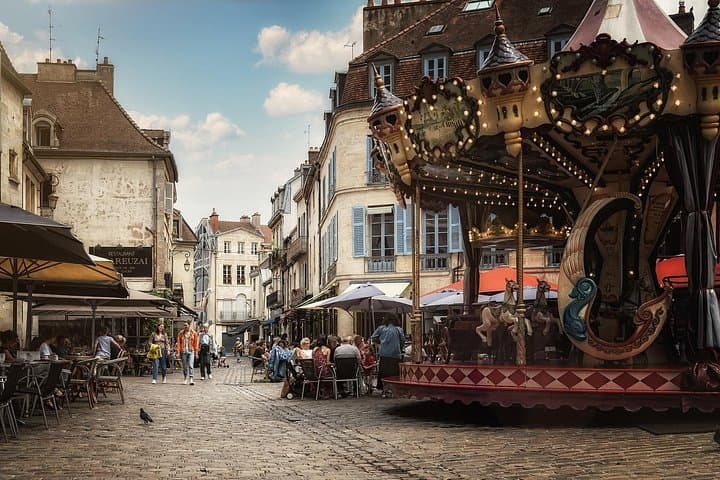
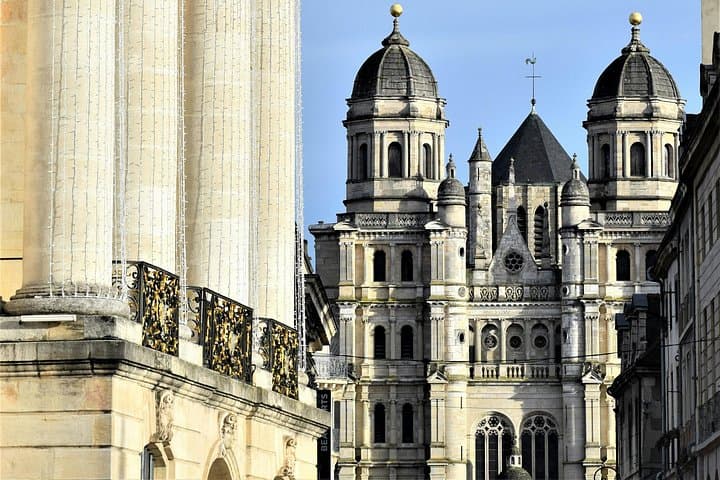
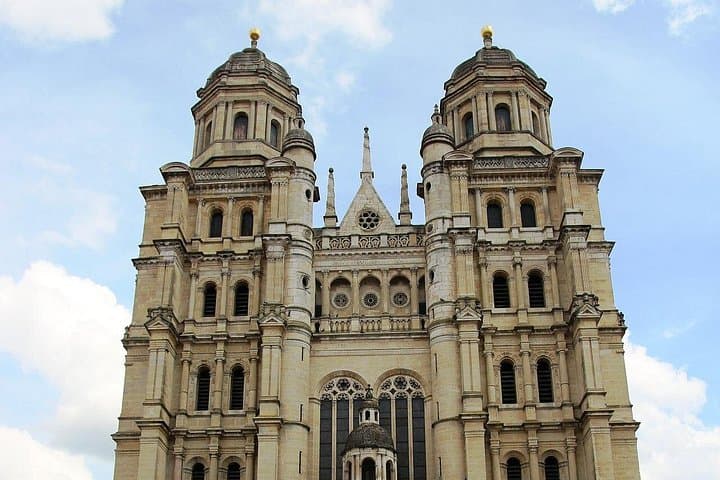
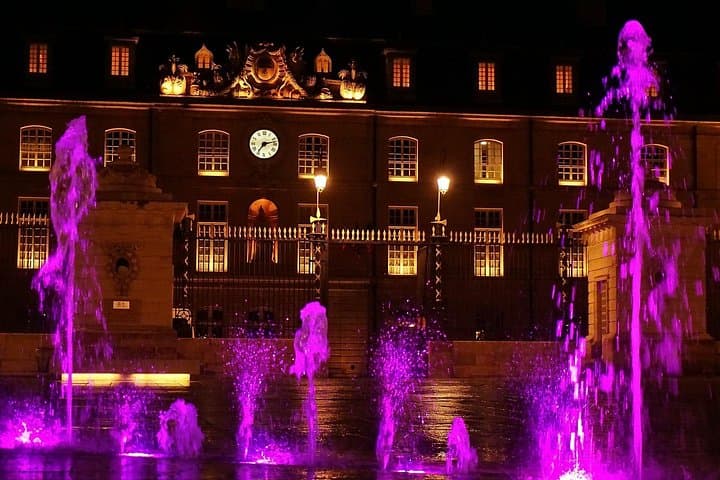
The route threads medieval lanes and Renaissance squares, passing the exterior of the Palais des Ducs de Bourgogne and the carved façade of Notre-Dame. Dijon’s history is visible — the power of the dukes who made this a political and artistic center in the Middle Ages, the market culture that sustained towns for centuries, and the culinary identity anchored by local mustard, cheeses and Burgundy wines.
Geology here is quiet but present: the limestone that built the ducal palace, cool and pale, came from nearby quarries and shapes the city’s light. Culture shows in Les Halles, where producers still sell seasonal goods and the rhythm of daily life remains local rather than tourist-driven.
Practical guidance: wear city-ready shoes with good soles for cobbles, bring a refillable water bottle, and plan the tour early or late in summer to avoid midday crowds. Guides will point to cafés and cellar doors for further exploration, and the private format lets you tailor tempo and interest — art, food, or architecture.
This is an ideal introduction to Dijon: compact, story-rich, and practical for travelers who want context before they branch out on their own.
The tour runs two hours and is a private experience; capacity depends on booking but is designed for a single private party.
Meeting location is typically in Dijon’s Old Town near Rue de la Chouette or arranged with the guide; the tour ends at Place François Rude or a nearby central point.
This walking tour focuses on exteriors and markets; museum admissions are not included unless specified in a custom booking.
The route is classified as easy and suitable for most, but narrow streets and cobbles can challenge mobility limitations—contact the operator to discuss accessibility needs.
European Voyages operates guided outdoor trips and adventures with an emphasis on safety, stewardship, and memorable experiences.
You step off a quiet Rue de la Chouette and the city rearranges itself around you: timber-framed houses lean toward one another, a market bell calls across stone, and the owl carving seems to wink as you pass. The two-hour private walk moves at a human pace, letting the stones and façades dictate pauses and stories.
You step off a quiet Rue de la Chouette and the city rearranges itself around you: timber-framed houses lean toward one another, a market bell calls across stone, and the owl carving seems to wink as you pass. The two-hour private walk moves at a human pace, letting the stones and façades dictate pauses and stories.
The route threads medieval lanes and Renaissance squares, passing the exterior of the Palais des Ducs de Bourgogne and the carved façade of Notre-Dame. Dijon’s history is visible — the power of the dukes who made this a political and artistic center in the Middle Ages, the market culture that sustained towns for centuries, and the culinary identity anchored by local mustard, cheeses and Burgundy wines.
Geology here is quiet but present: the limestone that built the ducal palace, cool and pale, came from nearby quarries and shapes the city’s light. Culture shows in Les Halles, where producers still sell seasonal goods and the rhythm of daily life remains local rather than tourist-driven.
Practical guidance: wear city-ready shoes with good soles for cobbles, bring a refillable water bottle, and plan the tour early or late in summer to avoid midday crowds. Guides will point to cafés and cellar doors for further exploration, and the private format lets you tailor tempo and interest — art, food, or architecture.
This is an ideal introduction to Dijon: compact, story-rich, and practical for travelers who want context before they branch out on their own.