THE ADVENTURE COLLECTIVE® · Independent discovery and booking for outdoor travel

Spend a full day at Villa Escudero where a cascading waterfall doubles as your dining companion and carabao carts trace the plantation lanes. This practical guide walks you through history, what to expect, and how to plan your visit.
Spend a full day at Villa Escudero where a cascading waterfall doubles as your dining companion and carabao carts trace the plantation lanes. This practical guide walks you through history, what to expect, and how to plan your visit.
You step off the air‑conditioned vehicle into humidity that smells of earth and coconut husk, and the first sound is water—steady, alive—sliding over stone. Villa Escudero’s grounds open like a working estate: palms lean, rice paddies stretch, and a man‑made cascade runs through the restaurant, daring diners to dip their toes.
Verified experiences and guided adventures in the surrounding area.
Operated by My Travel Buddy · Tiaong, Quezon
You step off the air‑conditioned vehicle into humidity that smells of earth and coconut husk, and the first sound is water—steady, alive—sliding over stone. Villa Escudero’s grounds open like a working estate: palms lean, rice paddies stretch, and a man‑made cascade runs through the restaurant, daring diners to dip their toes.
The property began as the Escudero family’s coconut plantation in the early 20th century and evolved into a living museum that preserves Filipino rural life. The ancestral house—moved to an island within the lagoon—holds colonial furniture, religious icons and family archives that map local social history. Geologically the area is lowland alluvium fed by nearby rivers; the landscape is gentle, shaped more by cultivation than dramatic peaks.
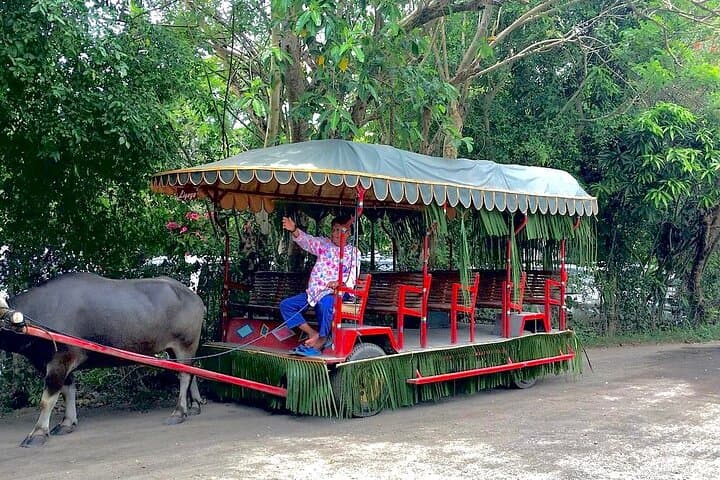
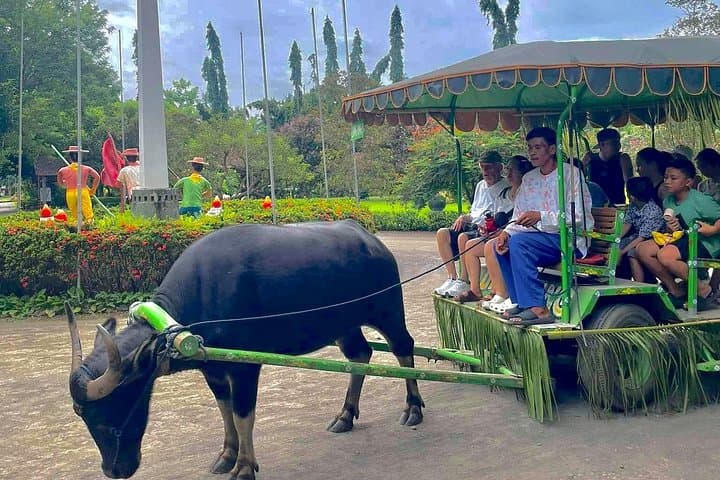
Culturally the day blends hands‑on tradition and staged performance: carabao‑drawn carts creak along dirt lanes, and musicians play bamboo percussion while folk dancers perform the tinikling and kundiman. Food is central—the waterfall restaurant seats you on river stones while servers bring multiple Filipino dishes, and the water’s movement gives the meal a steady, cooling rhythm.
Practical guidance: plan for an 8–10 hour day trip from Manila, wear closed‑toe shoes for wet stone paths, and bring insect repellent and sun protection. The site is family‑friendly but not recommended for guests with severe back or heart issues. Cash is handy for handicrafts; book in advance for weekend seating at the waterfall restaurant.
Most day tours include round‑trip air‑conditioned transfers from Manila if booked as a package—confirm at booking; the listed tour includes an air‑conditioned vehicle.
Yes—lunch at the waterfall restaurant is a signature experience and usually included in tour packages; reserve early for preferred seating.
Some areas, like the museum and flat plantation paths, are accessible, but the waterfall restaurant and boat/island areas require stairs or stepping over wet stones and may be challenging for wheelchairs.
The tour notes it’s not recommended for pregnant travelers or those with severe spinal or cardiovascular conditions due to uneven terrain and limited emergency access in some areas.
My Travel Buddy operates guided outdoor trips and adventures with an emphasis on safety, stewardship, and memorable experiences.

You step off the air‑conditioned vehicle into humidity that smells of earth and coconut husk, and the first sound is water—steady, alive—sliding over stone. Villa Escudero’s grounds open like a working estate: palms lean, rice paddies stretch, and a man‑made cascade runs through the restaurant, daring diners to dip their toes.
You step off the air‑conditioned vehicle into humidity that smells of earth and coconut husk, and the first sound is water—steady, alive—sliding over stone. Villa Escudero’s grounds open like a working estate: palms lean, rice paddies stretch, and a man‑made cascade runs through the restaurant, daring diners to dip their toes.
The property began as the Escudero family’s coconut plantation in the early 20th century and evolved into a living museum that preserves Filipino rural life. The ancestral house—moved to an island within the lagoon—holds colonial furniture, religious icons and family archives that map local social history. Geologically the area is lowland alluvium fed by nearby rivers; the landscape is gentle, shaped more by cultivation than dramatic peaks.
Culturally the day blends hands‑on tradition and staged performance: carabao‑drawn carts creak along dirt lanes, and musicians play bamboo percussion while folk dancers perform the tinikling and kundiman. Food is central—the waterfall restaurant seats you on river stones while servers bring multiple Filipino dishes, and the water’s movement gives the meal a steady, cooling rhythm.
Practical guidance: plan for an 8–10 hour day trip from Manila, wear closed‑toe shoes for wet stone paths, and bring insect repellent and sun protection. The site is family‑friendly but not recommended for guests with severe back or heart issues. Cash is handy for handicrafts; book in advance for weekend seating at the waterfall restaurant.