THE ADVENTURE COLLECTIVE® · Independent discovery and booking for outdoor travel

Walk Franklin's courthouse square and side streets to uncover the town's overlooked African American history. This guided hour links buildings, churches, and quiet memorials to the community stories that shaped the town.
Walk Franklin's courthouse square and side streets to uncover the town's overlooked African American history. This guided hour links buildings, churches, and quiet memorials to the community stories that shaped the town.
A mid-morning sun warms the brick façades of Franklin's downtown as the group gathers at the courthouse square, footsteps and low conversation threading through the historic streets. The walking tour moves at a steady, conversational pace, the guide pointing to doorways, churches, and plaques while telling stories that lift overlooked chapters of the town's past.
Verified experiences and guided adventures in the surrounding area.
Operated by United Street Tours · Franklin, TN
A mid-morning sun warms the brick façades of Franklin's downtown as the group gathers at the courthouse square, footsteps and low conversation threading through the historic streets. The walking tour moves at a steady, conversational pace, the guide pointing to doorways, churches, and plaques while telling stories that lift overlooked chapters of the town's past.
Franklin's story stretches from antebellum plantations and Civil War battlefields to Reconstruction, segregation, and the civil-rights era. The tour connects those large historical arcs to everyday places — former business addresses, church sites, and residential blocks — revealing how Black Frankliners built community, resisted erasure, and shaped the town's present.
Geology here is subtle but present: the rolling uplands of Middle Tennessee carve streets that climb and fall in short, sharp pitches; limestone underlies the courthouse square, and shallow, tree-lined streams lace the outskirts. Culturally, the city balances restoration-minded preservation with living neighborhoods; guides often highlight churches and fraternal halls that served as civic anchors.
Practically, the experience is a compact, accessible hour of easy walking with frequent stops. Wear comfortable shoes for uneven sidewalks, bring water for warm months, and plan arrival time for parking or the nearby public transit options. The tour is wheelchair and stroller accessible and best taken in the morning to avoid heat and larger afternoon crowds. For visitors wanting context, pair the walk with a museum visit or a stop at a local Black-owned café to continue the conversation off the square.
The tour runs approximately 60 minutes and covers short walking distances with multiple stops around the downtown area.
Yes — the route is designated as wheelchair and stroller accessible, though surfaces may include older sidewalks; notify the operator of accessibility needs when booking.
Yes — families are welcome, but the tour assumes a moderate level of walking ability and may include historical topics better suited to older children.
The tour may be canceled for severe weather; check the cancellation policy and contact the operator if conditions are poor the day of the tour.
United Street Tours operates guided outdoor trips and adventures with an emphasis on safety, stewardship, and memorable experiences.

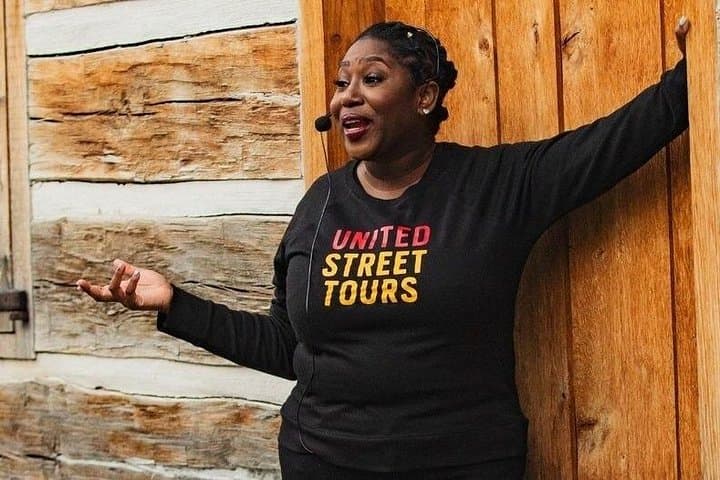
A mid-morning sun warms the brick façades of Franklin's downtown as the group gathers at the courthouse square, footsteps and low conversation threading through the historic streets. The walking tour moves at a steady, conversational pace, the guide pointing to doorways, churches, and plaques while telling stories that lift overlooked chapters of the town's past.
A mid-morning sun warms the brick façades of Franklin's downtown as the group gathers at the courthouse square, footsteps and low conversation threading through the historic streets. The walking tour moves at a steady, conversational pace, the guide pointing to doorways, churches, and plaques while telling stories that lift overlooked chapters of the town's past.
Franklin's story stretches from antebellum plantations and Civil War battlefields to Reconstruction, segregation, and the civil-rights era. The tour connects those large historical arcs to everyday places — former business addresses, church sites, and residential blocks — revealing how Black Frankliners built community, resisted erasure, and shaped the town's present.
Geology here is subtle but present: the rolling uplands of Middle Tennessee carve streets that climb and fall in short, sharp pitches; limestone underlies the courthouse square, and shallow, tree-lined streams lace the outskirts. Culturally, the city balances restoration-minded preservation with living neighborhoods; guides often highlight churches and fraternal halls that served as civic anchors.
Practically, the experience is a compact, accessible hour of easy walking with frequent stops. Wear comfortable shoes for uneven sidewalks, bring water for warm months, and plan arrival time for parking or the nearby public transit options. The tour is wheelchair and stroller accessible and best taken in the morning to avoid heat and larger afternoon crowds. For visitors wanting context, pair the walk with a museum visit or a stop at a local Black-owned café to continue the conversation off the square.