THE ADVENTURE COLLECTIVE® · Independent discovery and booking for outdoor travel

An eight-day private journey from Siem Reap to Phnom Penh that pairs Angkor’s monumental temples with Tonle Sap’s floating villages and Mekong river ecology. Expect temple dawns, village boat rides, bicycle loops and riverside history—planned with private transfers and local guides.
An eight-day private journey from Siem Reap to Phnom Penh that pairs Angkor’s monumental temples with Tonle Sap’s floating villages and Mekong river ecology. Expect temple dawns, village boat rides, bicycle loops and riverside history—planned with private transfers and local guides.
You step from a hot airport into the dry, fragrant air of Siem Reap and the hum of motorbikes folds around you like a lived-in map. Morning light finds Angkor’s stones warm under your fingertips as carved faces watch the world turn; afternoons trade temple hush for the broad, reflective surface of Tonle Sap and the slow, lenticular pulse of the Mekong.
Verified experiences and guided adventures in the surrounding area.
Operated by About Cambodia Travel & Tours · Siem Reap, Siem Reap Province
You step from a hot airport into the dry, fragrant air of Siem Reap and the hum of motorbikes folds around you like a lived-in map. Morning light finds Angkor’s stones warm under your fingertips as carved faces watch the world turn; afternoons trade temple hush for the broad, reflective surface of Tonle Sap and the slow, lenticular pulse of the Mekong.
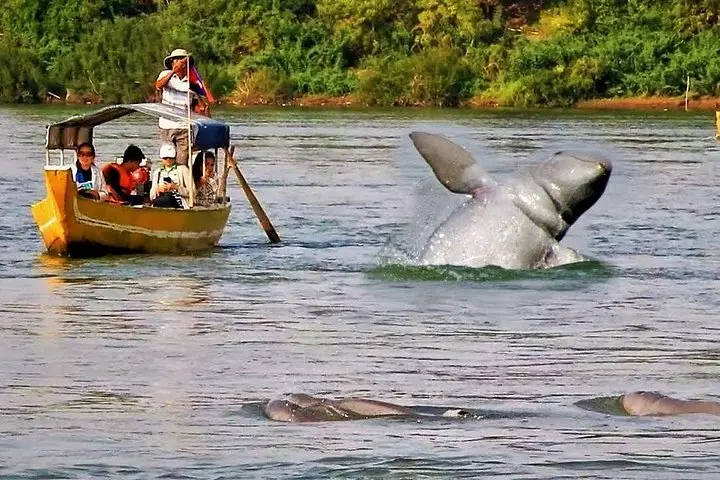
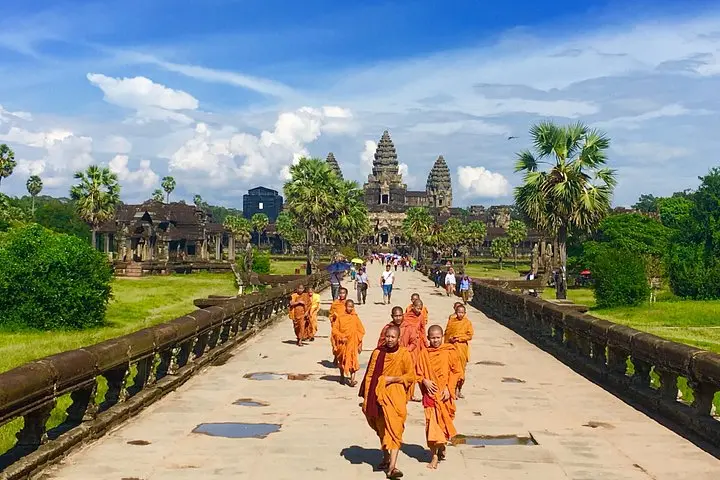
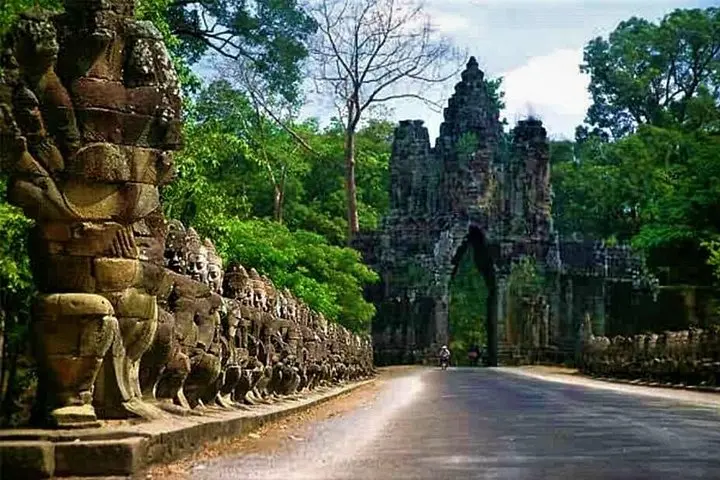
This eight-day private loop threads Cambodia’s high points: Angkor Wat and the Bayon’s carved visages (12th–13th centuries) that articulate Khmer cosmology; Tonle Sap’s floating villages and the seasonal floodplain that drives local life and fisheries; the riverside town of Kratie and its critically endangered Irrawaddy dolphins; and Phnom Penh, shaped by French colonial planning and modern history.
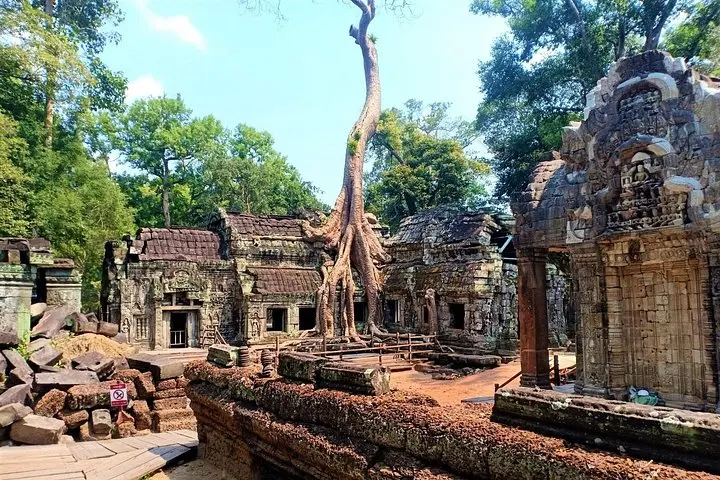
Geologically the region is a lowland floodplain fed by monsoon-swollen rivers; expect lush riverine forests, sedimentary clay banks, and wide horizons at the barays (man-made reservoirs) that once powered Angkor’s irrigation. Culturally, this tour balances temple archaeology, rural craftsmanship and market life—Artisans Angkor and local fruit orchards are practical places to see traditional skills sustained.
Practical edge: pace your days—temple circuits are best at dawn or late afternoon to avoid heat and crowds. Bring a rehydration plan (1–2 L/day), respect pagoda dress codes (shoulders and knees covered), and carry local currency—ATMs exist but can be unreliable outside cities. Boat rides require no special skills but steady footing; cycling on Koh Trong is flat and easy. With a private vehicle and guide, logistics are straightforward; your main job is to arrive curious and prepared.
Most nationalities can obtain an e-visa or visa on arrival; check current rules and have passport pages and return flight info ready.
November to February (cool, dry season) offers the most comfortable touring conditions; monsoon months swell Tonle Sap and can affect rural roads.
Sightings are never guaranteed; trips to Kratie increase chances, and visits support local conservation—early mornings are best.
This private itinerary includes an English-speaking guide and main Angkor entrance fees as stated—confirm exact inclusions at booking.
About Cambodia Travel & Tours operates guided outdoor trips and adventures with an emphasis on safety, stewardship, and memorable experiences.
You step from a hot airport into the dry, fragrant air of Siem Reap and the hum of motorbikes folds around you like a lived-in map. Morning light finds Angkor’s stones warm under your fingertips as carved faces watch the world turn; afternoons trade temple hush for the broad, reflective surface of Tonle Sap and the slow, lenticular pulse of the Mekong.
You step from a hot airport into the dry, fragrant air of Siem Reap and the hum of motorbikes folds around you like a lived-in map. Morning light finds Angkor’s stones warm under your fingertips as carved faces watch the world turn; afternoons trade temple hush for the broad, reflective surface of Tonle Sap and the slow, lenticular pulse of the Mekong.
This eight-day private loop threads Cambodia’s high points: Angkor Wat and the Bayon’s carved visages (12th–13th centuries) that articulate Khmer cosmology; Tonle Sap’s floating villages and the seasonal floodplain that drives local life and fisheries; the riverside town of Kratie and its critically endangered Irrawaddy dolphins; and Phnom Penh, shaped by French colonial planning and modern history.
Geologically the region is a lowland floodplain fed by monsoon-swollen rivers; expect lush riverine forests, sedimentary clay banks, and wide horizons at the barays (man-made reservoirs) that once powered Angkor’s irrigation. Culturally, this tour balances temple archaeology, rural craftsmanship and market life—Artisans Angkor and local fruit orchards are practical places to see traditional skills sustained.
Practical edge: pace your days—temple circuits are best at dawn or late afternoon to avoid heat and crowds. Bring a rehydration plan (1–2 L/day), respect pagoda dress codes (shoulders and knees covered), and carry local currency—ATMs exist but can be unreliable outside cities. Boat rides require no special skills but steady footing; cycling on Koh Trong is flat and easy. With a private vehicle and guide, logistics are straightforward; your main job is to arrive curious and prepared.