THE ADVENTURE COLLECTIVE® · Independent discovery and booking for outdoor travel

A short, immersive half-day walk from Sapa brings you into Cat Cat Village — a compact Black Hmong settlement among rice terraces, a colonial-era hydraulic station and a waterfall. This guide explains what to expect on the 2.5 km trail and how to prepare.
A short, immersive half-day walk from Sapa brings you into Cat Cat Village — a compact Black Hmong settlement among rice terraces, a colonial-era hydraulic station and a waterfall. This guide explains what to expect on the 2.5 km trail and how to prepare.
You step off the narrow town lane and the soundscape changes: a steady drip from terraces, the occasional call of a herder and the measured footfalls of a village path leading down into the Muong Hoa Valley. The trail slopes away from Sapa town and in under an hour you reach Cat Cat Village, home to the Black Hmong community and a window into century-old hill-country life beneath the shadow of Fansipan.
Verified experiences and guided adventures in the surrounding area.
Operated by Vinadu · Sapa, Lao Cai
You step off the narrow town lane and the soundscape changes: a steady drip from terraces, the occasional call of a herder and the measured footfalls of a village path leading down into the Muong Hoa Valley. The trail slopes away from Sapa town and in under an hour you reach Cat Cat Village, home to the Black Hmong community and a window into century-old hill-country life beneath the shadow of Fansipan.
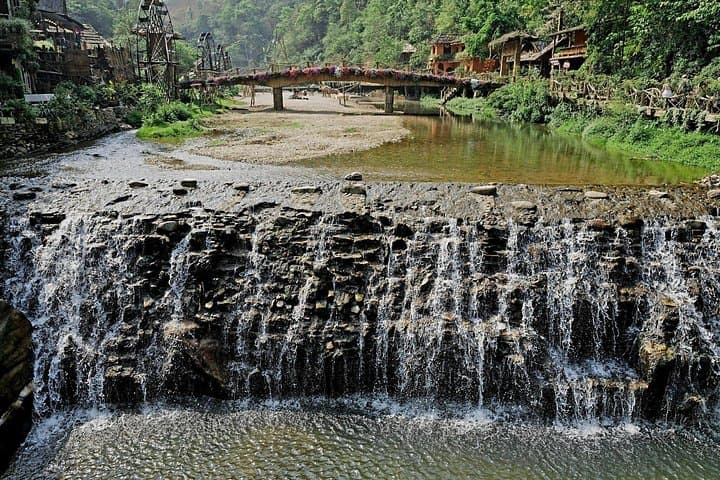
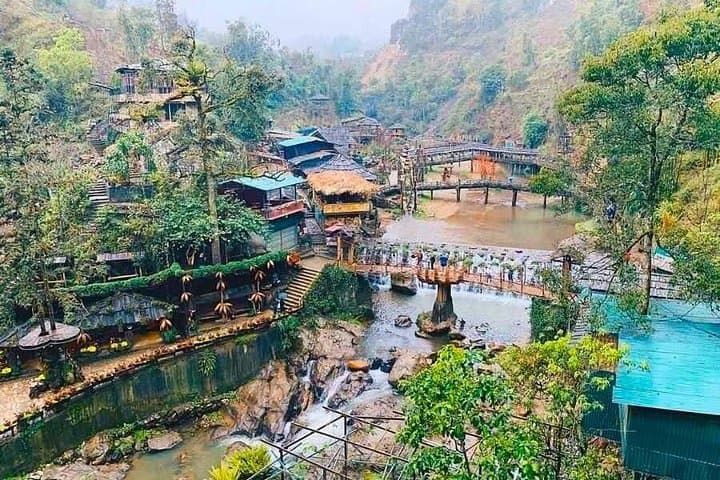
Cat Cat’s terraced rice fields, stone paths and wooden houses sit on folds of volcanic soil carved by generations. A French-built hydraulic power station from the colonial era still marks the valley near a compact waterfall and a simple wooden bridge — small landmarks that map the village’s past encounters with outside forces. Local women still practice indigo dyeing and hand-weaving; your guide can explain motifs that identify clan and craft.
The walk itself is short — about 2.5 km on uneven steps and dirt tracks with a cumulative descent and climb — but sensory-rich: wet earth, the metallic glint of river water, and views opening on surrounding hills. Photogenic scenes are frequent; respect private yards and ask before photographing people.
Practical notes: expect around two hours of trekking within a 3.5-hour tour window, comfortable shoes and a light rain layer will keep the visit smooth, and small bills are useful for buying handicrafts or tipping. Morning mist and late-afternoon golden light both sharpen the terraces differently, so time your visit for the mood you want. This half-day walk is ideal for travelers seeking cultural contact with straightforward logistics and minimal technical demand.
The walk to the village gate is about 1.5 km from Sapa town, with the full guided route covering roughly 2.5 km and about two hours of walking time.
Yes — entrance tickets for Cat Cat Village are included in the tour price as listed in the itinerary.
Yes; the route is classified as easy, but there are stone steps and uneven sections — consider mobility and bring support for those who need it.
Early morning offers mist and cooler temperatures, while late afternoon gives softer light for photos; avoid midday during summer rains if possible.
Vinadu operates guided outdoor trips and adventures with an emphasis on safety, stewardship, and memorable experiences.


You step off the narrow town lane and the soundscape changes: a steady drip from terraces, the occasional call of a herder and the measured footfalls of a village path leading down into the Muong Hoa Valley. The trail slopes away from Sapa town and in under an hour you reach Cat Cat Village, home to the Black Hmong community and a window into century-old hill-country life beneath the shadow of Fansipan.
You step off the narrow town lane and the soundscape changes: a steady drip from terraces, the occasional call of a herder and the measured footfalls of a village path leading down into the Muong Hoa Valley. The trail slopes away from Sapa town and in under an hour you reach Cat Cat Village, home to the Black Hmong community and a window into century-old hill-country life beneath the shadow of Fansipan.
Cat Cat’s terraced rice fields, stone paths and wooden houses sit on folds of volcanic soil carved by generations. A French-built hydraulic power station from the colonial era still marks the valley near a compact waterfall and a simple wooden bridge — small landmarks that map the village’s past encounters with outside forces. Local women still practice indigo dyeing and hand-weaving; your guide can explain motifs that identify clan and craft.
The walk itself is short — about 2.5 km on uneven steps and dirt tracks with a cumulative descent and climb — but sensory-rich: wet earth, the metallic glint of river water, and views opening on surrounding hills. Photogenic scenes are frequent; respect private yards and ask before photographing people.
Practical notes: expect around two hours of trekking within a 3.5-hour tour window, comfortable shoes and a light rain layer will keep the visit smooth, and small bills are useful for buying handicrafts or tipping. Morning mist and late-afternoon golden light both sharpen the terraces differently, so time your visit for the mood you want. This half-day walk is ideal for travelers seeking cultural contact with straightforward logistics and minimal technical demand.