THE ADVENTURE COLLECTIVE® · Independent discovery and booking for outdoor travel

Spend a private day exploring Old Dhaka’s forts, markets, and riverfront with a local guide. This full-day tour combines Mughal history, vibrant bazaars, and a Buriganga boat ride for a practical, immersive introduction to the city.
Spend a private day exploring Old Dhaka’s forts, markets, and riverfront with a local guide. This full-day tour combines Mughal history, vibrant bazaars, and a Buriganga boat ride for a practical, immersive introduction to the city.
The morning begins with rickshaws threading through narrow lanes and the Buriganga River daring you to look closer: wooden launches ride low on the water as vendors stack crates of jasmine and fish on the quays. You step off the private vehicle into a palette of brick, sandstone, and painted facades—Dhaka’s noise is also its map.
Verified experiences and guided adventures in the surrounding area.
Operated by bangladeshexplore · Dhaka, Dhaka
The morning begins with rickshaws threading through narrow lanes and the Buriganga River daring you to look closer: wooden launches ride low on the water as vendors stack crates of jasmine and fish on the quays. You step off the private vehicle into a palette of brick, sandstone, and painted facades—Dhaka’s noise is also its map.
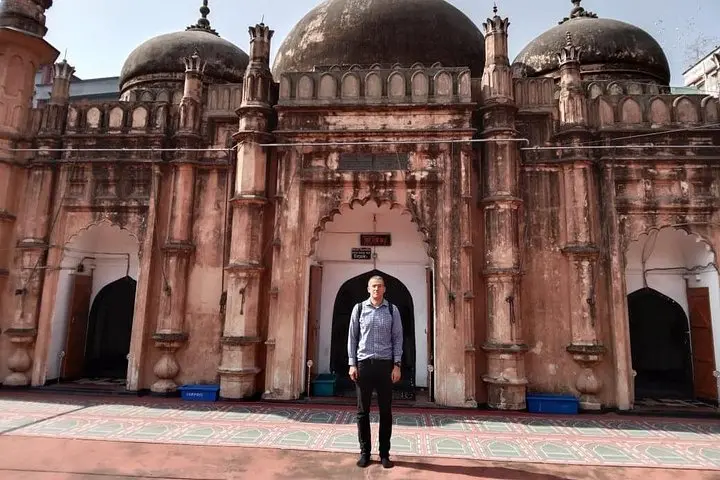
This full-day route stitches centuries together. From the 17th-century Mughal architecture of Lalbagh Fort to the pink façade of Ahsan Manzil, the city carries Mughal, colonial, and Nawabi layers. The Shaheed Minar marks a more recent, fiercely held history—the 1952 Language Movement—and Dhakeshwari Temple and the Star Mosque show how faith and craft shaped public life.
Geologically, Dhaka sits on the Ganges-Brahmaputra delta; the Buriganga and surrounding rivers have defined commerce and settlement patterns, giving the city its riverine markets and shipyards. Culturally, Old Dhaka is compact and kinetic: textile workshops in Shakhari Bazar, the Armenian Church’s quiet courtyard, and Nazira’s spice-scented lanes offer different faces of local life.
Practical guidance: tours are private and include transport and lunch—expect about eight hours of mixed walking and short drives. Start early to beat midday heat, carry a reusable water bottle, and wear closed shoes for uneven surfaces in bazaars and forts. Dress modestly for temples and mosques and keep small change for rickshaws, snacks, and tips. Photography is welcome at most sites, but ask before shooting worshippers.
This is an accessible, sensory-packed day for travelers who want history, street-level commerce, and a river glimpse of Dhaka’s living city.
Yes—this private tour includes pickup and drop-off; you’ll confirm a meeting point or hotel transfer when booking.
Local guides typically speak English and Bengali; confirm language needs when booking for other languages.
Lunch is included and can be adjusted for vegetarian preferences—inform the operator of dietary restrictions at booking.
Short river launches are a routine part of Dhaka travel; operators provide standard life jackets and the guide will advise on safety.
bangladeshexplore operates guided outdoor trips and adventures with an emphasis on safety, stewardship, and memorable experiences.
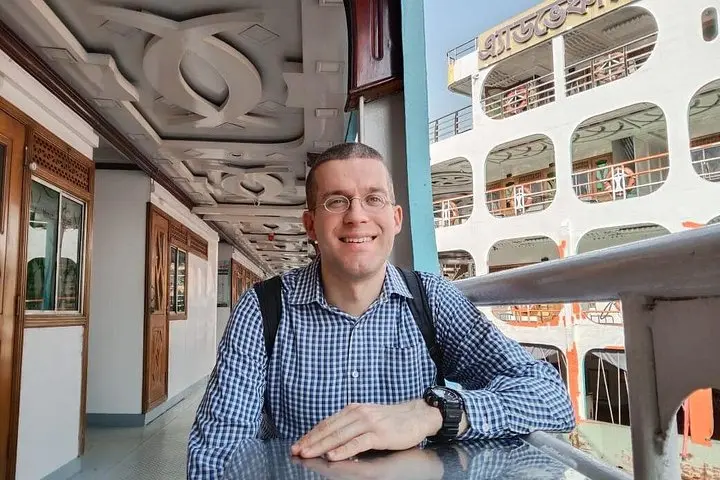
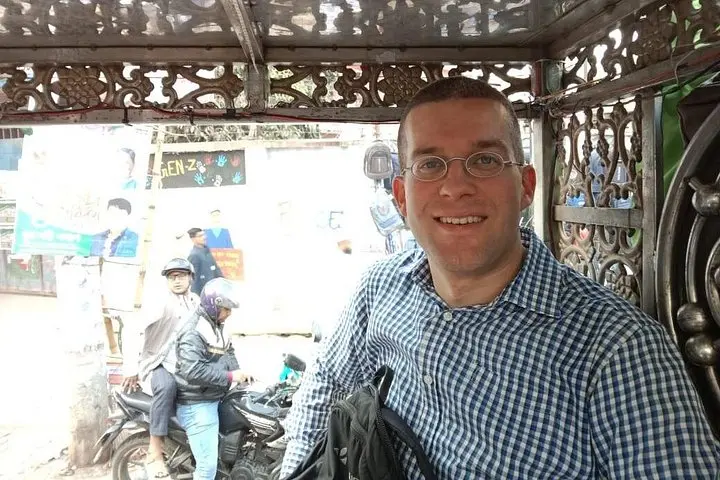
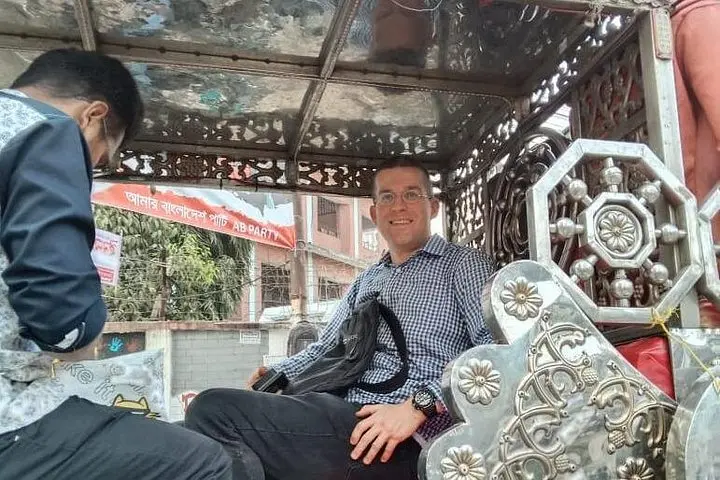
The morning begins with rickshaws threading through narrow lanes and the Buriganga River daring you to look closer: wooden launches ride low on the water as vendors stack crates of jasmine and fish on the quays. You step off the private vehicle into a palette of brick, sandstone, and painted facades—Dhaka’s noise is also its map.
The morning begins with rickshaws threading through narrow lanes and the Buriganga River daring you to look closer: wooden launches ride low on the water as vendors stack crates of jasmine and fish on the quays. You step off the private vehicle into a palette of brick, sandstone, and painted facades—Dhaka’s noise is also its map.
This full-day route stitches centuries together. From the 17th-century Mughal architecture of Lalbagh Fort to the pink façade of Ahsan Manzil, the city carries Mughal, colonial, and Nawabi layers. The Shaheed Minar marks a more recent, fiercely held history—the 1952 Language Movement—and Dhakeshwari Temple and the Star Mosque show how faith and craft shaped public life.
Geologically, Dhaka sits on the Ganges-Brahmaputra delta; the Buriganga and surrounding rivers have defined commerce and settlement patterns, giving the city its riverine markets and shipyards. Culturally, Old Dhaka is compact and kinetic: textile workshops in Shakhari Bazar, the Armenian Church’s quiet courtyard, and Nazira’s spice-scented lanes offer different faces of local life.
Practical guidance: tours are private and include transport and lunch—expect about eight hours of mixed walking and short drives. Start early to beat midday heat, carry a reusable water bottle, and wear closed shoes for uneven surfaces in bazaars and forts. Dress modestly for temples and mosques and keep small change for rickshaws, snacks, and tips. Photography is welcome at most sites, but ask before shooting worshippers.
This is an accessible, sensory-packed day for travelers who want history, street-level commerce, and a river glimpse of Dhaka’s living city.