THE ADVENTURE COLLECTIVE® · Independent discovery and booking for outdoor travel

A day trip from Yogyakarta into Central Java’s highlands, the Dieng Plateau pairs steaming volcanic features with eighth-century Hindu temples and a shifting Color Lake. This concise guide tells you what to expect and how to prepare.
A day trip from Yogyakarta into Central Java’s highlands, the Dieng Plateau pairs steaming volcanic features with eighth-century Hindu temples and a shifting Color Lake. This concise guide tells you what to expect and how to prepare.
A cool mist lifts off the plateau as the minivan winds up the mountain road — dawn paints the volcanic ridgelines and the air smells faintly of sulfur. At roughly 2,000 meters, Dieng’s high plain feels like a place that moves at its own pace: steaming vents dare you to come closer, crater walls hold pools of iridescent water, and terraced fields slope away toward distant volcanoes.
Verified experiences and guided adventures in the surrounding area.
Operated by Asia Advisor by Asni · Wonosobo, Central Java
A cool mist lifts off the plateau as the minivan winds up the mountain road — dawn paints the volcanic ridgelines and the air smells faintly of sulfur. At roughly 2,000 meters, Dieng’s high plain feels like a place that moves at its own pace: steaming vents dare you to come closer, crater walls hold pools of iridescent water, and terraced fields slope away toward distant volcanoes.
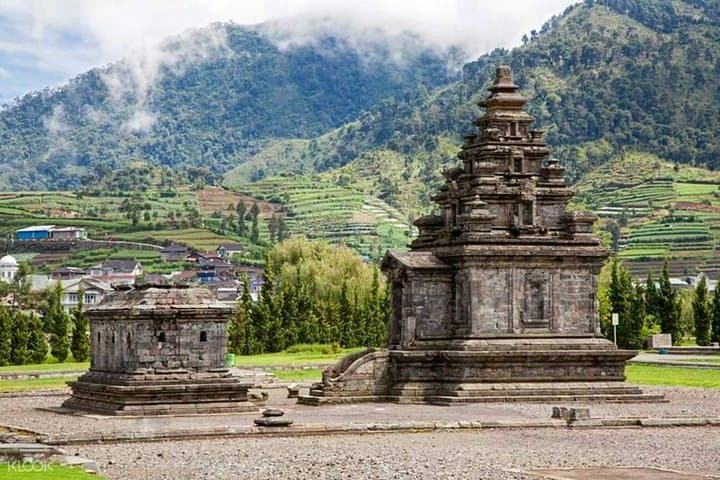
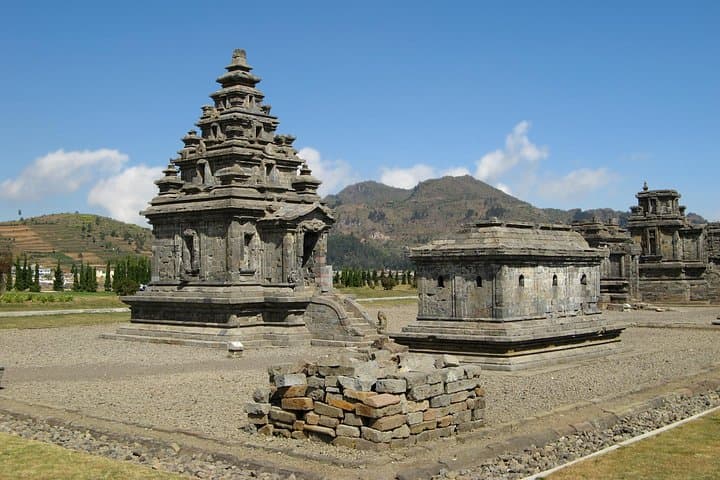
The plateau formed where ancient eruptions and ongoing hydrothermal activity meet. Sikidang’s boiling mud and fumaroles are active reminders of that geology; Telaga Warna (Color Lake) shifts hue with mineral content and light; the Arjuna Temple complex preserves 8th–9th century Hindu stonework that speaks to early Javanese culture and ritual at high elevation. Local farmers grow potatoes and vegetables adapted to the cool nights, and small markets around Wonosobo sell hot snacks to travelers.
On a typical day tour from Yogyakarta (about 10–11 hours roundtrip), visitors stop at Sikidang, the Arjuna temples and Telaga Warna, with short walks at each site. Expect uneven footpaths, steps at the temple complex and sulfur-scented air near craters — not dangerous for most, but uncomfortable for those sensitive to fumes.
Practical pointers: dress in layers and carry a rain shell, arrive early for clearer views, keep a safe distance from active vents, and carry small cash for entry fees and local snacks. With preparation, the Dieng Plateau is a compact, dramatic introduction to Central Java’s volcanic landscapes and living cultural history.
The full excursion is typically 10–11 hours door-to-door from Yogyakarta, including transfers and stops at main sites.
Sites like Sikidang have designated viewing areas; follow signs and guides and avoid vent areas where fumes are strong.
Tour inclusions vary; small local entrance fees and optional charges for photography or parking may not be covered—carry cash.
Yes — the tour is rated easy and suitable for most ages, though mobility-limited travelers may find steps and uneven ground challenging.
Asia Advisor by Asni operates guided outdoor trips and adventures with an emphasis on safety, stewardship, and memorable experiences.


A cool mist lifts off the plateau as the minivan winds up the mountain road — dawn paints the volcanic ridgelines and the air smells faintly of sulfur. At roughly 2,000 meters, Dieng’s high plain feels like a place that moves at its own pace: steaming vents dare you to come closer, crater walls hold pools of iridescent water, and terraced fields slope away toward distant volcanoes.
A cool mist lifts off the plateau as the minivan winds up the mountain road — dawn paints the volcanic ridgelines and the air smells faintly of sulfur. At roughly 2,000 meters, Dieng’s high plain feels like a place that moves at its own pace: steaming vents dare you to come closer, crater walls hold pools of iridescent water, and terraced fields slope away toward distant volcanoes.
The plateau formed where ancient eruptions and ongoing hydrothermal activity meet. Sikidang’s boiling mud and fumaroles are active reminders of that geology; Telaga Warna (Color Lake) shifts hue with mineral content and light; the Arjuna Temple complex preserves 8th–9th century Hindu stonework that speaks to early Javanese culture and ritual at high elevation. Local farmers grow potatoes and vegetables adapted to the cool nights, and small markets around Wonosobo sell hot snacks to travelers.
On a typical day tour from Yogyakarta (about 10–11 hours roundtrip), visitors stop at Sikidang, the Arjuna temples and Telaga Warna, with short walks at each site. Expect uneven footpaths, steps at the temple complex and sulfur-scented air near craters — not dangerous for most, but uncomfortable for those sensitive to fumes.
Practical pointers: dress in layers and carry a rain shell, arrive early for clearer views, keep a safe distance from active vents, and carry small cash for entry fees and local snacks. With preparation, the Dieng Plateau is a compact, dramatic introduction to Central Java’s volcanic landscapes and living cultural history.