THE ADVENTURE COLLECTIVE® · Independent discovery and booking for outdoor travel

A private, two-hour walking tour that moves from George Square through Glasgow’s oldest streets to Glasgow Green. Expect easy walking, rich history—from medieval cathedral stones to Victorian civic pride—and a guide focused on local stories.
A private, two-hour walking tour that moves from George Square through Glasgow’s oldest streets to Glasgow Green. Expect easy walking, rich history—from medieval cathedral stones to Victorian civic pride—and a guide focused on local stories.
George Square opens like a stage: sandstone facades, bronze statues, and street musicians filling the air as your guide gathers the group. You step off the square onto broad Victorian avenues, the city’s industrial past unspooling in brick and river-smoke while the River Clyde, close but occasionally hidden, seems to tug the city toward the west.
Verified experiences and guided adventures in the surrounding area.
Operated by Opatrip.com Scotland · Glasgow, Scotland
George Square opens like a stage: sandstone facades, bronze statues, and street musicians filling the air as your guide gathers the group. You step off the square onto broad Victorian avenues, the city’s industrial past unspooling in brick and river-smoke while the River Clyde, close but occasionally hidden, seems to tug the city toward the west.
This two-hour private walking tour threads Glasgow’s layered history—medieval echoes at Glasgow Cathedral, Renaissance timber at Provand’s Lordship, and civic pride at the People’s Palace and its Winter Gardens. Geology here is subtle: the city sits on rolling sandstone and shale, visible in carved lintels and weathered masonry rather than sweeping cliffs. Culturally, Glasgow is blunt and buoyant—shipbuilding and trade shaped its neighborhoods, while music halls and tenements shaped its people.
Expect paved city streets, occasional cobblestones, and a flat route with negligible elevation gain (under 30m total). The pace is easy, with stops for photography and stories; backup on rainy days with waterproof layers. Bring comfortable walking shoes and a small daypack for water and camera gear.
Timing matters: mornings are quieter for photos, late afternoons warm up the sandstone tones, and festival days add unexpected detours. The private format means questions, adjustments, and a focus on local social history—from Victorian philanthropy to modern culture.
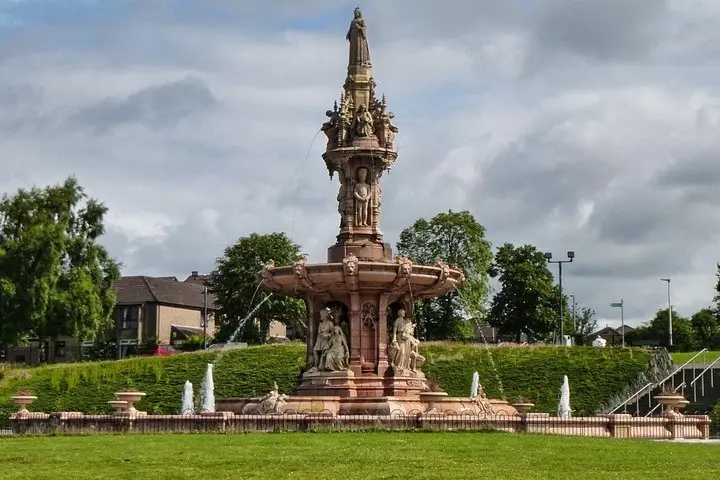
Practical: meeting point is outside Glasgow City Chambers in George Square; the route finishes near Glasgow Green and the Doulton Fountain. Allow two hours, wear grippy soles, and carry contactless payment for incidental café stops.
The tour lasts two hours and covers roughly 1.5–3 miles (2.5–5 km) depending on detours and pacing, on mostly flat terrain.
This itinerary includes an exterior visit and interpretation; interior entry may be possible but depends on opening hours and is not guaranteed in the standard tour.
Yes—pace is easy with frequent stops; please note mobility limitations in advance so the guide can tailor the route.
Tours run in light rain; for heavy weather check the cancellation policy—private format offers flexibility but some elements may be shortened.
Opatrip.com Scotland operates guided outdoor trips and adventures with an emphasis on safety, stewardship, and memorable experiences.

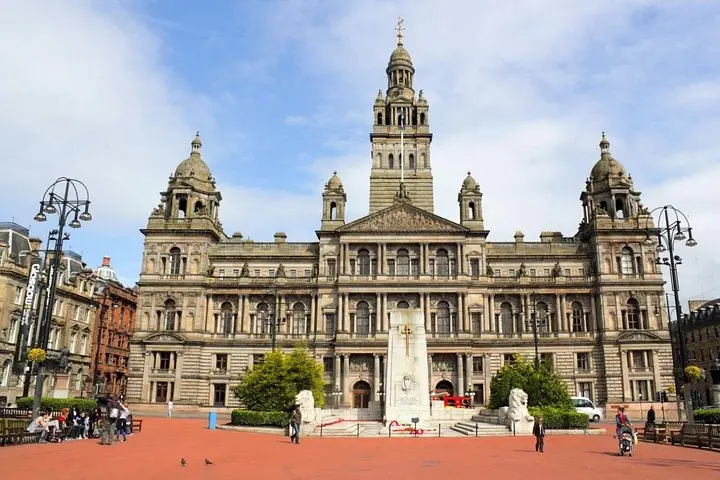

George Square opens like a stage: sandstone facades, bronze statues, and street musicians filling the air as your guide gathers the group. You step off the square onto broad Victorian avenues, the city’s industrial past unspooling in brick and river-smoke while the River Clyde, close but occasionally hidden, seems to tug the city toward the west.
George Square opens like a stage: sandstone facades, bronze statues, and street musicians filling the air as your guide gathers the group. You step off the square onto broad Victorian avenues, the city’s industrial past unspooling in brick and river-smoke while the River Clyde, close but occasionally hidden, seems to tug the city toward the west.
This two-hour private walking tour threads Glasgow’s layered history—medieval echoes at Glasgow Cathedral, Renaissance timber at Provand’s Lordship, and civic pride at the People’s Palace and its Winter Gardens. Geology here is subtle: the city sits on rolling sandstone and shale, visible in carved lintels and weathered masonry rather than sweeping cliffs. Culturally, Glasgow is blunt and buoyant—shipbuilding and trade shaped its neighborhoods, while music halls and tenements shaped its people.
Expect paved city streets, occasional cobblestones, and a flat route with negligible elevation gain (under 30m total). The pace is easy, with stops for photography and stories; backup on rainy days with waterproof layers. Bring comfortable walking shoes and a small daypack for water and camera gear.
Timing matters: mornings are quieter for photos, late afternoons warm up the sandstone tones, and festival days add unexpected detours. The private format means questions, adjustments, and a focus on local social history—from Victorian philanthropy to modern culture.
Practical: meeting point is outside Glasgow City Chambers in George Square; the route finishes near Glasgow Green and the Doulton Fountain. Allow two hours, wear grippy soles, and carry contactless payment for incidental café stops.