THE ADVENTURE COLLECTIVE® · Independent discovery and booking for outdoor travel

Cycle quiet country lanes from Hanoi to Duong Lam, Quang Phu Cau and Chuong Village on a private day tour that pairs living crafts with ancient temples. Expect hands-on demonstrations, traditional lunch, and ample opportunities for photography.
Cycle quiet country lanes from Hanoi to Duong Lam, Quang Phu Cau and Chuong Village on a private day tour that pairs living crafts with ancient temples. Expect hands-on demonstrations, traditional lunch, and ample opportunities for photography.
You start on the road out of Hanoi before dawn, the city thinning into rice paddies and low, folded hills. A morning breeze pushes along the lane as your guide steers toward Chuong’s workshops; palm leaves and sharpened bamboo wait in neat stacks like soldiers ready for a hatmaker’s hands.
Verified experiences and guided adventures in the surrounding area.
Operated by LOCAL TOURS VIETNAM · Hanoi, Hanoi
You start on the road out of Hanoi before dawn, the city thinning into rice paddies and low, folded hills. A morning breeze pushes along the lane as your guide steers toward Chuong’s workshops; palm leaves and sharpened bamboo wait in neat stacks like soldiers ready for a hatmaker’s hands.
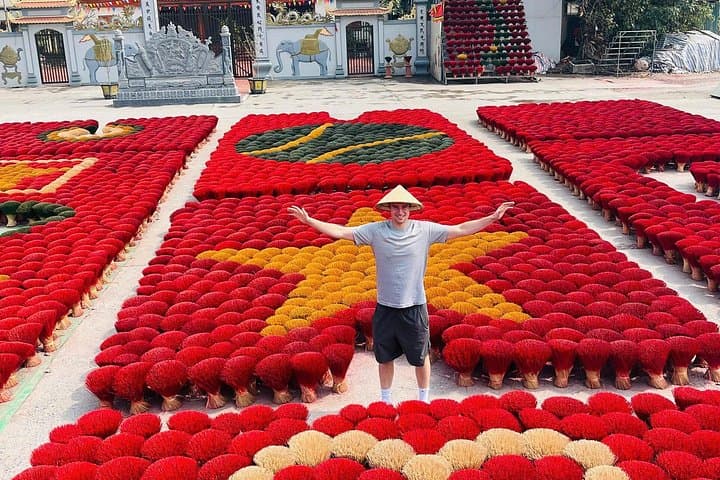
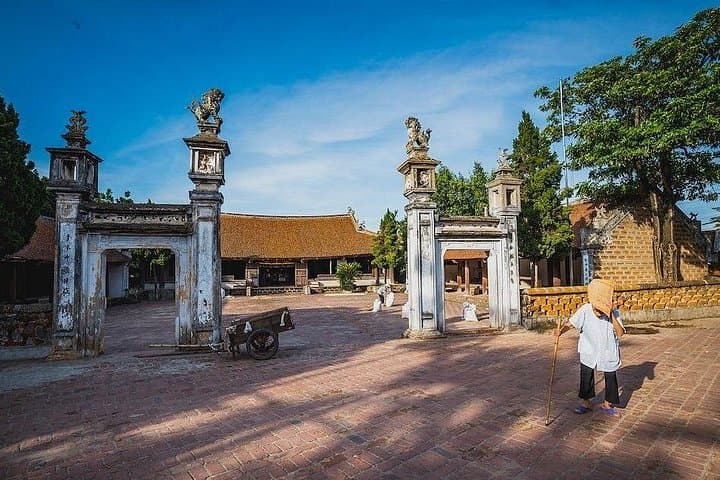
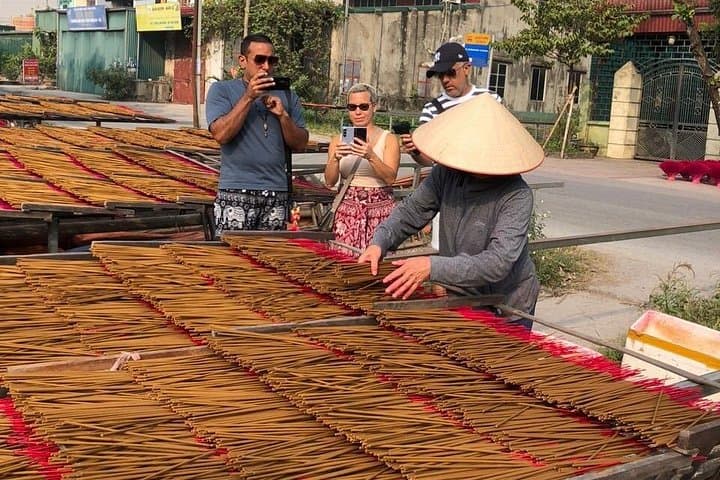
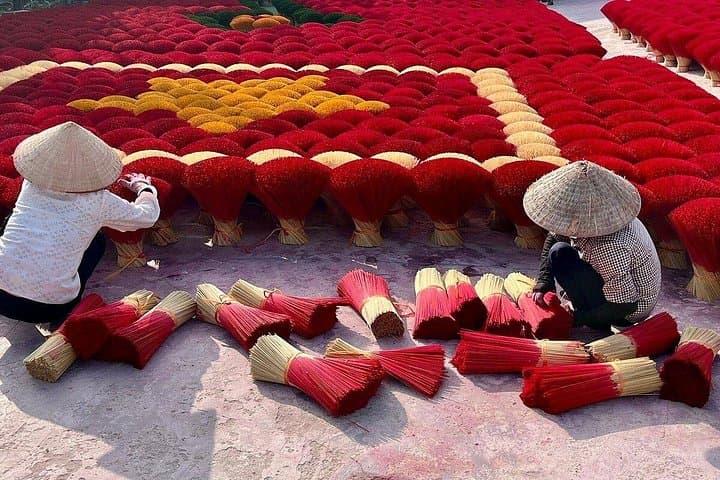
The route links three living histories. Duong Lam’s laterite houses and stone communal gates recall a rural architecture that predates colonial maps — Mia Pagoda holds carved panels and steles centuries old. Quang Phu Cau’s incense rows trace a craft refined during the French period when aromatic sticks became both trade good and devotional object. Chuong Village preserves techniques for the non la: soaking, shaping and stitching fragile palm into a resilient, weatherproof cone.
Expect quiet lanes, short bike spins between sites, and tactile demonstrations — the rattle of straw, the steady pull of a hat brim, the scent of drying resin. Guides explain local lineage, temple patrons and the seasonal cycle that sets craft rhythm.
Practical: this private day tour runs roughly 10–11 hours, includes entrance fees, lunch and bottled water, and uses easy bikes for flat country lanes. Wear closed-toe shoes for workshop visits, bring sun protection and modest clothing for temples. Timing matters — mornings are best for photos and cooler pedaling; afternoons grow hazy and the light flattens. Respect workshop spaces: ask before photographing people or taking part in hands-on steps. With steady pacing you leave with a clearer sense of how simple materials and steady hands sustain cultural identity here.
Drive time is about 45–60 minutes each way depending on traffic; the full tour including stops lasts about 10–11 hours.
No — the cycling is on flat village lanes and short distances between stops; basic ability to ride a bike is enough.
Yes — the tour includes a traditional lunch and the listed entrance fees per the itinerary.
Yes — guides can arrange vegetarian, vegan or gluten-free meals if requested at booking.
LOCAL TOURS VIETNAM operates guided outdoor trips and adventures with an emphasis on safety, stewardship, and memorable experiences.
You start on the road out of Hanoi before dawn, the city thinning into rice paddies and low, folded hills. A morning breeze pushes along the lane as your guide steers toward Chuong’s workshops; palm leaves and sharpened bamboo wait in neat stacks like soldiers ready for a hatmaker’s hands.
You start on the road out of Hanoi before dawn, the city thinning into rice paddies and low, folded hills. A morning breeze pushes along the lane as your guide steers toward Chuong’s workshops; palm leaves and sharpened bamboo wait in neat stacks like soldiers ready for a hatmaker’s hands.
The route links three living histories. Duong Lam’s laterite houses and stone communal gates recall a rural architecture that predates colonial maps — Mia Pagoda holds carved panels and steles centuries old. Quang Phu Cau’s incense rows trace a craft refined during the French period when aromatic sticks became both trade good and devotional object. Chuong Village preserves techniques for the non la: soaking, shaping and stitching fragile palm into a resilient, weatherproof cone.
Expect quiet lanes, short bike spins between sites, and tactile demonstrations — the rattle of straw, the steady pull of a hat brim, the scent of drying resin. Guides explain local lineage, temple patrons and the seasonal cycle that sets craft rhythm.
Practical: this private day tour runs roughly 10–11 hours, includes entrance fees, lunch and bottled water, and uses easy bikes for flat country lanes. Wear closed-toe shoes for workshop visits, bring sun protection and modest clothing for temples. Timing matters — mornings are best for photos and cooler pedaling; afternoons grow hazy and the light flattens. Respect workshop spaces: ask before photographing people or taking part in hands-on steps. With steady pacing you leave with a clearer sense of how simple materials and steady hands sustain cultural identity here.