THE ADVENTURE COLLECTIVE® · Independent discovery and booking for outdoor travel

A seven-day loop from Seoul to Seorak, Suncheon and Gyeongju that pairs UNESCO sites, tea terraces and wetlands with hands-on cultural experiences. Ideal for travelers who want scenic variety and a paced, all-inclusive itinerary.
A seven-day loop from Seoul to Seorak, Suncheon and Gyeongju that pairs UNESCO sites, tea terraces and wetlands with hands-on cultural experiences. Ideal for travelers who want scenic variety and a paced, all-inclusive itinerary.
A pre-dawn Seoul feels purposeful: buses line the curb, guides arrange name boards, and the city exhales into the highways. Over seven days this tour threads Korea’s coastal wetlands, temple valleys, tea terraces and ancient capitals—delivering a blend of walking, short hikes, and long drives that reveal why Korea’s history and landscape read as one continuous landscape.
Verified experiences and guided adventures in the surrounding area.
Operated by Hanatour ITC (하나투어 아이티씨) · Seoul, Seoul
A pre-dawn Seoul feels purposeful: buses line the curb, guides arrange name boards, and the city exhales into the highways. Over seven days this tour threads Korea’s coastal wetlands, temple valleys, tea terraces and ancient capitals—delivering a blend of walking, short hikes, and long drives that reveal why Korea’s history and landscape read as one continuous landscape.
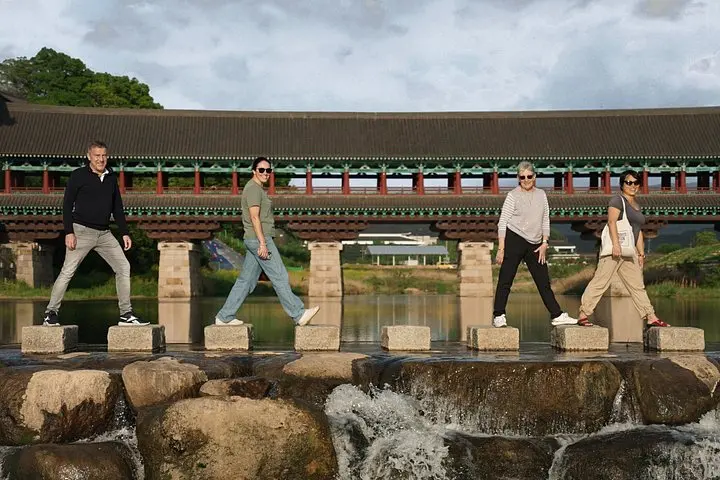
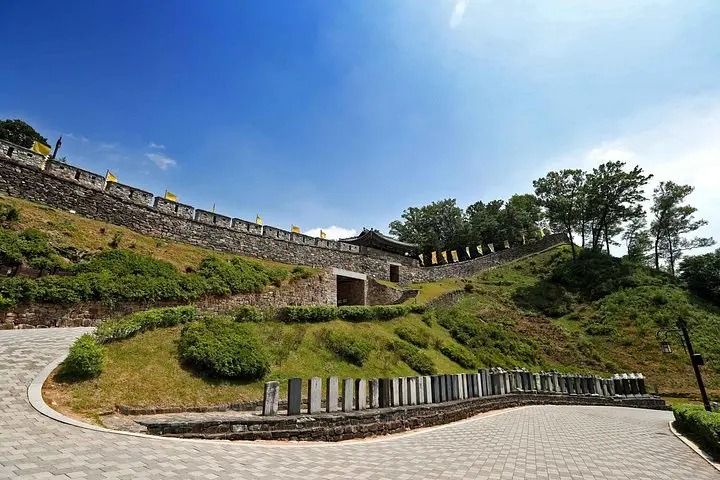
Travelers move from Gongju’s Gongsanseong Fortress and the Tomb of King Muryeong—Baekje-era sites that speak to early peninsula statecraft—to the rooflines of Jeonju’s Hanok Village where timbered hanok houses and centuries of culinary craft remain visible. The itinerary then follows green tea terraces in Boseong, the reed flats and 3.5 km tidal boardwalk of Suncheon Bay (a Ramsar site), and Buddhist masterpieces in Gyeongju, the Silla capital that preserves Bulguksa Temple and Cheomseongdae.
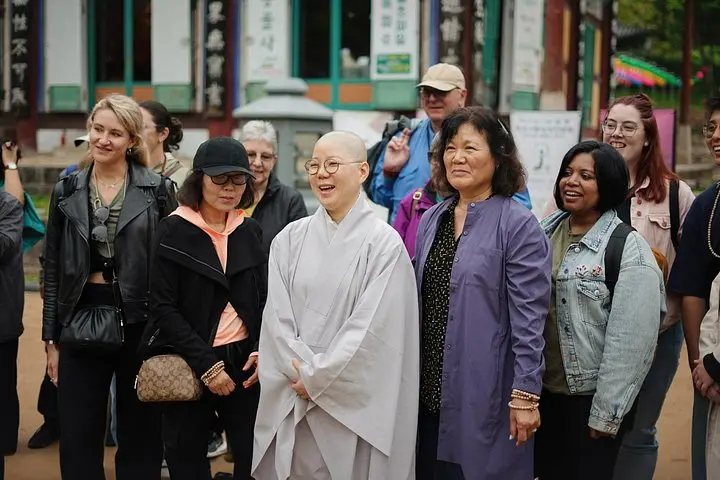
Geology surfaces in Seorak’s Jujeongol valley—granite outcrops and steep ravines that concentrate fall color—and in the coastal sandflats of Suncheon where sediment and tide shape habitat for migrating birds. Culturally the tour includes hands-on moments: hanbok fittings, a tea conversation with a monk, and a regional cooking class.
Practically: expect daily site stops of 60–120 minutes, comfortable hotels each night, and several short uphill walks—moderate fitness makes the trip smoother. Pack layered clothing for variable coastal winds and mountain chills, bring good walking shoes for temple steps and boardwalks, and keep a reusable bottle for long transfers. Timing trips for autumn brings peak foliage at Naejangsan and Seorak; spring highlights include tea fields and camellia blooms.
The tour begins and ends at Amid Hotel lobby in Seoul at 08:00; guides hold a DISCOVER KOREA sign for meet-up.
Yes—breakfasts, most lunches and dinners listed, and all entrance fees noted in the itinerary are included.
The tour requires at least moderate fitness with stairs and short walks; travelers with limited mobility should contact the operator to discuss accommodations.
Special dietary needs can be submitted at booking; guides will make reasonable efforts to accommodate them but advanced notice is required.
Hanatour ITC (하나투어 아이티씨) operates guided outdoor trips and adventures with an emphasis on safety, stewardship, and memorable experiences.

A pre-dawn Seoul feels purposeful: buses line the curb, guides arrange name boards, and the city exhales into the highways. Over seven days this tour threads Korea’s coastal wetlands, temple valleys, tea terraces and ancient capitals—delivering a blend of walking, short hikes, and long drives that reveal why Korea’s history and landscape read as one continuous landscape.
A pre-dawn Seoul feels purposeful: buses line the curb, guides arrange name boards, and the city exhales into the highways. Over seven days this tour threads Korea’s coastal wetlands, temple valleys, tea terraces and ancient capitals—delivering a blend of walking, short hikes, and long drives that reveal why Korea’s history and landscape read as one continuous landscape.
Travelers move from Gongju’s Gongsanseong Fortress and the Tomb of King Muryeong—Baekje-era sites that speak to early peninsula statecraft—to the rooflines of Jeonju’s Hanok Village where timbered hanok houses and centuries of culinary craft remain visible. The itinerary then follows green tea terraces in Boseong, the reed flats and 3.5 km tidal boardwalk of Suncheon Bay (a Ramsar site), and Buddhist masterpieces in Gyeongju, the Silla capital that preserves Bulguksa Temple and Cheomseongdae.
Geology surfaces in Seorak’s Jujeongol valley—granite outcrops and steep ravines that concentrate fall color—and in the coastal sandflats of Suncheon where sediment and tide shape habitat for migrating birds. Culturally the tour includes hands-on moments: hanbok fittings, a tea conversation with a monk, and a regional cooking class.
Practically: expect daily site stops of 60–120 minutes, comfortable hotels each night, and several short uphill walks—moderate fitness makes the trip smoother. Pack layered clothing for variable coastal winds and mountain chills, bring good walking shoes for temple steps and boardwalks, and keep a reusable bottle for long transfers. Timing trips for autumn brings peak foliage at Naejangsan and Seorak; spring highlights include tea fields and camellia blooms.