THE ADVENTURE COLLECTIVE® · Independent discovery and booking for outdoor travel

Walk Leiden at your own pace with a GPS-guided self-tour that navigates canals, courtyards and Rembrandt’s birthplace. Expect 2–3 hours of flat, accessible urban exploration with historical context at each stop.
Walk Leiden at your own pace with a GPS-guided self-tour that navigates canals, courtyards and Rembrandt’s birthplace. Expect 2–3 hours of flat, accessible urban exploration with historical context at each stop.
A late-afternoon sun slants across Leiden's canals and the city breathes in a quieter rhythm — bicycles hum, church bells punctuate the air, and the GPS voice punctually nudges you toward the next bridge. This self-guided walking tour places you at street level of a 17th-century university town where Rembrandt learned the rhythms of light.
Verified experiences and guided adventures in the surrounding area.
Operated by Niki Your TravelBuddy · Leiden, South Holland
A late-afternoon sun slants across Leiden's canals and the city breathes in a quieter rhythm — bicycles hum, church bells punctuate the air, and the GPS voice punctually nudges you toward the next bridge. This self-guided walking tour places you at street level of a 17th-century university town where Rembrandt learned the rhythms of light.
Leiden's story is plain in brick and water: a medieval core expanded by Golden Age prosperity, sited on reclaimed river plains fed by Rhine distributaries. Historic sites — the birthplace of Rembrandt, the Academy Building of 1575, and the Hortus Botanicus founded in 1590 — map a city shaped by trade, scholarship and horticultural curiosity. Courtyards (hofjes) and narrow alleys reflect social histories of guilds, philanthropists and returning scholars.
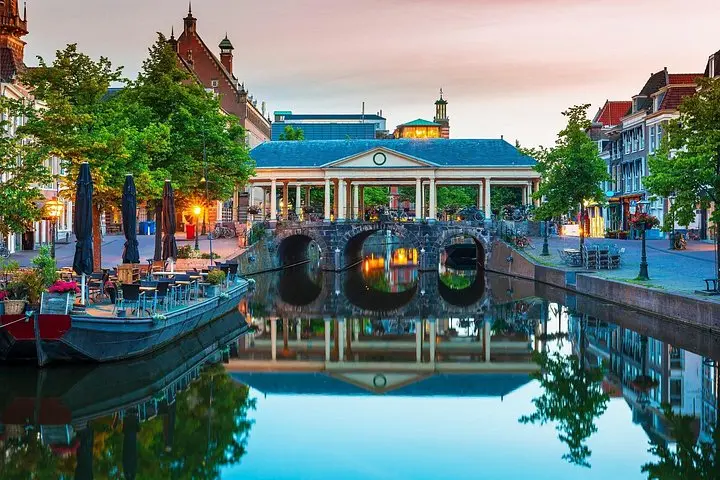
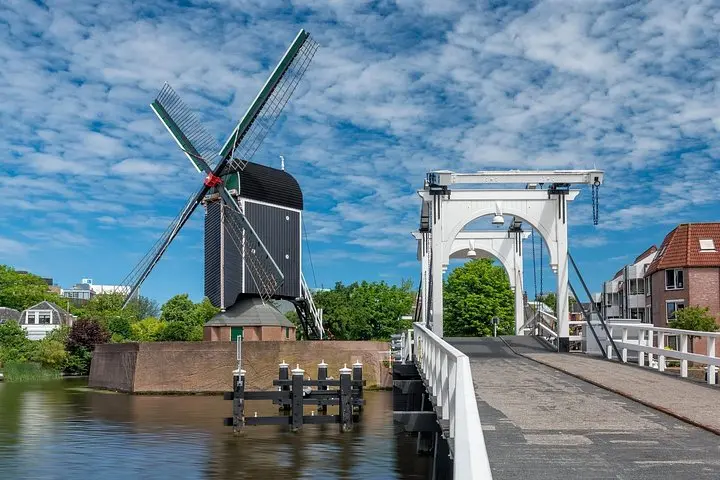
Practical use of the GPS WebApp guides you past Blauwpoortsbrug, the Pieterskerk’s sandstone walls and the reconstructed De Put mill, with short on-the-spot histories and directional prompts. Expect 2–3 hours on mainly paved, flat surfaces suitable for most walkers; the route is largely wheelchair- and stroller-accessible. Keep an eye out for cyclists on shared lanes, charge your device before leaving, and time the walk for morning light or late-afternoon warmth to avoid peak bike traffic.
This tour is best for independent travelers who want context without a live guide: it’s a primer on Leiden’s architecture, gardens and civic life, delivered where it matters — step by step, bridge by bridge.
No — it’s a self-guided GPS WebApp that provides step-by-step directions and commentary in your chosen language.
Plan for about 2–3 hours depending on stops and walking pace; the route covers central Leiden at an easy pace.
Most streets and primary stops are wheelchair- and stroller-accessible, though some older alleys and bridges have uneven surfaces.
Full refunds are available if you cancel at least 24 hours before the scheduled start time.
Niki Your TravelBuddy operates guided outdoor trips and adventures with an emphasis on safety, stewardship, and memorable experiences.

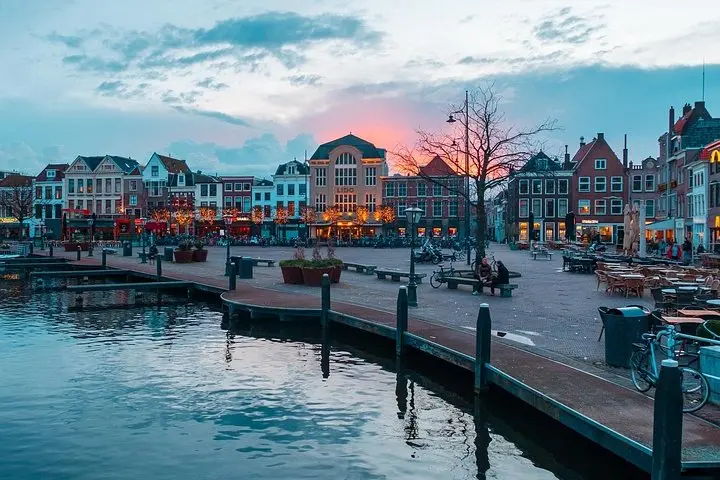
A late-afternoon sun slants across Leiden's canals and the city breathes in a quieter rhythm — bicycles hum, church bells punctuate the air, and the GPS voice punctually nudges you toward the next bridge. This self-guided walking tour places you at street level of a 17th-century university town where Rembrandt learned the rhythms of light.
A late-afternoon sun slants across Leiden's canals and the city breathes in a quieter rhythm — bicycles hum, church bells punctuate the air, and the GPS voice punctually nudges you toward the next bridge. This self-guided walking tour places you at street level of a 17th-century university town where Rembrandt learned the rhythms of light.
Leiden's story is plain in brick and water: a medieval core expanded by Golden Age prosperity, sited on reclaimed river plains fed by Rhine distributaries. Historic sites — the birthplace of Rembrandt, the Academy Building of 1575, and the Hortus Botanicus founded in 1590 — map a city shaped by trade, scholarship and horticultural curiosity. Courtyards (hofjes) and narrow alleys reflect social histories of guilds, philanthropists and returning scholars.
Practical use of the GPS WebApp guides you past Blauwpoortsbrug, the Pieterskerk’s sandstone walls and the reconstructed De Put mill, with short on-the-spot histories and directional prompts. Expect 2–3 hours on mainly paved, flat surfaces suitable for most walkers; the route is largely wheelchair- and stroller-accessible. Keep an eye out for cyclists on shared lanes, charge your device before leaving, and time the walk for morning light or late-afternoon warmth to avoid peak bike traffic.
This tour is best for independent travelers who want context without a live guide: it’s a primer on Leiden’s architecture, gardens and civic life, delivered where it matters — step by step, bridge by bridge.